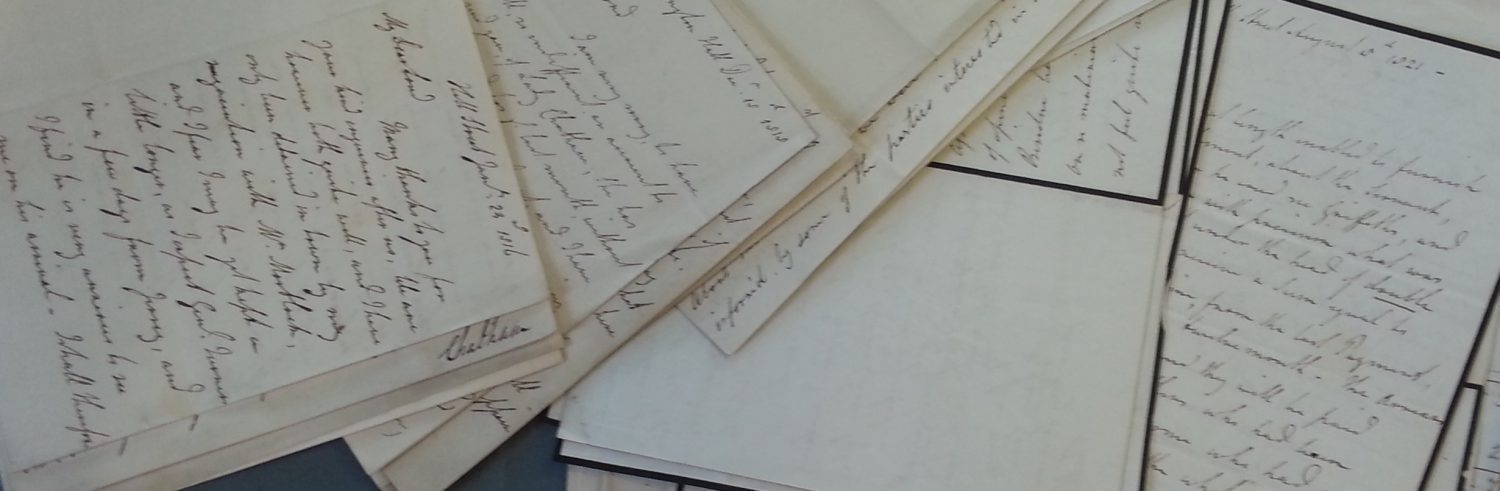
Was John, 2nd Earl of Chatham a waste of space? (Part One)

Now, before you all jump up and shout “Yes! Next question!”, bear with me.

My friends and acquaintances will all know that I have a “Thing” (yes, with a capital T) about John Pitt, 2nd Earl of Chatham. This “Thing” has grown and developed over the years since I found myself, somewhat to my own surprise, writing a novel about him.

Perhaps I shouldn’t need to justify my choice of him as a subject, but sometimes I feel that I do. A few months ago I bought a letter off an antiques dealer written by John in 1802. I took it to an art shop to frame. “Very nice,” the man said as he measured it up for me. “But this Earl of Chatham…. what did he do?” This is a question I get asked a lot….

I think I mentioned before that Sir Tresham Lever in “The House of Pitt” wrote John off as “stupid and useless”. Most historians agree: he’s described, variously, as “intelligent but incurably idle” (Wendy Hinde, “Castlereagh” (London, 1981) p. 117); “charming and indolent, slightly over-burdened by the weight of his illustrious name … an incompetent general and a wretched administrator” (Joan Haslip, “Lady Hester Stanhope” (London, 1987) p. 23); “amiable … [but] exhibited signs of a natural lethargy which proved incurable” (Robin Reilly, “Pitt the Younger” (London, 1978) p. 10)… etc etc etc, you get the idea. Even Ehrman, while he admits John “was not untalented” (damned by faint praise!), reports the rumours of John’s slothfulness, drunkenness, incapacity and so on (John Ehrman, “The Younger Pitt: The Reluctant Transition” (London, 1983) p. 379.

I’m not yet ready to write my full “John was not as bad as all that” tirade (hence this is Part One only); that will have to wait till I’ve gone through all my notes. I think it is certainly beyond any historian to suggest that John was not so laid back he was pretty much horizontal. Lots of emotions complicated his relationship with his younger brother William (…. and let’s face it, being an impoverished older brother thoroughly dependent on his younger brother’s influence must have been a weird enough inversion of normality) but jealousy did not feature much, if at all. John was quite happy to let William reap all the political plaudits. Whether things would have been different had John not had a younger brother I do not know, but he never spoke once in the House of Lords that I can find and probably would not have got involved in politics at all had his brother not dragged him in.

So yes, lazy he almost certainly was. And yet when he was appointed to the Cabinet in 1788, as First Lord of the Admiralty, he seems (judging from the newspapers) to have knuckled down to the task with some degree of diligence. Cabinet meetings were held at his house (…. OK, maybe an excuse to be able to roll out of bed and go straight to work); he is often reported at Admiralty Board meetings; he was one of the Commissioners appointed during the Regency Crisis to draw up and present the Regency Bill to Parliament. He was a regular attender of court functions (and it seems George III quite liked him), not just the fun ones but the business ones too. Not, perhaps, a picture of overwhelming zeal, but certainly not one of a complete slacker.

So where did it start to go wrong? Ehrman traces it to the summer of 1793, in other words around the time when the First Coalition assault on the revolutionary French in Flanders was starting to go rather wrong. Chatham’s navy received the blame (along with the Duke of Richmond’s Ordnance) for not supplying the army well enough. Chatham defended himself by pointing out the government had split its pins between Flanders and Toulon, and the navy could not be expected to defend both fronts equally well. He escaped censure on that occasion, but when the Duke of Portland and his followers came over to Pitt from the Foxite side in the summer of 1794 they seem to have made it an express condition that one of their own would take over the Admiralty. Pitt held out five months; in December 1794 he moved his brother to the responsibility-lite post of Lord Privy Seal. Portland Whig Lord Spencer took Chatham’s place at the Admiralty.

Over the summer of 1794 I have seen a number of reports and rumours about John cropping up in newspapers and diaries (Ehrman refers to them, as I noted above). Was the Admiralty as badly run as was suggested? I’m afraid I haven’t done enough research to tell you. Rumour had it that John attended to no business before noon, kept naval officers waiting, and never opened his letters. I haven’t managed to trace any of these rumours to anything concrete (the one about the not opening letters, which is reported in N.A.M. Rodger, “The Command of the Ocean” (London, 2004) p. 363, I have traced to one of Spencer’s underlings, writing thirty or more years after the event). Obviously they all come from people who were not on John’s side, although that fact in itself means very little. As for John, he had little or no doubt he had been stabbed in the back by the Portland Whigs; he feared for his reputation, and it seems he has been right to do so.

What to conclude, therefore? John was not a naval man in any case. He was a military man, and (after Richmond resigned in early 1795) the only military man in a wartime cabinet. He seems to have given plenty of advice on military topics even when it wasn’t his remit: Castlereagh, for example, wrote to John requesting advice on military matters in October 1805 (Castlereagh Correspondence vol 6 (London 1851), 19). Lord Eldon famously said John was the ablest man in the Cabinet, and although it seems this was a throwaway remark I doubt he would have said it had he not thought John at least slightly clever. It is Chatham’s main misfortune that his whole life was blighted by the Walcheren campaign, which he commanded in 1809 and which ended in utter failure. That, however, is quite another story.

I don’t think I need to say here that I do not think John was a waste of space. You’ve worked that out by now, and 400 pages of novel certainly suggests I find him interesting. What I think is most interesting about him— to answer the question asked by the art dealer who framed my John letter— is not what he *did*, but *who he was*. He was a man who had the good fortune, or perhaps the ill fortune, to be the eldest son and elder brother of two very famous, important and brilliant public figures. He must have lived his entire life in their shadow. I hope to bring him out a bit, and round out the “late Lord Chatham” (as he was nicknamed) as a personality in his own right.

And that’s enough blathering on. Humour me. As I said, I have a Thing.

Oh my heart, my heart, how he broke my heart: Pitt’s last days

Just taking five minutes from my writing day (it’s Thuuuuuuuuuuuuuursdaaaaaaaaaaay!) to blog something that’s been tugging at my mind since yesterday.

Last night, quite by accident, I discovered that Earl Stanhope’s “Miscellanies” (London, 1863) are on Google Books. (You can find the whole thing here). Reading through, I found a few letters that passed between Pitt the Younger and his physician, Sir Walter Farquhar, at the start of January 1806.

First, to put them into context and explain why they affected me so much, a little background. Pitt returned to office in May 1804, beset by parliamentary divisions. He managed to cobble together the Third Coalition against France with Austria and Russia in 1805, only to see it shattered by Napoleon on the battlefields of Ulm (October 1805) and Austerlitz (December 1805). Pitt’s health was by this time seriously failing and he had gone to Bath in mid December 1805 to take the waters. Pitt, a natural optimist, was initially confident Bath would benefit him: a letter he wrote on 21 December to Lord Harrowby, also printed in the “Miscellanies” (pp 28-9), ends with the line “I have been here for ten days, and have already felt the effect of the waters in a pretty smart fit of the gout, from which I am just recovering, and of which I expect soon to perceive the benefit.”

Eleven days later and Pitt’s tone had completely changed. Parliament was due to meet on 21 January 1806 after the recess and Pitt knew very well the opposition— at this point led in the House of Commons by Fox, and in the House of Lords by Pitt’s own cousin Lord Grenville— would strongly censure the failure of his foreign policy. He knew he had to get well enough to defend himself, and he knew he was running out of time. On 1 January 1806 he wrote the following letter to Sir Walter Farquhar, his physician. He was obviously still trying to strike his usual upbeat note, but clearly failing miserably. I’ll quote it in its entirety here:

“My dear Sir,

I have been rather gaining ground since I wrote to you last; but it has been so slowly that I cannot feel comfortable at finding myself within less than three weeks of the meeting of Parliament without being more advanced. My strength is as yet very little improved, and my appetite not at all. It is indeed only for these last five days that I have begun again on the waters, and at first so sparingly that they would scarce produce any effect. For these last two days I have taken two middle-sized glasses, which certainly seem to agree very well, though I have not felt any positive benefit, except in my sleep being better than it has been. I do not know whether I am to place to their account some gouty sensations in the bottom of the left foot, which, without being yet anything very decided, are sufficient to make me rather lame. Mr Crook [his apothecary in Bath] seems apprehensive of more gout; but if it is in the habit, I cannot but think the sooner it is brought out the better. On the whole, if I had six weeks to spare, I should have no doubt of returning to town stout enough; but, as it is, I am afraid that, unless exactly the best use is made of the short interval to the 21st, I shall hardly be equal to the labours which are then to begin; and I have therefore thought it best to trouble you with these particulars, for your further directions.

Yours very sincerely,

W. Pitt.”

(pp. 33-4)

In other words, “HELP!”

Stanhope then goes on to quote a letter from Farquhar urging Pitt to take “paregoric elixir”, which apparently he could take as often as necessary without ill effects (oh, Farquhar, Farquhar, Farquhar: it was an opiate!), and offering to come down to Bath. Pitt’s reply ends thus:

“I cannot deny that it will be a great satisfaction to me to see you, if you can come without too much inconvenience to yourself, and without creating an alarm among my friends.” (p. 35)

So doom and gloom for Pitt in the last three weeks of his life. For some reason this has knocked me for six. Perhaps it’s the knowledge that, from the time these letters were exchanged, Pitt began a steep and swift decline to his death.

I’m still upset about it today. That’s it: next time I am writing about fictional characters and not real people.

*weeps gently over keyboard*

Earl Camden on the collapse of Pitt the Elder in the House of Lords, Kent RO CKS-U840/C173/30

I have been looking for an eyewitness account of the first Earl of Chatham’s spectacular collapse in the House of Lords in April 1778 for some time, and have finally found this account from Lord Camden to his daughter Elizabeth (“dear Betsey”, as the letter begins). I know there is a longer account from Camden to Grafton elsewhere, but I have not seen it so this is as close as I get right now.

The letter is dated 9 April 1778, so two days after Chatham collapsed.  Camden starts with some inconsequential gossip and platitudes (“the plumbs were excellent”) then moves on to the meaty stuff. Camden was present on the occasion: Chatham went to the House of Lords to oppose the Duke of Richmond’s motion for peace with America, and suffered from a stroke halfway through.

Camden writes:

“All our hopes of any material Change of Ministry are checked at once by the fatal Accidt. that happen’d on Tuesday Last in the House of Lords by a sudden fit that seiz’d the E. Chatham just as he was rising to reply to the D. of Richmond. You may conceive better than I can describe the Hurry & Confusion the Expressions of Grieff & astonishment that broke out & actuated the whole Assembly. Every man seemed affected more or less except ye E. of M[ansfield] who kept his seat & remained as much unmoved as the Poor Man himself who was stretch’d Senseless across a Bench. He continued some time in that posture till he was removed into the Painted Chamber. Assistance was sent for in an instant, & Dr Brocklesby was the first Physician that cd be got. In about an hour Addington [Dr Anthony Addington, Chatham’s personal physician] came, & soon after the Earl [revived?] the first Symptom of life being an Endeavour to reach, wch at last had its effect by discharging a Load from his Stomach wch probably was the Occasion of the fit, for it was actually no Apoplexy, but in truth very similar to that Seizure wch took him the beginning of last Summer, for all the Appearances were the same in both. He recover’d, if you remember, from the first very soon; & was better afterwds than we had seen him for many years. I pray to God this may have no worse Consequence. He was carry’d that Eveng to Mr Strutt’s in Palace Yard, where he still remains & is this day to be removed to Serjeant’s in Downing Street. He recover’d his Senses perfectly that Eveng & slept remarkably well. He continued well all yesterday & I hear he slept this morng till ½ past 6 o’clock. I hope the best, but according to my desponding temper, I fear the worst.”

Camden was right to “fear the worst”: Chatham never fully recovered and died on 11 May 1778.

A letter from Pitt to his brother, Kent RO CKS-U1590/S5/C25

This is one of the things I found so interesting today when I went to Maidstone for the archives. It’s a letter from William Pitt to his older brother John, Earl of Chatham, dated 12 October 1778. John was in Gibraltar at the time, having left with his regiment (the 39th) shortly after the death of his father in May. I had initially thought there was little or no correspondence during the early years between the two brothers, but it seems I was wrong, although this letter suggests why I might have got that impression.

What I find so sweet about it is that Pitt is completely aware that his letter might never get to its intended recipient, so he has this awkward air of almost talking to himself. The letter says nothing really beyond “Dear John, I miss you and want you to know that”. I find it poignant, particularly given the relationship the two of them had later in life.

To The Earl of Chatham, Gibraltar

12 October 1778, Hotel, King Street

My dear Brother,

I shall scarcely send you more at present than a single Line, which may perhaps never reach you. If it does, it will at least inform you that I am in the Land of the Living. Nothing has happen’d the least interesting since I wrote last to you, but I am afraid that very few of my Letters have yet reach’d you. I have been writing repeatedly ever since June, thinking to convey my Letters by Col. Mawhood, whose departure has been postponed from Day to Day, and I at least hear that he is not to go at all. He has made over our Letters to another Officer, by whose means, I hope you will at length receive them. At all Events, most of what those Letters contain is by this Time obsolete, besides which I have entirely forgotten most of it; so that I shall not attempt to send you Duplicates. One of my Dispatches has, I find, been intercepted by the French, having been committed to the Helena which unluckily fell in with their Fleet; and I know not how many more may share the same Fate. I left all well at Burton about a Fortnight since, and found Ld and Lady Mahon well at Hayes. I am now immediately going to Cambridge for about a Month. If I have any opportunity, you shall not fail to hear from me soon, whatever may occur.

Your most affectionate Brother, W Pitt.

[PS] I have sent the Stockings and Hats written for by Wood.

Archives!

I have just got back from the Kent Library and History Centre in Maidstone, where I spent the day up to my elbows in manuscripts and as happy as the proverbial pig in the proverbial you-know-what. It was my first time in the archives in seven years and, although I did feel a teensy bit like a fraud (last time I was in an archive I was a legit research student; now, I’m… well… I guess technically I’m a novelist, but I still feel kind of odd describing myself as such given I’m not published yet). But I now have that lovely almond-crossed-with-gunpowder old-document-handling-smell on my hands and I can’t believe how much I have MISSED it.

I unearthed a few treasures, some of which I will have to share at greater length later:

1) Unexpectedly opening a folder to find http://www.historicalportraits.com/Gallery.asp?Page=Item&ItemID=54&Desc=William-Pitt-by-Sir-Thomas-Lawrence-PRA-|-Sir-Thomas-Lawrence-PRA staring back at me (… which I find odd as apparently it is also held in a private collection, according to the site I’ve linked to here: presumably there were several copies floating about as the one I saw was definitely in pencil and looked legit)

2) Comedy moments as I tried to decipher the first Lord Camden’s handwriting, which looked like a number of spiders caught in a pile-up on the M25

3) Finding a bundle of notes on Pitt’s household expenditures around the turn of the 19th century, in which he clearly had his mind on other things (one of them has a pencil drawing of the ground plan of a stately home on the back….)

And much, much more.

It only took on average 5 minutes to get the documents up when I ordered them, too. That’s a vast improvement on what I remember. In this respect a certain record office which will remain anonymous, but which we will refer to here as Bloucestershire Brecord Boffice, holds the record at an hour and a half per order.

Feeling quite blissed out now.

John’s Birthday

… is not today, but a friend of mine has expressed surprise at one of my previous posts in which I stated that it was 10 October (rather than 9 October, as believed by Wikipedia, the Oxford DNB and just about every other source you may choose to mention). So I’ve been going through my notes to find out exactly why I believed John to be born on 10 October 1756 and not 9 October 1756.

Item the First: from “Letters written by the late Earl of Chatham to his nephew Thomas Pitt…” (London, 1804): p. 97, Letter XXI, dated “Hayes, Oct. 10, 1756” begins with “Dear Nephew, I have the pleasure to acquaint you with the glad tidings of Hayes. Lady Hester was safely delivered this morning of a son.” I know this isn’t a manuscript source exactly, but unless the printer got it wrong, I trust Pitt the Elder to know both the date and the day of his own son’s birth. Although I guess he could have been so overwhelmed by the event that he could have got it wrong. But we’ll give him the benefit of a doubt for now, won’t we?

Item the Second: again not a MSS source, but still: from Canon Thompson, “A History of Hayes in the County of Kent” (London, 1935, p.  57): the book states that the Register Book of St Mary’s, the Hayes Parish Church, lists John as being born on 10 October 1756.

Item the Third: from “The Correspondence of Richard Grenville, Earl Temple and the Rt Hon George Grenville”, ed. William James Smith (London, 1852), I, 173: the birth of John Pitt is recorded as 10 October 1756 (and apparently he was delivered by the famous surgeon John Hunter, which I had forgotten until now. Yay for John).

But the spanner in the works is this latter, dated *9 October* 1773. It’s from Tomline’s “Life of Pitt” (London, 1821),I, 17, and it is a letter from Lord Chatham to William: “Thursday’s post brought us no letter from the dear traveller: we trust this day will prove more satisfactory; it is the happy day that gave us your brother”.

And yet the parish records clearly state him to have been born on 10 October.

Why did Pitt the Elder change his mind?

Will we ever know when John’s real birthday was?

Am I the only person who cares?

I know the answer to the last one anyway: probably.

Lord Chatham and the HMS Boyne

I came across the following article from The World, 12 August 1789, a while ago. Written to defend the appointment of Chatham (a soldier) to the Admiralty, it included an interesting paragraph at the end:

Really? What on earth is this all about? So off I go to research what happened to the Boyne.

So far I haven’t found anything specifically mentioning John, but I did find out that the Boyne was indeed in the West Indies in the early 1780s and returned in the summer of 1780 as part of a merchant convoy, carrying officers home. Its journey was not an easy one:

(St James’s Chronicle, 14-16 September 1780)

Captain Rice was from the 86th Rutland regiment. John had purchased a captaincy (… or been given one by the Duke of Rutland, I am not sure) in said regiment in December 1779, so I wondered whether he might have been on the same ship and whether this was the occasion mentioned by The World in 1789. Unfortunately it looks like the facts don’t match up: according to the London Chronicle of 24 August 1780, Chatham was *just setting out* for the West Indies, not returning.

On the other hand I also found this:

(London Courant and Morning Chronicle, 24 January 1780)

(… which, incidentally, also explains something I had long been confused about, namely why Lord Chatham would voluntarily go off to serve in the West Indies when most men would have avoided such a disease-ridden place like—-well, like the plague.)

So if Chatham was about to leave in January, why did he not leave till the end of August? Unless the newspapers got their wires crossed, and Chatham was on his way *back* from the West Indies at the end of the summer. This would in fact make more sense to me, as I know for a fact Chatham was back in England between October 1780 and February 1781. Had he sailed to the West Indies at the end of August, he would have had to re-embark almost instantly. Furthermore, the Boyne does not seem to have served again after her adventures in 1780, and was eventually broken up in 1783:

http://en.wikipedia.org/wiki/HMS_Boyne_%281766%29

I’m still looking, so who knows, but I found it interesting to find this little vignette into the life of an officer travelling to and from military outposts in the 18th century. (I suspect it won’t make it into the novel, as interesting as it is!)

If Chatham *was* on the Boyne in 1780, the Pitt family certainly had a narrow squeak on a number of accounts. 1780 was a spectacularly bad year for the family anyway: Hester, Lady Mahon, the eldest Pitt child, died in July of that year and James Charles, the youngest, a captain in the navy, died of fever in Antigua in the autumn. Had Chatham sunk with the Boyne in September, that would have been three out of the five children gone in the space of four or five months. Not to mention the fact that William would have been Third Earl of Chatham at the age of twenty-one, would never have entered the House of Commons, and might never have become PM.

Thank goodness throwing those cannons overboard worked!

Years ago I saw this…

Visit of George III to Howe's Flagship, the 'Queen Charlotte', 26 June 1794 by Henry Perronet Briggs - print

It’s a painting by Henry Perronet Briggs (1828) in the Royal Maritime Museum, Greenwich, and depicts the visit of King George III and Queen Charlotte to Portsmouth on 24 June 1794 to congratulate Admiral Lord Howe on his victory over the French at Ushant (the battle became known as the “Glorious First of June”). George III is shown handing Howe a ceremonial diamond-hilted sword on the quarterdeck of Howe’s flagship, the Queen Charlotte. Various members of the Royal family and the court watch. I can’t identify too many of them off hand, but conspicuous among them are the two main characters of my novel: prime minister William Pitt the Younger on the far left, and (immediately to the right of the chap in the rather dashing red and gold pelisse) Pitt’s brother John, Second Earl of Chatham. Chatham was, of course, First Lord of the Admiralty at the time and so had a prominent role in the celebrations.

I think it’s pretty cool. One day I might even go and see it in person!

The road to Somerset

I’ve just come back from a weekend at my parents’ in Somerset. We travelled there in part on the A303, and it seems this was more or less the same route that Pitt the Elder, Earl of Chatham and his family would take to travel to their house at Burton Pynsent in Curry Rivel (there was, of course, no dual carriageway in those days…) The following is an account of part of a journey from Burton Pynsent to London written by Chatham’s wife, Hester, to her husband. I don’t think I have the date, but the letter is quoted in Brian Tunstall’s William Pitt, Earl of Chatham (London, 1938), pp.  435-6.

I’m happy to say our journey in Somerset was less eventful than Hester’s was!

—-

The road from King’s Weston to Aynsford Inn, greatest part narrow causeway, like the Ilminster Way, requires careful driving; we performed it very well. The chaise horses broke two rotten traces, not from any fault of theirs, but it is all for the better, they cannot serve again. Wheel of said Chaise broke as it got to Aynsford Inn. Road very well from hence till within two miles of Hindon. Then very heavy, not being made, but safe. At Hindon find our horses. The landlord does us the honour to ride as postillion at wheel himself, because nobody could ride the horse he did, but himself. Went very safe, the road for the next couple of miles very bad indeed, broke only one trace this post. After the two mile on to Deptford, good enough. House at Deptford very bad. Put us in mind of our Chard dinner. From hence to Amesbury, road very good, but fortune did not favour Bradshaw and the damsels [the servants followed in another coach]. About 3 miles from Deptford the wheel horse fell down, the postillion under him, but the admirable care and dexterity of William Footman whose cleverness in travelling I cannot enough praise, extricated him from this perilous situation without his receiving much hurt. We set forward again. Within a quarter of a mile short in two breaks the perch of their chaise. We took our party immediately, brought our two maids into our coach, with trunk, band boxes etc., put on one pair of the unfortunate chaise horses to our four in consideration of the additional weight, send William forward to fetch a fresh chaise from Amesbury to meet Bradshaw, who was to march on foot till they came to him with his favourite grippine. We continued our way with our three postillions most happily to Amesbury, taking a view of Stonehenge in our way. We went directly then to Andover with excellent horses and got in about seven.

More about John in Quebec

John was still in Quebec when war broke out between Britain and revolutionary America in April 1775. He remained there for most of the first year of the war, but it gradually became clear that his presence so close to the theatre of war was undesirable on political grounds. Lord Chatham was a prominent political figure and there was some fear that John might be captured and used as a pawn to extract concessions from Britain—a fear that was nearly realised when John and General Carleton narrowly escaped capture by Canadian sympathisers with the Americans in the autumn of 1775. John’s presence in Canada was certainly well known to the American military commanders: General Washington wrote in Benedict Arnold’s instructions for invading Canada that “if Lord Chatham’s son should [still] be in Canada, and in any way should fall into your power, you are enjoined to treat him with all possible deference and respect.”

With an American invasion of Canada imminent, the decision was made to withdraw John from Canada. John seems not to have had any say in the decision: it was his mother, Hester, Countess of Chatham, who came to the conclusion that John was better out of the army. Lord Chatham was at the time suffering from one of his periodic fits of depression complicated by gout.

The following letters on the subject were written by Hester to her husband’s cousin, Lord Camelford, and are in the British Library (BL Add Mss 59490).

—-

Hayes, 7 February 1776

“I am just come from having put the question to my Lord on what his opinion was as to his Sons continuance or not in the Army. This touch’d so many tender strings that it was impossible it shou’d not agitate Him. However he gave me his decided opinion that his quitting was indispensable, and that in the present circumstances an Exchange was not a desirable Thing, as there were strong objections to his remaining in the Army, and declining to serve.” Lady Chatham therefore asks Thomas Pitt to tell Lord Barrington of “Pitt’s Resignation, in the following Words, `That the continuance of the Unhappy War in America makes it necessary humbly to request Permission of HM for Lord Pitt to resign his Commission’”.

Hayes, 8 February 1776

Lady Chatham is not pleased that “our Son shou’d sacrifice a Profession that is agreeable to Him, and in which we might flatter ourselves He might have some success”. The decision was “very unpleasant”, but she is “compensated only by the Persuasion that there is a Propriety and Fitness in the doing it”.

—-

Poor John, who was never really able to pursue a career of his own independently from his father or brother…