“Thank God all is well over”: family reactions to Pitt’s duel, May 1798

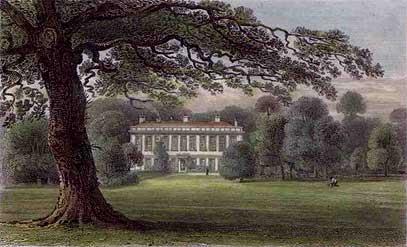
AN00137729_001_l

Whitsunday, 27 May 1798. Four men arrive on Putney Heath in hackney carriages. Their meeting is supposed to be secret, but somehow word has got out and a small crowd is already gathering.

The crowds watch as two of the men choose pistols and take their places opposite each other. One of the other gentlemen raises his hand; the other holds the pistol case and chews a thumbnail.

On the first man’s signal the two antagonists fire without effect. After a short deliberation the process is repeated, the taller of the two duellists firing into the air. This time everyone seems satisfied, and the party return to their respective vehicles.

The duellists were none other than the Prime Minister, William Pitt the Younger, and the leader of the parliamentary opposition, George Tierney (Charles James Fox had seceded from Parliament more or less completely in 1797, and would not return until 1800). Pitt had accused Tierney of a deliberate attempt to obstruct the defence of the country during a debate on an emergency bill to secure additional manpower for the Navy; Tierney had demanded an apology, Pitt refused to back down, and the next day Tierney had issued his challenge.

The country was either fascinated or horrified (and possibly a combination of both) at the prospect of the wartime prime minister putting himself deliberately in harm’s way. William Wilberforce, Pitt’s friend, was doubly incensed by the duel’s taking place on a Sunday, and actually gave notice of a motion on duelling in the House of Commons (he later withdrew it on Pitt’s insistence). Wilberforce said “he had felt more solicitude upon it [the duel] than upon almost any other occasion”.[1]

But how did Pitt’s family react to the duel? Pitt’s brother, Lord Chatham, almost certainly disapproved of his brother making a fool of himself, but if he did he kept his opinion to himself. All we know is that Chatham told Henry Addington, the Speaker, that he had been right not to try and stop the duel taking place: “Lord Chatham remarked that I [Addington] could not have taken any step so injurious to his family … my interfering would have looked too much like collusion”.[2]

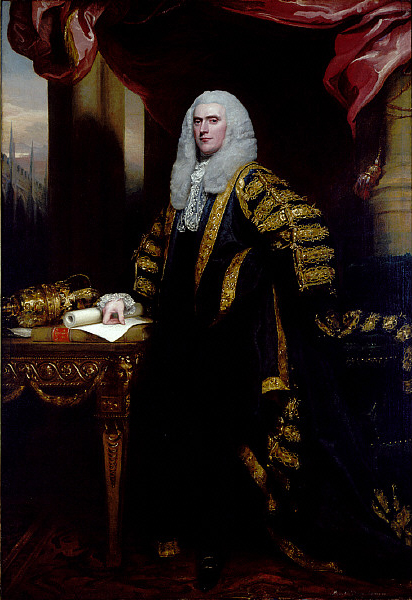
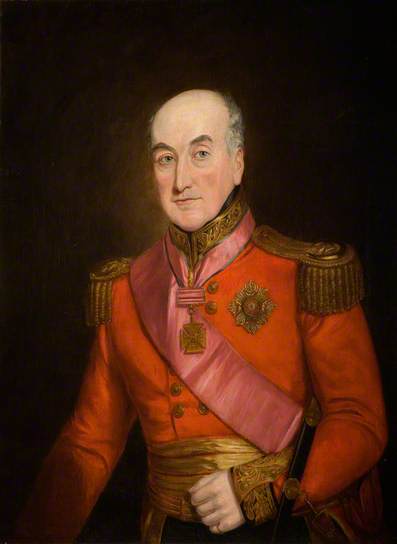
Henry Addington, 1st Viscount Sidmouth as Speaker of the House of Commons

Henry Addington, 1st Viscount Sidmouth as Speaker of the House of Commons

It’s clear from a letter from the King to Pitt, however, that Chatham had (probably quite cheerfully) passed on a stern royal message on the subject of duelling with members of the opposition. “I certainly said nothing to Lord Chatham but what my mind dictated, and I trust what has happened will never be repeated,” the King wrote on 30 May. “… Public characters have no right to weigh alone what they owe to themselves; they must consider also what is due to their country.”[3]

As for Pitt’s elderly mother, aged 77 and not in the best health, I can’t imagine how she must have felt on receiving the following letter from Pitt written on 28 May (Pitt’s 39th birthday):

You will be glad, I know, to hear from myself on a subject in which I know how much you will feel interested, and I am very happy that I have nothing to tell that is not perfectly agreeable. The newspapers of to-day contain a short but correct account of a meeting which I found it necessary to have with Mr Tierney yesterday, on Putney Heath, in consequence of some words which I had used in the House of Commons, and which I did not think it became me to retract or explain. The business terminated without anything unpleasant to either party, and in a way which left me perfectly satisfied both with myself and my antagonist, who behaved with great propriety. You will, I know, hear from my brother on the subject, but I could not be contented without sending these few lines from myself.[4]

In fact Chatham had already written to the Dowager Countess. He did so on Sunday night, so on the 27th, immediately after the duel, so Pitt was a day behind: his letter was old news. Perhaps he had counted on this to an extent, but he must have wondered what his brother said.

Judging from the following letter from Chatham’s wife Mary to the Dowager Countess’s companion, Mrs Stapleton, the Chatham household was all in a flap:

My Dear Mrs S.,

Not knowing that L[ord] C[hatham] had sent to dear L[ad]y C[hatham] by the Mail Sunday night, I would not, for fear by chance, any Letter should have been opened first, say any thing of what had passed. Thank God all is well over, I knew nothing of it till it was so, & the shock it would be to our dearest Dear friend, was my very first thought. I never wrote a more uncomfortable Letter in my life to you than I did yesterday. I did not dare touch upon what was uppermost in my thoughts, & every other subject appeared so trifling. We all say there must be an Embargo laid upon his ever venturing such a thing again. The lower people all say that the King might as well fight as Mr Pitt. Report says that Sheridan is very angry with Tierney on the subject. But what is more important to me is dear Lady Chathams health, send me one line to let me know how she has borne this business. I heard the King tell Lord Chatham from one card table to another last night that Mr Wilson [Dean of Windsor and Pitt and Chatham’s former tutor] who had just come from Burton gave a good account of her, adding how much pleased he was at knowing that she was just now well enough to bear this excitement.[5]

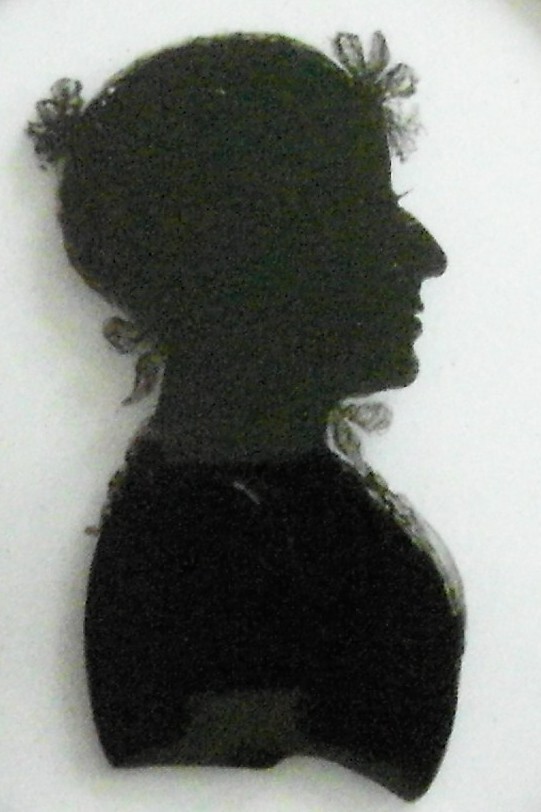
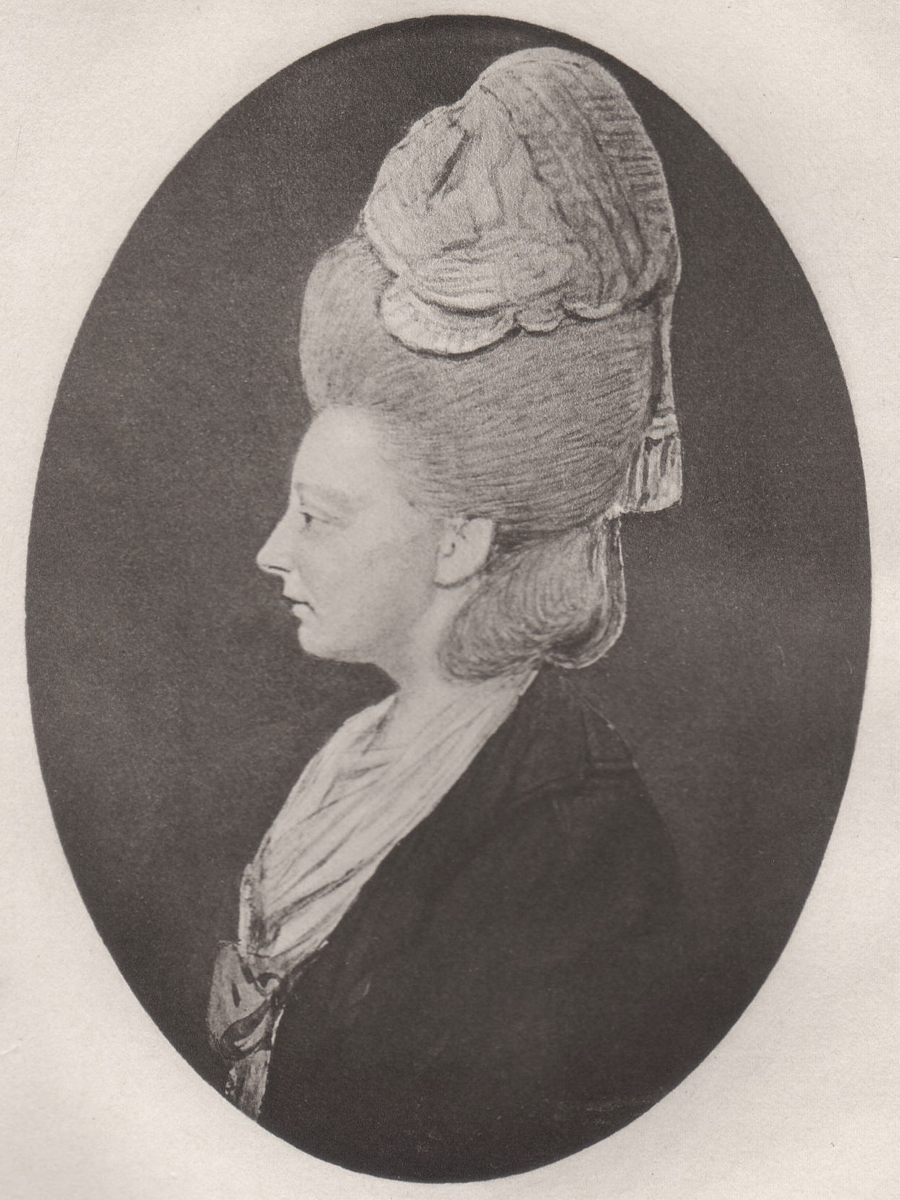
Mary, Countess of Chatham (ca 1800) by Charles Rosenburg of Bath; in the possession of Ron Mills

Mary, Countess of Chatham (ca 1800) by Charles Rosenburg

Oh to be a fly on the wall at that royal card-playing session… Or indeed a fly on the wall when Chatham told Mary about his brother’s duel.

“Good evening, dear. Had a good day?”

“Uhm. Not really. Er. My brother fought a duel with Mr Tierney.”

“Oh dear, that’s — wait. What?”

_________________

References

[1] Express and Evening Chronicle, 31 May 1798

[2] George Pellew, Life of Lord Sidmouth I, 205

[3] Lord Stanhope, Life of Pitt III, appendix XIV

[4] Lord Stanhope, Life of Pitt III, 132

[5] National Army Museum Combermere MSS 8408-114

“My lot has indeed been a hard one”: Lord Chatham and his money problems, again

A while ago I quoted a short bit from one of John, 2nd Earl of Chatham’s letters to Mrs Stapleton, his mother’s former companion, in which he lamented the impact of his brother’s death and wife’s ill health on his finances. On that occasion John did manage to scrape together a loan of one hundred and fifty pounds; but it was not the first time Mrs Stapleton had cause to ask John for a loan … nor was it the last.

142c0-johnhayterlessblurreddetail

John Pitt, 2nd Earl of Chatham (1821)

I found the May 1808 letter referred to above interesting in that John did a bit of muttering about his financial difficulties, but it was NOTHING compared to the two letters I found today. These are full-on hand-wringing affairs, quite uncharacteristic of John, and I imagine they would have made quite an impact on Mrs Stapleton for that reason. Whether it was the impact John wished to have is … debatable, because even I (and I freely admit I am more indulgent towards John than many people would be) found them a bit on the pathetic side. Still, there’s no doubt he was an unlucky enough chap, and even if he manages to blame everyone but himself for his predicament I have no doubt his woes were real enough.

I will quote the letters in full, because they make for impressive reading.

Letter One: Colchester, 13 December 1807

My Dear Mrs Stapleton,

Your letter of ye 3rd Inst[ant] from Wynnstay has been forward to me here, where I have been fixed for some time, going up occasionally to London for business, and to see Lady Chatham who is at Frognall. I shou’d be happy if I cou’d tell you, she was as much recovered as you so kindly wish her, but tho very much better, she had not regained her strength sufficiently, when I last saw her, to come down here with me, but I hope to find her better when I go up again which will be in a few days. I must now however painfull tell you, that I have delayed writing to you several days, from the reluctance I felt to return you the only answer in my power, which is, that at this time I really can do nothing. It is doubly painful to me to write on this subject, as it is scarcely possible I shou’d do it, without complaining of the past, which no one has ever yet heard me do. You know full well the manner in which my hands are tied up, and in which I was left, without the power of raising one single sixpence. The business of Burton, from the difficulties attending it, is not yet closed;[*] and when it is, the whole life Interest I have in it, is not worth much above half of what My Mother’s debts amount to. How I shall be able to deal with them I know not. I hope, but till I see my way, I can only hope, that I may have it in my power to make some arrangement about them. My own incumbrances, which from unfortunate events have pressed hard upon me, I can only get rid of gradually by devoting a larger Portion of my Income regularly to them, than I can well manage to do. Had my poor Brother lived, who was jointly with me called upon to pay My Mother’s debts it might have been more easily accomplished. He thought with me, that they might have been paid out of ye Money for which Burton sold, with ye consent of my Nieces. But now alas, as their prospect of inheritance is so much meaner, the thing is more difficult, nor have they the same temptation to agree to it. I mean by this the Stanhopes, for dear Mrs Pringle wou’d do any thing. Had the Estate, been mine, as it shou’d have been, in failure of my Brothers, I shou’d have desired the principal satisfaction, from its having put it in my power to have paid my Mother’s debts, and instead of the pain of this letter, to have had the happiness of doing at once what you wished. I can say no more, and will only add

That I am My Dear Mrs Stapleton

Your Very Affect[ionat]e

Humble Servant

Chatham

[*] I presume this is a reference to the fact Chatham was sued by the Pinney family over the terms of the sale of the Burton Pynsent estate.

Mary, Countess of Chatham (ca 1800) by Charles Rosenburg

Mary, Countess of Chatham (ca 1800) by Charles Rosenburg

Letter Two: Colchester, 2 December 1810

Private

My Dear Mrs Stapleton,

I did not venture here till yesterday, and had no opportunity of writing to you till this days Post, and I am quite vexed to find, that owing to some business which has engaged me till late, I shall not be in time. The subject of your letter is indeed, as you say, one mutually painful to us both. You do me but justice in believing that I feel, and most truly and sincerely I can assure you, I do, for your situation. But painful as it is to me to say it, I will not disguise the truth or deceive you by holding out expectations which, without some good fortune or other, I confess I do not see the prospect of being able to realise. Had my poor Brother been spared, I hardly know how, even together, we cou’d have met the heavy embarrassments which my Poor Mother left. Alone, I can have but little hope of bringing them to a satisfactory settlement. I have paid already more than I know how to deal with, & the consequence has been that it has so thrown me back in all my own payments, that I am pressed at this moment to a degree of inconvenience that I do not like to own, except in confidence to you. My lot has indeed been a hard one. Lady Chatham’s long Illness, in itself a source of the bitterest affliction, has been attended with an expence, that has more than counterbalanced all the efforts, which by a strict oeconomy I cou’d make to bring my affairs at all around, and it is on her account alone, that I am induced not to turn my back at once upon London, rather than to go on struggling with the difficulties I have to contend with. In this situation I am grieved to say I can do nothing. I have dwelt upon this unpleasant subject more than I had intended, but I felt anxious you shou’d be impressed, that nothing but utter impossibility shou’d prevent me from offering my assistance at this distressing moment, and doing that which it wou’d afford me the highest gratification to find in my power. I will not add more than that I am

My Dear Mrs Stapleton

Always Very Sincerely & Affect[ionatel]y Yours

Chatham

PS. I have said nothing to Lady Chatham about your letter. It wd too much distress her on your account, and I make every thing appear to the best. C

*   *   *

So there you have it. I’m not too sure what Mrs Stapleton’s reaction can have been to the line “my lot has indeed been a hard one”. Poor John had, indeed, had a bad time of it 1807-10, what with Mary being ill, Walcheren and the aftermath, and the loss of his lucrative salary as Master General of the Ordnance. But he was hardly badly off by any standards: he had a combined annual pension of seven thousand pounds, not to mention his salaries as Commander of the Eastern District, Governor of Jersey, and High Steward of Colchester.

I suppose I would have preferred him to say “Yes! Of course I’ll help, even if I can’t afford it!” But then I suppose learning to say no is, perhaps, one of the only ways to get oneself out of debt. And as we all know, John eventually did get himself out of debt, but not before he had learned his lesson the hard way

______________

References

Both Chatham letters are in NAM Combermere MSS 8408-114

They’re real people, you know…

I write about real people. I know, I know, every author writes about “real people”, in that fictional characters come alive on the page of the book they inhabit, but I write about real people. The main characters of The Long Shadow, William Pitt the Younger and his elder brother John, Earl of Chatham, really existed. And for some reason, whenever I find proof that they did so, I am amazed, and I still have no idea why.

Two hundred years or so ago my characters lived and breathed on the earth. They spoke the words that were recorded by journalists and diarists; they wrote the letters I have read in the archives; they lived in the houses I have visited. They went to sleep at night, got up in the mornings (…. or more probably early afternoon, in the case of my boy Chatham), ate huge meals, wore sumptuous clothes, walked the streets of London, relieved themselves, caught the common cold, laughed, and cried, and, well … lived.

I already know this, because I’ve read about it, and yet there is still a sort of dislocation in my head that makes me unable fully to grasp the fact my characters were both real and human.

johnprintWlmPittYngr

^^^ Real people ^^^

A few months ago I made a discovery, quite by accident.* I found this record on the finds.org.uk site, dedicated to recording archaeological finds of historical significance in the UK. I’ve blogged about it before, but I’ll talk about it again.

Why did this find stagger me so much? Because this, dear reader, is John Pitt, 2nd Earl of Chatham’s personal seal. The one he affixed to private correspondence. And it dropped from his watch fob, probably sometime between 1783 and 1790, while he was visiting his mother at her Somerset house of Burton Pynsent, where it was found in 2006 — not, alas, by me, although every time I’ve been back there I’ve kept my eyes peeled in case, you know, he did it twice.

johnseal

Think about it. I knew Burton Pynsent belonged to the Pitt family; I knew the 2nd Lord Chatham would have gone there many times. But here is concrete evidence that he was there, in person: that he was capable of losing things, just like anybody else. I imagine he was pretty annoyed when he found out he had lost it, too. It’s like a glimpse into a timewarp, just a blink of a moment in which the walls of time and space come crashing down.

I’ve had the same feeling so many times while researching John Chatham in particular. I think it’s because he’s virtually invisible in the history books, so to find any evidence of his physical existence is doubly disorientating. Remember my visit to Abington Hall, near Cambridge, which he rented from 1816 to 1821 (possibly longer)? It’s now the headquarters of The Welding Institute (TWI) and the estate changed beyond recognition, covered with prefab offices, storerooms and laboratories, but walking through it was like being haunted by the past.

Perhaps it was because John’s time there was hardly happy, but visiting a house where he actually lived affected me a great deal. There’s not much of “his” house left, but with assistance I was able to piece John’s Abington together. TWI’s records officer showed me the remains of a bridge over Chatham’s stream, the last remnant of his walled garden, the location of his stables, and the double line of lime trees leading to the London road that would have been his drive.

20140602_110853

Chatham, moreover, left his mark. The house’s ground floor still has a flavour of John’s grand early-19th century reception rooms, and the outside still bears the peeling whitewash “inflicted on it by your boy” (as the records officer informed me, accusingly). The welders may have moved in, but I felt almost as though I could reach out through the centuries and brush Chatham’s sleeve with my fingers.

Sometimes, of course, the frisson I get from such a connection comes with a sense of embarrassment. I have often been reminded, while consulting the archives, that I am, essentially, reading someone’s private correspondence. I’m sure Pitt the Elder would have been horrified to know I would read the following line, written to his wife, Lady Hester, shortly after she had given birth to their third child: “How I long, now that you are out of the straw, to have you in the fragrant grass?” (National Archives Chatham MSS PRO 30/8/5 f 205) The historian always, of course, has something of the voyeur in him or her, but I still won’t be getting that image out of my head any time soon.

So yes: real. Not real in my head, but real in the flesh, two hundred years ago. I’ve stood over the Pitt family vault in Westminster Abbey and tried to come to terms with the fact that the people I have read so much about were there only a short distance beneath my feet. I can’t do it. I’ve touched things that belonged to them — I’ve seen John’s own miniature of his wife, held his cutlery, walked his estates, and I even have a letter he wrote hanging on my wall downstairs — but for some reason I can’t get over this barrier. I can’t comprehend that, even though they are my characters, they will never completely belong to me.

Surely I’m not the only one?

__________

* Most of my best discoveries have been made by accident: one day I will write a post about my own personal Historical Research Fairy, who tugs me by the skirts, hisses “Pssssst!” in my ear, and places the right document in my hands, or turns my eyes to just the right place on a gallery wall.

A letter from Lord Chatham, February 1806

I recently received a CD-ROM full of letters written by the 2nd Earl of Chatham, now in the possession of the National Army Museum. Mostly the letters dealt with Ordnance matters, since John was writing in his capacity as Master-General of the Ordnance at the time, but one letter in particular leapt out at me. It was written by John to Sir John Macleod, Deputy Adjutant-General of the Royal Artillery, on 9 February 1806.

snippet

At this point John was the outgoing Master-General. His brother, William Pitt the Younger, had died on 23 January, and his ministry had not long survived him. The “Ministry of All the Talents” under Lord Grenville had replaced John as Master-General with Lord Moira, and John was writing to Macleod to thank him for his service.

The letter is especially interesting because I have not seen many letters written by John in this period at all. All of them have a slight deer-in-the-headlights overtone, as though John had been partly crushed by the calamity of his brother’s death and loss of office. I get the impression he was finding it difficult to cope, and his situation was not helped by the fact his wife, Mary, Countess of Chatham, was suffering from a life-threatening illness at the same time.

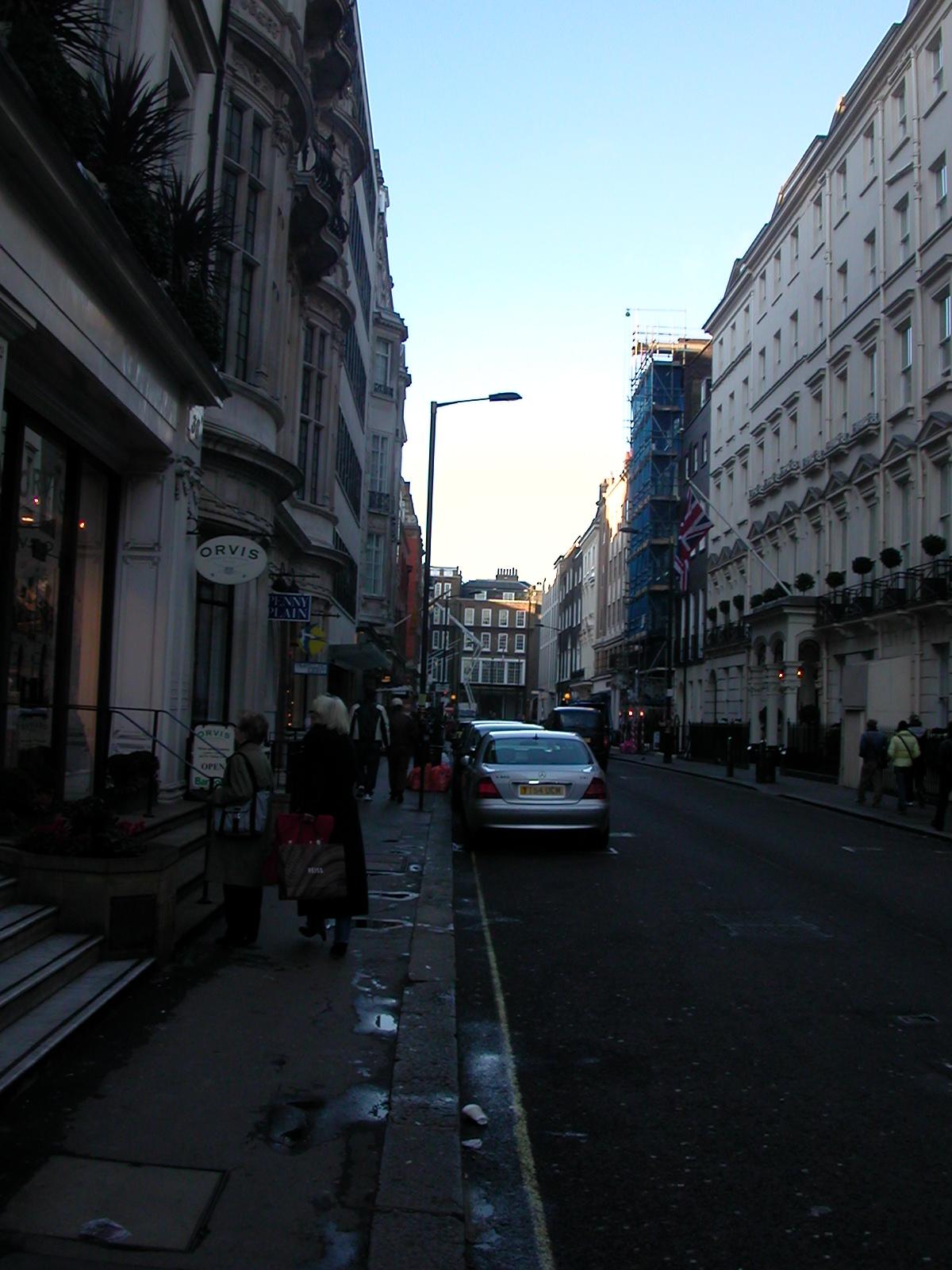
Dover Street today (wikimedia commons)

Dover Street today (wikimedia commons)

John’s letter to Macleod bears all this out, and I will quote it in full here. The letter is written from Dover Street, the house to which John moved in a hurry when he lost his office, unable to afford his St James’s Square house any longer.

“Dover Street Feby. 9th 1806

My Dear Sir

I shou’d not have delayed, till now thanking you for your kind letter, but that a great deal of business of various sorts, added unfortunately, to Lady Chatham’s illness, has not left me a single moment, and indeed, as you will think not unlikely, under circumstances of so much distress, I have been far from well myself. I have only to assure you, My Dear Sir, that I shall always look back with great pleasure to the time of our confidential intercourse, and which I can most truly say has impressed me with sentiments of ye sincerest personal esteem and regard towards you. I certainly do not quit a department, to which I have so much reason to feel warmly attached, without considerable regret, but I assure you, that regret is much diminished from the consideration of the hands into which, I have surrendered it [Lord Moira]. I wish I cou’d have the satisfaction of enabling you to give Lady Emily, and your daughters, a better account of Lady Chatham, but her amendment, is, I am sorry to say, as yet but inconsiderable. Pray have the goodness to make my kindest remembrances to them, and I need not add how happy I shall be to see you, when you are enough recovered, which I hope will be soon.

Believe me

My Dear Sir

Yours Very Sincerely

Chatham”

[NAM 1977-01-13]

“My poor afflicted Sister”: Lady Chatham’s first mental illness, 1807-8

In May 1808 John, 2nd Earl of Chatham braced himself to write to his mother’s old companion, Catherine Stapleton. Mrs Stapleton (the “Mrs” was a courtesy title only, since she never married) had lived more or less permanently with the Dowager Countess of Chatham from 1782 until Lady Chatham’s death in 1803. She thus had a strong claim on John’s remembrances, although I have a feeling she never forgave him for selling Burton Pynsent in 1805.

By 1808, though, Mrs Stapleton was low on funds. I can only imagine sheer desperation drove her to request assistance from John, whom she must have known was not in a position to offer much assistance. He wrote back after a week or so with a draft of money for £150, the best he could do given his bank account was “strictly appropriated, in order to get rid gradually of some incumbrances, which ye misfortunes of late years have brought, to press very heavily upon me.”

Most of these “misfortunes” were clear enough. Many of them were self-inflicted, and for more see my post on the subject of John’s finances generally. I suspect, although I have not yet been able to substantiate this, that John had been sued over the sale of Burton Pynsent by the purchaser of the estate, John Pinney, and the fallout of this was no doubt one minor “misfortune” . The more significant ones were, most obviously, the death of John’s brother William Pitt in January 1806 and the subsequent break-up of his ministry, during which John Chatham lost the salary he had received as a Cabinet member in continuous service since July 1788. In May 1808 he was back in office, but presumably his credit had not yet recovered from eighteen months without a salary.

But there was one other misfortune of note, and John touched on it towards the end of his letter. “Lady Chatham is I hope essentially better, but far from well yet,” he wrote. “This has been a year of sad distress, and confinement to me, but upon the whole I am well” .[1] In November 1808, after another lengthy spate of correspondence (again on financial difficulties), John closed a letter to his banker Thomas Coutts by revealing his wife was still extremely unwell: “I have not seen Lady Chatham for some time, but form her letters I hope she is rather better than she was, tho’ her amendment, I am sorry to say, has been very slow.”[2]

Mary, Countess of Chatham

Mary, Countess of Chatham

Readers of this blog may recall my discovery, in April last year, that John’s wife Mary suffered from a severe mental illness towards the end of her life. Whether her illness was caused by schizophrenia or something metabolic I am not qualified to say, but it turns out her troubles from 1818 onwards were not unique. Mrs Tomline’s lengthy, somewhat voyeuristic letter to Sir Henry Halford describing Mary’s 1819 condition made a passing reference to a previous attack: “[I] reminded her [Lady Chatham] she had recovered from a former illness … and expressed perfect confidence that she would again recover.”[3] Sir Henry Halford himself recorded, in his diary kept during the period of his attendance on mad King George III, the King early on expressing confidence in Halford’s skill, for he had “saved Lady Chatham from being delivered over to the Mad Doctors.”[4]

Sir Henry Halford (Wikimedia Commons)

Sir Henry Halford (Wikimedia Commons)

A little digging revealed that Mary Chatham had, in fact, been ill for over a year by the time John wrote to Mrs Stapleton. She may in fact not have recovered from the “delirious Fever” that nearly prevented John attending his own brother’s funeral in February 1806, and which marks the beginning of the mental troubles that would plague her on and off for the rest of her life.[5] Certainly she was not well in April 1807, as is made clear in a letter, almost certainly written by her sister Georgiana, in the Leicester and Rutland Record Office Halford MSS.[6]

Georgiana Townshend was Mary’s only older sibling, born in 1761. She was unmarried, and seems to have spent much time as a live-in nurse to Mary during her lengthy periods of ill health, starting with Mary’s rheumatic episode in 1784. Her anonymous letter to Halford (then plain Henry Vaughan) of 14 April 1807 is especially interesting because it corroborates so many of the symptoms Mary suffered from during her relapse ten years later: this was clearly an attack of the same illness, whatever it was.

The letter, obviously written in distress by a woman at the end of her tether, makes difficult reading. As happened in 1818, Mary seems to have struck out, often literally, at those who were closest to her. Georgiana recorded Mary’s use of “violence” towards her sister and mother, as well as her use of “horrid language”, to the extent that the Dowager Lady Sydney had “really become quite afraid” of her own daughter. Georgiana did not, however, think her mother fully understood the severity of the situation. Lady Sydney kept waiting for Mary to snap out of it: “If she (my poor Sister is a little chearfull) her real illness is forgot, & ‘she can be well when she pleases’. Will any body of common Sense think she would not then always be so?”

Mary was clearly all too aware of her own condition, and that Georgiana was reporting everything to Halford. “I hope you never talk of my mind,” Georgiana quoted to Halford from Mary’s latest letter, adding, “that last word was hardly intelligible” . Mary knew she was caught up in a spiral of depression, but could see no way back out to the light, trapped as she was on a circular, claustrophobic path: “[She] has no better opinion of herself … saying she still lived too shut up a life feeling unfit for every thing & making herself more unfit by doing so” . Mary’s inability to break away from the blackness made her moods worse. Georgiana quoted another letter that was little more than a desperate cry for a help Mary knew did not exist:

My cold is better but I am shocking horrible in mind & spirits &c. Oh why, why write to write this so, keep it to yourself … or rather burn it, tell me I may be suddenly different. Nonsense my head can not go on so. God bless you.

She displayed suicidal tendencies, as she was to do ten years later, although Georgiana seemed to think there was no real danger. Georgiana reported her muttering “she could not live in this way (that you perceive is the old Story) [and] she must put an end to it” .

Mary was of course a married woman, and in every marriage there are two people. John had promised to support his wife in sickness and in health, but he cannot have known when he did so just how much sickness there would be in Mary’s life. He and Mary had always been a close couple. Her illness, and its nature, appears to have knocked him completely sideways. He dealt with it in much the same way as he dealt with most of the major problems in his life: by pretending it did not exist. Georgiana  referred to John’s wrapping himself up in his armour of denial:

She will not think he thinks her well, tho’ she tells my mother nobody thinks her well, but him. … She has regretted to me that poor L[or]d C[hatham] thought her getting better when she was as ill as ever, & alas! there is I fear too much truth in that.

johnprint

John’s stiff-upper-lip attitude may have helped him get by on the surface, but unfortunately it was exactly the worst thing possible for Mary. Inevitably their close marriage, subjected to almost unbearable pressure, began to crack. Georgiana’s letter gives an interesting, poignant vignette into the impact of Mary’s illness on her domestic arrangements. Either by medical advice, or because John, too, was not immune from Mary’s violent fits, they were living in different apartments for the first time in their marriage. “I am certain their being on separate floors must keep up the irritation,” Georgiana noted, “but that no-one can help, but she never can have confidence in his thinking her better, while she does not live as usual.”

If only John could wake up, smell the coffee and see what impact his attitude had, but Georgiana suspected it was impossible. The self-replicating nature of the issue distressed her: “She [Mary] cannot get back to where she was with him, & a most unhappy being she certainly is.”

Mary’s sense of entrapment must have been massively increased by her status as a cabinet minister’s wife. John had joined the Duke of Portland’s cabinet as Master General of the Ordnance and, as such, required to attend Court functions, hold dinners, and appear in public on a regular basis. It is clear from Georgiana’s letters that he expected Mary to appear with him, if only to keep up appearances of normality: the scandal, if news of her condition leaked out, would be great. “I dread her making her case more known,” Georgiana fretted to Halford. “… All her servants see it, & I live in dread of a scene.”

The attempts to keep Mary propped up and looking normal are horrifying to read. Georgiana described the hell in which Mary existed, as a public figure required to perform a social role. She quoted a letter from Mary’s maid:

I leave you to judge in what state she [Mary] must have been, before she would attempt to Strike me, which her L[ad]yship actually did on Tuesday at dressing time, fear made me shrink from her, & she immediately became conscious of what she had done, & kept on mumbling to herself … She was very bad in the afternoon, but much worse at dressing time, she never struck me before, but has many times gone off in a very violent way. I asked her L[ad]yship to take some Cordial, which she did[,] afterwards finished dressing, & went out very quietly with my L[or]d. … Since Tuesday her L[ad]yship has been upon the whole tolerably quiet, she complains of being very much tired in the Morning. Her L[ad]yship does not go to bed till after two in ye Morn[in]g.

As Georgiana noted, “She will be relieved by there being no Drawing Room Thursday.” Mary’s existence, drifting in a drug-induced fog from function to function, must have been unimaginable.

Nor was it enough to prevent gossip. By the end of the year Mary’s state was, unfortunately, the stuff of opposition tittle-tattle. “Lady Chatham is at Frognall … under some symptoms of a mental derangement,” Lord Auckland reported to Lord Grenville in November 1807, and in January 1808 Thomas Grenville wrote that Mary was “much disordered in her senses.”[7] These were family connections — the Grenvilles were John’s first cousins — but they were not friendly either to John or the ministry he represented. I find it hard to believe that Mary’s condition was not more widely known.

Mary’s 1807-8 illness may have had a long-term significance. I suspect very much it was a strong reason for Chatham pulling himself out of the running as a potential First Lord of the Treasury following the collapse of the Ministry of All the Talents and the Duke of Portland’s growing ill health. I suspect, too, it was one of the primary reasons why Chatham declined the command of the British Army in the Peninsula. Mary Chatham’s mental problems cast a long shadow. On the one hand they ensured that Arthur Wellesley was appointed in the Peninsula, a major step on the road to victory over Napoleon; but on the other they set John Chatham on his path to Walcheren, and disgrace.

______________

References

[1] Lord Chatham to Mrs Stapleton, 11 May 1808, National Army Museum Stapleton Cotton (Combermere) MSS 9506-61-3

[2] Lord Chatham to Thomas Coutts, 23 November 1808, Kent RO Pitt MSS U1590/S5/C42. I am grateful to Stephenie Woolterton for alerting me to this letter, and transcribing it for me.

[3] Elizabeth Tomline to Sir Henry Halford, undated but September 1819, Ipswich RO Pretyman MSS HA 119/562/716

[4] Sir Henry Halford’s diary [1831-2], Leicester and Rutland RO Halford MSS DG24/941 f 56

[5] Bishop of Lincoln to his wife, 31 January 1806, Ipswich RO Pretyman MSS HA 119/T99/26

[6] All quotations over the next few paragraphs come from [Georgiana Townshend] to Henry Vaughan [later Sir Henry Halford], 14 April 1807, Leicester and Rutland RO DG24/819/1; and [Georgiana Townshend] to Henry Vaughan [later Sir Henry Halford], 14 April 1807, Leicester and Rutland RO DG24/819/2

[7] Lord Auckland to Lord Grenville, 6 November 1807; Thomas Grenville to Lord Grenville, 9 January 1808, Manuscripts of J.B. Fortescue IX, 142, 171

Interview with David Cook

http://thewolfshead.tumblr.com/post/107243262733/talking-to-a-reiter

David Cook, author of Liberty or Death, Heart of Oak, Blood on the Snow, and Marksman, was kind enough to interview me about The Long Shadow on his blog. Check it out if you’re curious. I much enjoyed answering the questions. 🙂

Thank you, David, for the opportunity!

The 2nd Earl of Chatham’s muddled finances

Had John, 2nd Earl of Chatham been asked which year of his life was his (to coin a phrase) “Annus Horribilis”, he would very probably and with good reason have replied 1809. He might equally, however, have replied 1821, and with just as much reason.

It was not a good year. He was pushed into taking up his government at Gibraltar, a place he disliked and which very nearly killed him. His wife, who had spent most of the past two and a half years mentally ill, died suddenly in May, leaving John profoundly depressed. And a King’s Bench judgment opened a free-for-all on John’s finances, laying bare a woeful tale of debt, default, and neglect that stretched back at least forty years.

“Money? What’s that?”

John was not exceptional in this. Improvidence was a family tradition. Paying bills, to the Pitts, was something that happened to other people. Amazingly they seem to have had a very close relationship with their banker, Thomas Coutts, whom I would not have blamed for running away screaming every time he saw a Pitt family member approaching his front door. Presumably the effect of the publicity of having Lord Chatham and Mr Pitt on Coutts’ books outweighed the disadvantages incurred by their being constantly overdrawn.

Thomas Coutts, after Sir William Beechey (Wikimedia Commons)

Thomas Coutts, after Sir William Beechey (Wikimedia Commons)

John had long been notorious for his money problems. Wraxall spoke of “his total want of economy” in his memoirs, and there were rumours he had only been appointed commander-in-chief of the 1809 Walcheren expedition because of his straitened finances.[1] He definitely loved pomp and luxury, and his lifestyle as a peer of the realm was a costly one. Here’s a description of a new carriage he had made in January 1801:[2]

morningpost20jan1801chathamcarriage

Swish, and no doubt expensive too.

“Debts contracted at play”?

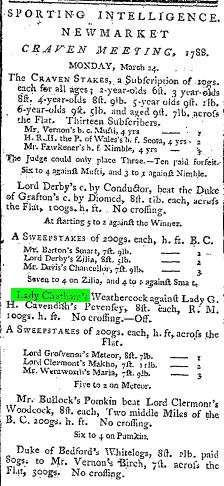
Of course there’s a distinct possibility that John’s financial problems were not simply due to extravagance. Unlike his brother William, John may have been a keen gambler. To be honest I’ve not found any direct evidence of this, but it’s a possibility, and there are some hints. He definitely had an interest in horse racing, no doubt encouraged by his living at Cheveley Park near Newmarket for ten years. I’ve spotted him eyeing up a horse put up for sale by the Duke of Portland in 1780, and his wife definitely had a horse running at least one year for money:[3]

timesmarch261788ladychathamshorse

It wasn’t just horse racing, though. In 1793 John was rumoured “to sit up all night at a club”, and presumably this involved gambling.[4] In 1844 Cyrus Redding published “Recollections of the Author of Vathek“, that is to say William Beckford, who had spent his formative years with the Pitt children and informed his biographer that John had sold his father’s house of Burton Pynsent “to pay debts contracted at play”.[5] Interesting theory, although in fairness to John there were other demands on the estate forcing him to sell.

Most damning of all was the judgment of his step-nephew, James Stanhope. Stanhope visited Burton Pynsent, some years after John sold it, and was moved to write a bitter poem on the subject of his uncles’ comparative inheritances:

The immortal Chatham ee’r [sic] he died

These gifts he thus assigned

Take then my fortune John, he cried

Thou William hast my mind[.]

This son the Part improved with toil

That ’twas his Countrys weal;

The former Burton learnt to spoil

To shuffle, cut, and deal.”[6]

*cringe*

James Stanhope may have been a little unjust. Even if John was a gambling man, the “fortune” he inherited wasn’t much cop. Yes, Parliament settled a pension of £4000 on the Chatham earldom after Pitt the Elder’s death in 1778, and in 1803 John became the “third life” to hold the £3000 pension settled on his father for three lives in the 1760s, but the latter was hardly ever paid and the former barely offset the long-term effect of Pitt the Elder’s own spendthriftiness.

John’s inheritance

William Pitt the Elder, 1st Earl of Chatham by William Hoare (Wikimedia Commons) [b]

William Pitt the Elder, 1st Earl of Chatham by William Hoare (Wikimedia Commons) [b]

Pitt the Elder just didn’t give a damn. Not the slightest. He would quite happily borrow huge sums of money off family and friends– £10,000 in one go in 1777, for example– without the faintest intention of paying it back.[7] (His wife tried her best, but since she was never able to stop her husband spending it must have been like holding back the tide.) Both the properties John inherited, Hayes Place in Kent and Burton Pynsent, were heavily mortgaged: Burton for over £13,000, Hayes for £10,000. Burton supposedly brought in £3000 a year, but this was rarely realised and, in any case, barely paid for the upkeep of the estate itself. It did not help that all three of the younger Pitt children had been assigned various sums in their father’s will, to which they were entitled on the security of the mortgages taken out on the two properties.[8]

In short, when John inherited the estate, his “fortune” consisted almost entirely of debts. The £4000 pension attached to the earldom was the only thing standing between him and utter penury: it was a good sum, but without lands to back it up, did little but allow the Earl of Chatham to live according to his rank.

The shock, therefore, is that Burton Pynsent remained so long in Pitt family hands, gambling debts or no. John sold Hayes in May 1785 to Sir James Bond (… no, not that one) for £8540, which didn’t even cover the mortgage. Even so, the funds were divided between members of the Pitt family (William, for example, received just under £4400).[9] His mother used Burton Pynsent as a dower-house until her death in April 1803, but even as early as February 1803 John was clearly getting itchy: he had the farms and lands valued, clearly with the intention of selling as soon as possible.[10] He finally managed to sell it in 1805, and became officially “landless”.

Fire your accountant, John

Small wonder, then, that John was so much in debt. He and his brother William started early, and often together. In December 1780 (around the same time, in fact, that John was eyeing up the Duke of Portland’s racing horse) they jointly paid a lump sum of £3500 to the Duke of Rutland in return for an annuity of £300 derived from three of Rutland’s Cambridgeshire estates. (John rather cavalierly countersigned the agreement from Newmarket, where he was hunting at the time.)[11] This lump sum was acquired partly through two separate loans for £1500, secured on two chamber sets at Lincoln’s Inn belonging jointly to William and John (the sets themselves were purchased with at least two separate loans).[12] Yes, you read that right: a loan secured on a loan, to pay for a loan.

head-desk-1In 1785 John was at it again, borrowing a total of £3150 from three separate moneylenders. In the 1790s John and William again jointly borrowed two separate sums of £6000 and £7000 from Coutts, the first through his bank and the second on a private basis. At least John seems to have paid most of the second loan back in 1804.[13]

And this is presumably only skimming the surface: like his father, John was quite happy to accept money from whoever was willing to give it, although I’d like to think he had a *leeeeetle* more of an intention of paying it back. His official cabinet salary, which he received 1788-1806 and 1807-10, did not make much difference to his borrowing habits. He borrowed money from his (himself heavily indebted) brother William, and entered into a number of bonds with his friend Lord Camden: one in October 1797 for £1500 at 5%, and one in 1806 for £4000, also at 5%. All these loans were secured on the same source (and anyway John had no property by 1806): the £4000 Chatham Earldom pension, itself already signed over a thousand times over to Thomas Coutts, the fashionable moneylenders the Goldsmid brothers, and others.[14]
Abraham Goldsmid, one of Lord Chatham's many moneylenders (Wikimedia Commons)

Abraham Goldsmid, one of Lord Chatham’s many moneylenders (Wikimedia Commons)

Small wonder, then, that when John was out of office in 1806 he had to resort to selling off a selection of his father and brother’s books:[15]

morningpost25dec1806johnsellsbooks

At this point I must stop before I beat my head against the desk so often I lose consciousness, but it’s literally a flavour of what was going on, not a comprehensive list.

The King’s Bench Judgment

Astoundingly, nothing much seems to have come of all this borrowing and mortgaging and shifting until sometime in late 1820 when John finally found a creditor who put his foot down and demanded his money back. It must have come as a shock, particularly when the man dragged John to court– especially when John lost.

Court of King's Bench in the 19th century (Wikimedia Commons)

Court of King’s Bench in the 19th century (Wikimedia Commons)

I’m not clear on the details, as I haven’t managed to find the court case in question, but it seems John borrowed £8126 from Mr John Burke. I’m not clear on who Mr Burke was, but what he was was determined, and when he discovered John did not have the means to pay him back, he sued. The resulting King’s Bench judgment clearly required John to pay Burke appropriate damages, in default of which the bailiffs would be sent in to seize his property. As a cherry on the cake, John was also required to pay Burke’s legal costs.[16]

Needless to say, John did not have the ready money. He had not had a government salary since 1810, although he did have his emoluments as Governor of Jersey, High Steward of Colchester (till 1817), and Colonel of the 4th Regiment of Foot. Still, his wife had been constantly ill for two years: whatever ready cash he had, presumably, had mostly gone on her healthcare. In January 1820 John had been made Governor of Gibraltar, with a salary of £2800, and perhaps it was this circumstance that inspired Burke to try his luck.[17]

To avoid the embarrassment of the bailiffs, John had no choice but to negotiate. His agent, Joseph Ward, met with Burke’s agent, Francis Robertson, and hammered out a compromise. The result was a bond, signed 11 January 1821:

Whereas the said John Earl of Chatham hath contracted and agreed with the said John Burke for the absolute sale to him the said John Burke of One Annuity or clear yearly Sum of Six hundred and ninety one pounds two shillings and six pence to be paid to the said John Burke his Executors Administrators and Assigns during the natural life of the said John Earl of Chatham…

The money was due to be raised from the poor £4000 pension attached to the Chatham earldom, already mortgaged in all directions beyond its ability to bear. This time, however, John was caught coming and going: if he defaulted on his quarterly payments by 28 days, in went the bailiffs, out came his pretty furniture.[18]

At some point after this date, however, Burke remembered that there were further damages to consider, because the money Chatham had borrowed had been raised from selling the £10,000 worth of stock Burke’s wife, Louisa Angelo Tremamondo, had brought as her dowry. The £600 annuity was therefore raised to £1196, and the money claimed in damages to £13,075.[19] Possibly this was due to interest, but it does not appear to be a separate agreement.

I cannot imagine the face John made when he put his pen to that bond, but sign it he did.

…. And it just keeps getting worse

So what did John do to finance his brand spanking new debt? You guessed it. He took out three life insurance policies, with three insurance companies: one with the Fire and Life Insurance Company for a total of £5000, one with the Provident Institution for £1800, and one with the Union Life Office for £400. A total of £7200 to be paid on his death to Joseph Ward, who would presumably then turn the proceeds over to Burke and clear the debt.[20]

Unluckily for Burke, he did not live long enough to benefit from the arrangement and died in December 1824. John, however, didn’t benefit either: he was bound to continue his quarterly payments to Burke’s “Executors Administrators and Assigns” during the term of his “natural life”, which meant continuing payments to Burke’s widow Louisa. Mrs Burke, therefore, received nearly eleven years’ worth of payments of £1196– about £13,000 in all. She received her last payment of £336 in October 1835 from John’s executors.[21]

Open season!

At around this time– probably not coincidentally– the husband of John’s niece, Harriot Hester, suddenly remembered something VERY important.

Sir William Pringle had married Harriot Hester Eliot, only daughter of John’s sister Harriot, in May 1806. Harriot Hester had lived for two and a half years with her aunt and uncle in London and remained close to the Chathams. Although there had been issues with her marriage to Pringle– John seems to have considered the man, who was fifteen years older than Harriot Hester, to be a fortune hunter– the couple were always welcome at John’s house, and Sir William and John frequently went hunting together.[22]

In February 1821, though, Sir William Pringle wrote to George Pretyman-Tomline to express concern about the terms of his wife’s fifteen-year-old marriage contract. By the terms of her marriage contract, Harriot Hester was due £3795 plus interest, which was to have been her mother’s “portion” or dowry, a sum that had not become fully available until Burton Pynsent was sold in 1805.[23] By 1821 this sum had not yet been paid, and Sir William wrote to ask Tomline to press Lord Chatham on the matter as Pringle’s solicitor had advised him to open a case of “culpable neglect”.[24]

I find it very hard to believe that Sir William Pringle had spent fifteen years not noticing that his wife (who was, incidentally, worth a vast amount of money, both in terms of property and ready cash– well over £10,000 in fact) was owed a whisker under £4000. I strongly suspect he chose February 1821 to press the point, because his solicitor reminded him there was now a precedent of Lord Chatham being taken to the legal cleaners and scrubbed till it damn well hurt.

Again, Chatham had no money; again, he had no choice. His solution was wearingly familiar, as Pringle informed Tomline: Chatham had proposed to secure

the reversion of the produce of the Burton Pynsent Estate to Lady Pringle & her Children, by assigning to trustees two policies of insurance on his life made at the Equitable Insurance Office, which are valued at £11,000, & by vesting the remainder of the money [from Burton Pynsent] in trustees, so that at his death the sum of about £16,000 would be forth coming to those entitled to it.

This arrangement tho’ certainly not so satisfactory as if the whole money had been vested, Lady Pringle & I have as far as we are concer’d, acceded to, from having been advised so to do, by our Solicitors & from being informed, & having every reason to believe, it was the best & indeed the only security Lord Chatham had to give.[25]

I imagine hunting visits at Lord Chatham’s house were rather more strained after this.

And yet…

The events of 1821 seem to have been a caution to John. He did take out at least one more life insurance policy on behalf of his other heir, William Stanhope Taylor, grandson of John’s sister Hester, and on John’s death at least one of the life insurance policies remained unpaid because John had (unsurprisingly) failed to keep up his annual payments, but all in all he seems to have behaved himself.[26]

He lived much more simply than he had done, renting a house in Brighton and mortgaging a (comparatively modest-sized) house in Charles Street. When he expired in that house on 24 September 1835, his heirs sold everything they could– even the servants’ bedlinen– but they balanced the books within a month.[27]

johnsfuneralby10nov1835times

In the end, the “improvident Lord Chatham” was virtually the only member of his family to die solvent.


References

[1] Sir Nathaniel Wraxall, Posthumous Memoirs of my Own Time, III (London, 1836), 130; H.B. Robinson, Memoirs of Sir Thomas Picton, I (London, 1836), 231

[2] Morning Post, 20 Jan 1801

[3] Edward Thoroton Gould to the Duke of Portland, 27 Nov 1780, Nottingham University Archive Portland MSS PwF 4.284; Times, 26 March 1788

[4] Sir Gilbert Elliot’s diary, 11 September 1793, quoted in Paul Kelly, “Strategy and Counter-Revolution: the Journal of Sir Gilbert Elliot, 1-22 September 1793”, EHR 98 (387) April 1974 328-348, 342

[5] Cyrus Redding, “Recollections of the Author of Vathek“, printed in The New Monthly Magazine 71 (2) 1844, 302

[6] Dacre Adams MSS, British Library Add MSS 89036/2/4 f 101

[7] Stanley Ayling, The Elder Pitt, Earl of Chatham (London, 1976), p 406

[8] John Ehrman (Ehrman I), The Younger Pitt: The Years of Acclaim (London, 1969), p. 19

[9] Ehrman I, 19

[10] National Archives Chatham MSS PRO 30/8/371 f 158

[11] Ehrman I, 20; the bond is dated 1 December 1780 and is at Ipswich RO, Pretyman MSS, HA 119/4/4/9/3/2

[12] Ehrman I, 20

[13] Tresham Lever, The House of Pitt (London, 1947), p. 359; Ehrman I, 601-2, 602 n 1

[14] Bond between Chatham and Camden, 3 October 1797, Kent RO Camden MSS CKS-U840/E20; bond between Chatham and Camden, 24 June 1806, Kent RO Camden MSS CKS-U840/E21; and National Archives Chatham MSS PRO 30/8/371 for the deeds mortgaging the Chatham pension

[15] Morning Post, 25 December 1806

[16] Bond between the Earl of Chatham, John Burke and Joseph Ward, 11 January 1821, National Archives Chatham MSS PRO 30/8/370 f 183

[17] Report from the select committee on the colonial military expenditure… (London, 1834) VI, 7

[18] Bond between the Earl of Chatham, John Burke and Joseph Ward, 11 January 1821, National Archives Chatham MSS PRO 30/8/370 f 183

[19] Bond between Francis Robertson and Louisa Angelo Burke, 17 June 1828, National Archives Chatham MSS PRO 30/8/370 f 238

[20] Bond between Francis Robertson and Louisa Angelo Burke, 17 June 1828, National Archives Chatham MSS PRO 30/8/370 f 238

[21] National Archives Chatham MSS PRO 30/8/370 f 152

[22] Chatham to George Pretyman-Tomline, 22 September 1819; Chatham to George Pretyman-Tomline, 19 January 1820, Ipswich RO Pretyman MSS HA 119/562/688

[23] Marriage settlement of Harriot Hester Eliot and William Pringle, 16 May 1806, Cornwall RO EL/647. I am grateful to Stephenie Woolterton for putting this document my way

[24] Sir William Pringle to George Pretyman-Tomline, 12 February 1821; William Eliot to George Pretyman-Tomline, 5 March 1821, Ipswich RO Pretyman MSS HA/119/562/688

[25] Sir William Pringle to George Pretyman-Tomline, 27 April 1821, Ipswich RO Pretyman MSS HA 119/562/688

[26] Life insurance policy dated 17 August 1833, National Archives Chatham MSS PRO 30/8/370 f 89

[27] Times, 10 Nov 1835
Mary, Countess of Chatham’s “Rheumatick complaint”

[Mary] has not I think been quite well lately. Some how or other she has got a Lameness in her Hip. It is better now and perhaps nothing of any Consequence but I think it makes her look Languid and pale.”[1]

So wrote Lady Harriot Pitt to her mother of Mary Elizabeth Townshend, soon to be engaged to Harriot’s brother Lord Chatham. Mary’s lameness passed, and no further mention is made of it in Harriot’s correspondence. Three weeks later John Chatham proposed to Mary Townshend; within two months they were married. Nobody anticipated that Mary would spend nearly the whole of the first three years of married life an invalid.

The “lameness” Harriot noticed in May 1783 may have been due to a number of things. It may have been a congenital issue, such as hip displasia, that was not picked up until later in life. It may have been early onset arthritis; it may have been some sort of deeper-seated metabolic illness like fibromyalgia. It may have been something entirely different. Whatever the cause, and whatever brought on the attack (a miscarriage perhaps?), by April 1784 Mary had taken to her bed.

The first record I have seen of her illness is Frederick Robinson writing to his brother, Lord Grantham, on 1 April 1784. “Ly. Chatham suffers cruelly when she moves but is rather better,” he wrote, suggesting Mary had already been ill for some time.[2] Three weeks later there was little improvement. On 20 April 1784, in the midst of a general election, William Pitt the Younger wrote to his mother that “Lady Chatham mends a little”. On the same day Mary’s sister Georgiana, devotedly nursing her younger sister, also wrote to Mary’s mother-in-law:

My Sister had a very good night last night, and I hope is better to day. Dr Warren has put off her getting up till tomorrow, on account of her being still a little fatigued with the Physic she took yesterday. Indeed I flatter myself that she is certainly gaining ground, & I hope when the weather is quite fine, that her amendment will be much quicker. It is really quite horrid to think how much she has suffered. … Getting up has hitherto always thrown her back, owing to the fatigue from the great pain she has always suffered, which naturally gives her a great dread of it. … She feels [the pain] more in her knee & leg than she did. What would I give to see her walk again.”[3]

But Mary did not walk again for a very long time. In November 1784, Anne Robinson (Lord Grantham’s sister) reported that “Lady Chatham … now talks of Standing which she has not done for above eight months”.[4] Two months later Mary was still ill, although by this time she seems to have been improving. Lord Grantham noted he had heard she was now able to use a “Merlin’s Chair”, a sort of wheelchair invented by John Joseph Merlin, a Swiss inventor.

A "Merlin chair" from Kenwood House (photo Ashley Wilde)

A “Merlin chair” from Kenwood House (photo Ashley Wilde)

The chair enabled Mary at last to navigate around her house and her spirits rose accordingly: her “health is now very good”, Lord Grantham reported. “She has Strength sufficient to get in and out of her Chair.” By the middle of January she was finally walking across her room for the first time since at least the previous March.[5]

A Merlin chair from 1811 (Wellcome Library)

A Merlin chair from 1811 (Wellcome Library)

A year after taking to her bed Mary was finally getting out and about, although mostly in search of further medical assistance. “I have been taking a long airing with Mary today,” Georgiana reported to the Dowager Lady Chatham on 3 March 1785. “… Going out certainly does her a great deal of good … She has been twice at Mr Partingdons [sic] … & finds great benefit from being Electrified with his large Machine.”[6]

Various medical electrical machines, ca 1770

Various medical electrical machines, ca 1770

“Mr Partingdon” was in fact Miles Partington, a fashionable surgeon whose speciality was to use the power of static electricity to treat rheumatic and nervous complaints in his patients. Mary would have come to his house on Great Russell Street, and would have sat in a comfortable chair propped up on glass blocks while a servant turned the handle of Partington’s machine. A large wheel rubbed against a cushion stuffed with horsehair, while metal rods channelled the resulting static electricity into a Leyden jar. Once fully charged, Partington would have put on a pair of gloves, taken hold of two metal rods insulated with glass handles, and channelled the electricity onto specific points on Mary’s leg and hip. I can’t believe it worked very well, but Mary by this time must have been desperate to believe in anything.

An electrical machine of the sort Miles Partington might have used on Mary

An electrical machine of the sort Miles Partington might have used on Mary

At this time Lord Chatham’s childhood tutor, Edward Wilson, “had the pleasure” of reporting to the Dowager Countess of Chatham that her daughter-in-law was “actually in a state of recovery which I had considered as a hopeless event.”[7]  But Mary’s improvement was much slower than anticipated, and she possibly suffered another relapse shortly afterwards. At any rate, Lord Chatham cancelled plans to travel to Ireland to visit his friend, Lord Lieutenant the Duke of Rutland, and took Mary to the fashionable spa of Buxton instead.[8] The Peak District waters did not do their job: “Lady Chatham has not received so much benefit from Buxton as she expected, but is told it will appear when she has left the place a little time,” Anne Robinson wrote to her brother Frederick.[9] By December, however, she was well enough to go on a hunting trip with her husband near Grantham.[10]

It must have been a temporary rally, however, for in 1786 Mary’s health was still uncertain. By the summer John was happy enough to leave her with Georgiana at Weymouth and at last make his long-delayed trip to Dublin, but it is clear from her father’s letters to her eldest brother John Townshend that she was not as well as her family would have liked. “Lady Chatham is better,” Lord Sydney wrote in August 1786, “but, I am sorry to say, has left Weymouth for Burton [Pynsent, in Somerset, to visit her mother-in-law]. I hope in God, that she will return [to Weymouth], & not trifle with so serious a business. Her recovery may depend entirely upon her use of the warm bathing this year.”[11]

By the end of the year, though, Mary’s health was much better established, so much so that she became pregnant (possibly for the second time). “We have been seasonably chear’d with a piece of news that was communicated to me last Sunday, from the very highest Authority [probably Lord Chatham himself], respecting Lady Chatham on which we most cordially congratulate your Ladyship,” Reverend Wilson wrote to the Dowager Countess of Chatham on 5 November 1786. “Besides the welcome prospect of increase we hope it will be a means of restoring her Ladyships health”.[12] Alas Mary’s pregnancy ended in a miscarriage before the end of the year, but she does not seem to have been especially unwell during 1787. By 1788 was at last able to engage in some political work, canvassing for Lord Hood during the 1788 Westminster by-election and, in 1789, acting as a patroness for the White’s Ball in honour of the King’s recovery from insanity.

It was not, however, the last word, and her “rheumatism” left her permanently lame on one side. In 1795 she seems again to have had a serious rheumatic attack. “Lady Chatham has got the Rheumatism in a very disagreeable Way”, the Dowager Countess wrote to Pitt, “… but … she is otherwise well and grows Fat”.[13] In February 1796, however, she was still ill:

Lady Chatham is I am afraid going to have some return of her old Rheumatick complaint. She has been for some time much more lame than usual: and I called a few days ago when she could not well move out of her Chair. This she attributed to having been electrified too much; but I am afraid she does not get better.[14]

All Lord Chatham’s friends would have remembered, all too well, what long-term effects Lady Chatham’s “rheumatick complaint” might have. On this occasion nothing seems to have come of it, but its spectre must always have hung over their marriage. Unfortunately for the Chathams, Mary’s health was not destined ever to be robust, and in later life she succumbed to mental instability on at least two prolonged occasions. Whether that mental instability was a progression of her earlier rheumatic problems I cannot say, but one thing is for sure: Mary Chatham was never an especially healthy woman.


References

[1] Lady Harriot Pitt to the Countess of Chatham, 19 May 1783, John Rylands Library Manchester University Eng MS 1272 f 38

[2] Frederick Robinson to Lord Grantham, 1 April 1784, Bedford Archives Wrest Park (Lucas) Mss L30/15/54/205

[3] Georgiana Townshend to the Dowager Countess of Chatham, 20 April 1784, National Archives PRO 30/8/64 f 167

[4] Anne Robinson to Lord Grantham, 5 November 1784, Bedford Archives Wrest Park (Lucas) Mss L30/15/50/56

[5] Lord Grantham to Frederick Robinson, 3 January 1785, Bedford Archives Wrest Park (Lucas) Mss L30/15/54/238; Lord Grantham to Frederick Robinson, 14 January 1785, Bedford Archives Wrest Park (Lucas) Mss L30/15/54/246; Lord Grantham to Frederick Robinson, 17 January 1785, Bedford Archives Wrest Park (Lucas) Mss L30/15/54/249

[6] Georgiana Townshend to Lady Chatham, PRO 30/8/64 f 170

[7] Edward Wilson to the Dowager Countess of Chatham, 12 March 1785, PRO 30/8/67 f 103

[8] Edward Wilson to the Dowager Countess of Chatham, 7 October 1785, PRO 30/8/67 f 113

[9] Anne Robinson to Frederick Robinson, 28 August 1785, Bedford Archives Wrest Park (Lucas) MSS L30/15/50/65

[10] Lord Grantham to Frederick Robinson, 19 December 1785, Bedford Archives Wrest Park (Lucas) Mss L30/15/54/296

[11] Lord Sydney to John Thomas Townshend, August 1786, Nottingham University Archives Hildyard MSS THF/X/3/5 f 2

[12] Edward Wilson to the Dowager Countess of Chatham, 5 November 1786, PRO 30/8/67 f 134

[13] The Dowager Countess of Chatham to William Pitt, 14 October 1795, PRO 30/8/10 f 31

[14] Lord Bathurst to Lord Camden, 27 February 1796, Kent RO CKS-U840/C95/2

“Likely to get frampy”: In which the 2nd Lord Chatham has trouble getting his act together

One of the things I love most about John, 2nd Lord Chatham is how endearingly pathetic he could be sometimes. I know that must sound odd, but I often find myself grinning while reading about him. The Pitt family can, in general, be seen as a little frigid, rather stuffy and full of themselves, and without a normal bone in their overachieving bodies. It’s a false impression that can be easily corrected by reading their private correspondence, but one of the reasons I fastened so happily on John as a research subject is that he is so refreshingly human.

I call them my “oh dear John” moments, mainly because that’s what I say out loud when I stumble across them. You know, the moments were “the late Lord Chatham” just lives up so much to his reputation that I have to suppress the urge to thud my head repeatedly against the desk. John turning up three hours late to the King’s birthday review? Oh dear, John. John never making an appointment to meet with anyone before two o’clock in the afternoon? Oh dear, John. John countersigning contracts for enormous loans during a brief luncheon break while hunting at Newmarket? Oh dear, oh dear, oh dear John… you get the picture.

johnprint

But sometimes John surpasses even himself. Like in his courtship of Mary Townshend, in which the twenty-six year old John seems to have displayed all the maturity and backbone of a teenager mustering the courage to ask a girl on a first date.

I think it’s fair to say John was not a reluctant suitor. As I discovered recently, John and Mary’s names had been paired up as early as May 1779, and probably earlier. The Pitt and Townshend families had been close since at least the 1760s: it’s fair to say that John knew Mary well, and vice versa. At some point, probably prior to John’s going off to Gibraltar in May 1778, friendship blossomed into young lurve.

Mary, Countess of Chatham

Mary, Countess of Chatham

Nothing serious was initially expected to come of the pairing, at least while John was away so frequently on military service. By the summer of 1782, however, he had transferred from the 86th regiment serving in the Leeward Islands to the 3rd Foot Guards, a prestigious royal regiment with flashy gold braid serving in London. As early as 27 June 1782 John’s brother William wrote to their mother, “My brother, I believe, has not informed you of a match of which the world here is certain, but of which he assures me he knows nothing, between himself and the beauty in Albemarle Street” — that is to say Mary Townshend, whose father’s town house was just round the corner from John’s Grafton Street residence.[1]

William wasn’t the only family member gossiping about John’s attachment. Lady Harriot Pitt, John’s younger sister, also told her mother about a conversation she had had with a friend, in which “my Brother Chatham’s intended marriage … [was] brought upon ye Tapis.” By this time John seems to have been thoroughly sick of all the speculation, since Harriot reported him referring sarcastically to such rumours as “Stock Jobbing Reports,” possibly the closest I’ve ever seen John come to an outright joke.[2]

Whatever the truth, the next proper references to the courtship come in April and May 1783, at which point Harriot was confidently expecting her brother to propose at any moment. She wrote to her mother on 1 May 1783 of a jaunt with John to the family property at Hayes: “Hayes is just now in glory, and I think my Brother enjoyed very much ye contemplating his Pretty Place and thinking of ye Pretty Lady he means to give it”.[3]

Lady Harriot Pitt, ca 1779

Lady Harriot Pitt, ca 1779

Certainly John and Mary seemed very snug together at this time. “They were so amicable at ye Dutchess’s [of Buccleugh’s, where there had been a ball the night before] that I really was disappointed when I found ye matter was not settled there,” Harriot reported on 3 May.[4] But two days later Harriot reported in frustration that, despite “opportunities” during a trip to Mary’s father’s country estate at Frognal, John “had only very near done it once”.[5] (…. “Very near”? What on earth did that mean? “Mary?” “Yes?” “I wanted to ask you something…” “Yes?” “Something very important…” “Yeeeeeeeeeees?” “………… Could you please pass the salt?”) On the 6th Harriot described Mary as “not a little fidgetty [sic]”, and William, too, was getting fed up: “The scene in Albemarle Street has been carried on from day to day, till it is full time it should end. I rather hope it will be happily completed very soon, though it has lasted so long already that it may still last longer than seems likely.”[6]

Frognal House, Lord Sydney's country home

Frognal House, Lord Sydney’s country home, where John totally failed to propose to Mary in May 1782

William, apparently, knew John too well. On 19 May Harriot had had enough, and told John to pull himself together: he was mucking Mary Townshend about too much, and she might just kick him in the shins if he ever did manage to screw up the courage. “My Brother and I have been beating over ye same Ground again,” Harriot reported to her mother. “He is very much dissatisfied with their [Lord and Lady Sydney] precluding, as he says, all opportunities by not allowing of Tete a Tetes, and I wish him ye more to take some other sort of opportunity as I think in this sort of way all sides may be likely to get Frampy.“[7]

Whatever “Frampy” meant (… no, don’t Google it … well, don’t tell me I didn’t warn you), John managed to uhmm and aah and blush and shrug for another two weeks before finally diving in and proposing on the 5th of June. The reaction of both families involved can only be summarised as “OMG FINALLY!” As Harriot put it, the declaration “was received as you will imagine by every part of ye family with ye greatest Delight”.[8]

Lord Sydney wrote to John’s mother in sheer relief, apparently the minute John had walked out of his study:

Lord Chatham has today done me the honor to express his desire of proposing himself to my Daughter Mary … It would be an absurd piece of Affectation in me to attempt to conceal my feelings of Satisfaction & Pride in placing a Part of my Family, which deserves & possesses my warmest & most tender Affection, under the Protection of those, whose Alliance, I can truly say, I prefer to that of any Family in England.[9]

The marriage was celebrated on 10 July 1783, and seems (by and large) to have been happy for a very long time. Which was just as well, after John’s long hesitation.

Emotions of a schoolboy, eh?


References

[1] Lord Stanhope, Life of Pitt I, 81 (Pitt to Lady Chatham, 27 June 1782)

[2] Lady Harriot Pitt to Lady Chatham, undated, Manchester University Archives GB 133 Eng MS 1272 f 45

[3] Lady Harriot Pitt to Lady Chatham, [1 May 1783], Manchester University Archives GB 133 Eng MS 1272 f 32

[4] Lady Harriot Pitt to Lady Chatham, [3 May 1783], Manchester University Archives GB 133 Eng MS 1272 f 33

[5] Lady Harriot Pitt to Lady Chatham, [5 May 1783], Manchester University Archives GB 133 Eng MS 1272 f 34

[6] Lady Harriot Pitt to Lady Chatham, [6 May 1783], Manchester University Archives GB 133 Eng MS 1272 f 35; Pitt to Lady Chatham, 15 May 1783, Stanhope I, 121-2

[7] Lady Harriot Pitt to Lady Chatham, [19 May 1783], Manchester University Archives GB 133 Eng MS 1272 f 38

[8] Lady Harriot Pitt to Lady Chatham, [23 June 1783], Manchester University Archives GB 133 Eng MS 1272 f 43

[9] Lord Sydney to Lady Chatham, 5 June 1783, National Archives PRO 30/8/60 f 205

Lord Sydney’s children

Another quick post this, put up simply as a result of a serendipitous finding on the net. I always knew Thomas Townshend, 1st Lord Sydney’s family was a large one: 6 sons and 6 daughters, according to his History of Parliament page. Until now I’ve not been able to track down more than seven of them.

Thomas Townshend, 1st Viscount Sydney (Wikimedia Commons)

Thomas Townshend, 1st Viscount Sydney (Wikimedia Commons)

Andrew Tink’s recent biography of Sydney notes only:

Three years Sydney’s junior, Elizabeth [Powys, Sydney’s wife] bore him six sons and six daughters. But only seven, Georgiana, Mary, John, Frances, Harriet, William and Horatio, are known to have survived infancy in an age when the mortality rate of children under two was especially high. On 9 December 1777, for instance, his brother Charles noted that Sydney’s wife ‘is brought to bed and is very well: the child died three hours after she was born’.[1]

I have finally found a list of Townshend’s twelve children (in fact there are thirteen in the list, but I think the last two should be one person). The list is contained in The present peerages… by Joseph Edmondson (London, 1785), and is surprisingly comprehensive  (p. 173):

sydneyfamily

From this list, and from some other sources, I gather Sydney’s thirteen children were as follows:

  1. Georgiana (1 June 1761 – 12 September 1835)
  2. Mary Elizabeth (2 September 1762 – 21 May 1821)
  3. John Thomas (21 February 1764 – 20 January 1831)
  4. Albinia Ann (9 October 1765 – buried 15 March 1770)[2]
  5. Charles Horatio (10 December 1766 – buried 22 December 1773)[2]
  6. Henry George (25 October 176? – buried 22 December 1773)[2] (apparently born 25 October 1765, but I can’t see how that’s possible given Albinia Ann was born on 9 October, unless they were twins and one of the dates is wrong)
  7. Frederick Roger (20 April 1770 – died while at Eton, in 1782)
  8. Frances (20 February 1772 – 13 August 1854)
  9. Henrietta [or Harriot] Catherine (27 November 1773 – 24 August 1814)
  10. William Augustus (10 March 1776 – 3 July 1816)
  11. Sophia Charlotte (died young: probably the baby mentioned as dying three hours after her birth in the extract from Tink, so 8/9 December 1777)
  12. [Horatio] George Powis (6 February 1780 – 25 May 1843)

I think “Horatia”, at the bottom of the list, probably did not exist, since I’ve not found her mentioned anywhere else. “George Powis”‘s given name was in fact Horatio, so I think that’s probably where the confusion lies.[3]

Either way, it looks like Lord Sydney buried an awfully large number of his children– two on the same day, so presumably felled by the same illness– and that most of them were not in fact tiny babies. Albinia was four and a half when she died; Charles Horatio was seven, as was William Augustus; Henry George possibly eight, and Frederick Roger was eleven or twelve. Only Sophia Charlotte died at birth.

I have to wonder how all this would have affected the 2nd Lord Chatham’s future wife, Mary. She would have been old enough to remember all the five siblings that died. Perhaps unsurprisingly, Mary was extremely close to all her siblings, particularly her brother, Georgiana, and Frances, who later married Lord Dynevor.


References

[1] Andrew Tink, Lord Sydney: the life and times of Tommy Townshend (Melbourne, 2011), p. 149

[2] D. Lysons, The environs of London, volume 4 (London, 1796), from here

[3] Collins’s Peerage of England , volume VI by Sir Egerton Brydges (London, 1812), 321-2