Leading by a…? : Lord Chatham’s nose

Come on. You *knew* this post was coming. (If you didn’t, you should have guessed…)

I have long been aware of Sir Nathaniel Wraxall’s description of John, Lord Chatham in his Posthumous Memoirs of his Own Time (volume 3, 129 if you’re interested). Shortly before launching into a fairly damning echo of all the nasty stories he’d ever heard about John, Wraxall states:

“Lord Chatham inherited … his illustrious father’s form and figure … The present earl so strongly resembles his father in face and person, that if he were to enter the house of peers, dressed after the mode of George the Second’s reign … the spectators might fancy that the great statesman was returned once more upon earth”.

Hmmm, really? I’d never really thought of John being a spit for his father. (Although I will admit he inherited Daddy’s jaw… compare the original Hoppner of John, not the Valentine Green print, with the Hoare painting of Pitt the Elder, and the resemblance in the lower half of the face is astounding.)

And yet clearly there was something in it. Witness the philosopher Jeremy Bentham, writing to George Wilson in 1781 (quoted in Benthamiana, or select extracts from the works of Jeremy Bentham… London, 1843, p. 333): “Do you know Lord Chatham? … He has his father’s Roman nose…”

Wait, what?!

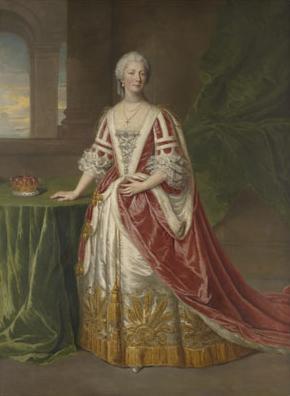
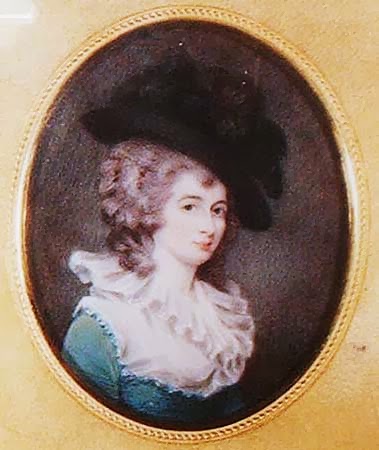
I always assumed the two older Pitt brothers looked like their mother (John’s jaw notwithstanding). John definitely had his mother’s eyes, and I thought her nose (and probably her dress sense, although I digress):

image

(from here)

And yet Bentham got me thinking (and yes, Wraxall too, although mostly I’d like to slap him silly, but I’m digressing again). John being the main character in my novel, I’d like to think I know what he looks like. I have seen five bona fide John-sat-in-person-for-this-portrait paintings of Lord Chatham now in addition to three derivatives, all of the Hoppner. They are all sufficiently similar that I can say, with absolute certainty, that John had sleepy blue almond-shaped eyes, a strong chin, and VERY dark hair (those eyebrows…!). BUT HIS NOSE KEEPS CHANGING SHAPE.

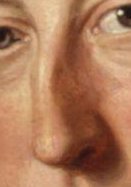
I’m inclining now to think that John’s nose was not as straight and pointy as I first thought. I’m not sure I can go quite so far as Bentham and say he had a “Roman nose” like his father:

image

… but I think he definitely did not have a perfectly straight nose.

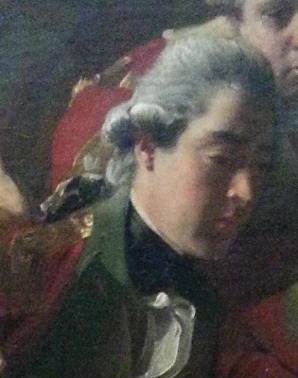
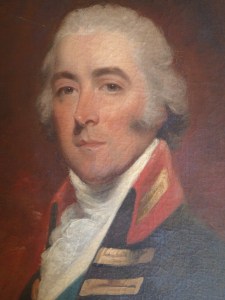
Of the two paintings I have seen of John, two depict a short, straight nose:

image

(from The Death of the Earl of Chatham by John Singleton Copley: sorry it’s a bit blurred, but I was trying to look like I was checking my phone messages at the time :-D)

and

OLYMPUS DIGITAL CAMERA


(studio of John Hoppner, courtesy of the Royal Marines Commando Barracks Officers’ Mess, Plymouth)

So far, so similar to Hester, Countess of Chatham and … definitely … NOT Roman.

But how about this?

image

(from the Martin Archer Shee portrait, which I otherwise loathe… you can see it in its full glory here)

Or this?

image

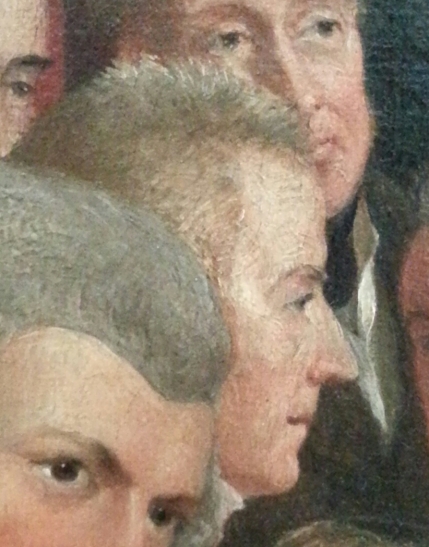
(from The Trial of Queen Caroline by Sir George Hayter: you can see the full painting [and good luck picking out John in THAT!] here)

I think the Hayter one, particularly, gives a flavour of why Wraxall might have thought John might look like Pitt the Elder if dressed up in a periwig, although it’s still not quite a classic “Roman” nose in my opinion.

And incidentally the Valentine Green print of the Hoppner gives John’s nose a rather less straight aspect than the original appears to:

image

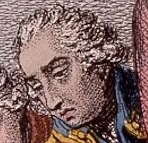
For bonus points, here’s Gillray’s depiction of John in “The Death of the Great Wolf” (1795), in which John’s nose is clearly not straight:

image

There is another portrait of John that falls somewhere midway between straight and not straight:

image

It’s pretty straight on the whole and could easily be mistaken for his brother’s. And on that note, here’s Pitt the Younger’s nose by the same artist (George Romney):

image

… from which you can see that John and William’s noses were, basically, the same shape. So if John had a Roman nose… maybe William did too?

Or maybe it was just the name “Chatham” that made people think he *must* take after his father in some way?

Either way, I’m going to have to stop here, because I’ve run out of noses to post……..

John’s later years, Part 3: “the venerable Earl”

Yesterday I thoroughly pillaged the British Library’s excellent 19th Century Newspapers database (… well, *nearly* excellent: I have one or two reservations about the search interface, but that’s another story). I habven’t used it much before, largely because I keep forgetting the 2nd Earl of Chatham clung to life until September 1835, but I found some excellent stuff about John’s later years. Slowly but surely it’s all fleshing out for me, although I still need to find more manuscript sources on the subject.

Beginning, then, with John’s return from Gibraltar in July 1825— because I’m still not quite sure what he actually did while in Gibraltar as governor— I can confirm a few things I already knew, which was that he spent August at Leamington Spa, presumably recovering from whatever illness completely floored him and knocked two and a half stone off his weight (for more see my first post on John’s later years). When in London he stayed at Thomas’s Hotel, 25 Berkeley Square, a fashionable establishment in an area he knew very well indeed.

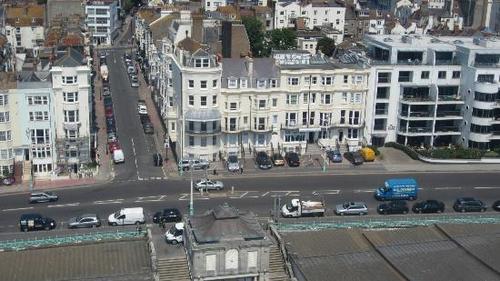
He then moved on to Brighton, where he rented a house on Marine Parade— from 1830, and possibly earlier than that, it was Number 20 (now a hotel and nightclub— appropriately the kind of place where the patrons probably sleep all day)— and frequented Molineux’s Turkish Baths on East Cliff.

image

(This photo of New Madeira Hotel is courtesy of TripAdvisor)

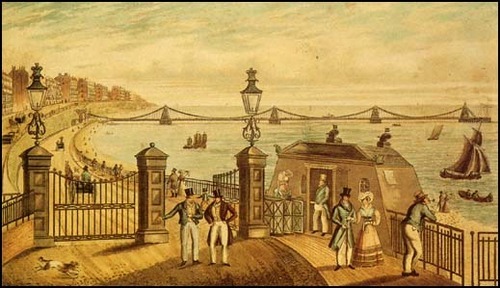
He clearly enjoyed Brighton, as he went back every year from September or October until as late as March or April (one year he was there until May). Although his proxy vote was still deployed in the House of Lords, he does not appear to have attended, and seems to have considered himself retired: fair enough I suppose, since he was by this time seventy years old. What his health was like generally I couldn’t say: the newspapers talk about him being in “pretty good health”, for his age at least, and his main activities at Brighton seem to have included riding along Marine Parade and walking on the new pier. By the end of 1832, however, he was described as having a “weakness in his legs” that prevented him walking unaided: he still managed to ride every day though, at least until 1834, when his strength was described as “failing”.

image

Marine Parade, Brighton, ca 1830, from here

(No idea what might have caused the leg weakness, but you will recall from a previous blog post that John seriously injured his leg on two occasions, in 1788 and 1791: perhaps that had something to do with his later inability to walk?)

Otherwise the information pretty much accords with what I had previously found about John. He was reported as having died in March 1831: the newspapers, red-faced, later had to retract their incorrect statement. In August 1834 he had “a paralytic stroke”, but he completely recovered and spent the winter and spring in Brighton as usual. His death in September 1835 seems to have been sudden: he was reported just under a week before his death as being daily expected at his house in Brighton. I suspect another stroke may well have carried him off, as he had supposedly been in pretty good health before that.

Interestingly he seems to have been well-regarded in the press, described from 1830 onwards without fail as “venerable”. The state of his health was assiduously followed, partly perhaps because of all the pensions and emoluments that would fall vacant when he died but also, it seems, because people cared about the last surviving member of the Pitt family. The journalists’ tone was often respectful, even fond, which I found somewhat surprising given John’s reputation even in his own lifetime. The Standard wrote on 8 November 1833:

“The venerable Earl of Chatham is gone to Brighton for six months. This amiable nobleman, notwithstanding the retired habits of his life, and his extreme taciturnity in general society, was held in the highest esteem by his brother, the Right Hon. William Pitt. It was always understood that Mr. Pitt took the advice of Lord Chatham on all important measures relating to finance.”

Admittedly the first occasion I have seen of anyone suggesting John might have had input into Pitt’s financial measures, and I certainly haven’t seen any evidence to support that assertion, but I’d say there is a flavour of truth in the suggestion that Pitt was in the habit of talking things over with John and in any case it makes a nice change from “he was a complete idiot”. (And a quiet giggle at the “taciturnity” comment…)

So much for John’s very last years. I get the impression he faded away, spending most of his life on the seafront at Brighton, contributing funds to local building efforts (he was a subscriber to the chain pier, for example), occasionally using the Turkish baths and hauling himself on horseback long after he lost full use of his legs. His last years won’t make a novel any time soon: but it’s interesting to read, at least for me. I like to think that, after the horror that must, for him, have been the late 1810s, his wife’s death, and the homesickness and depression he experienced in Gibraltar, John finally found his peace on Brighton seafront.

“From Day to Day”

Image

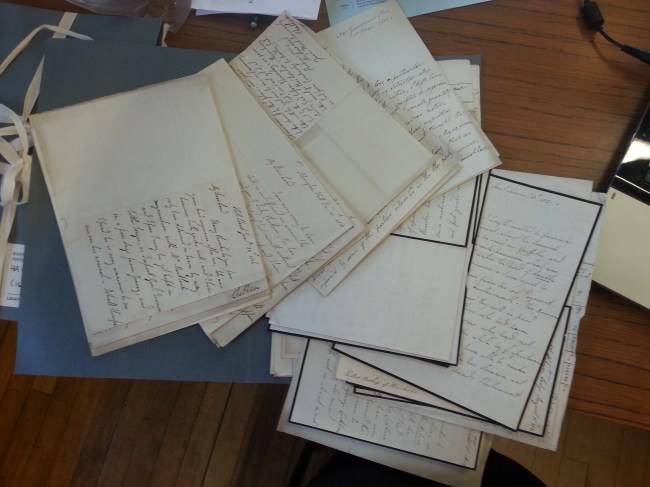
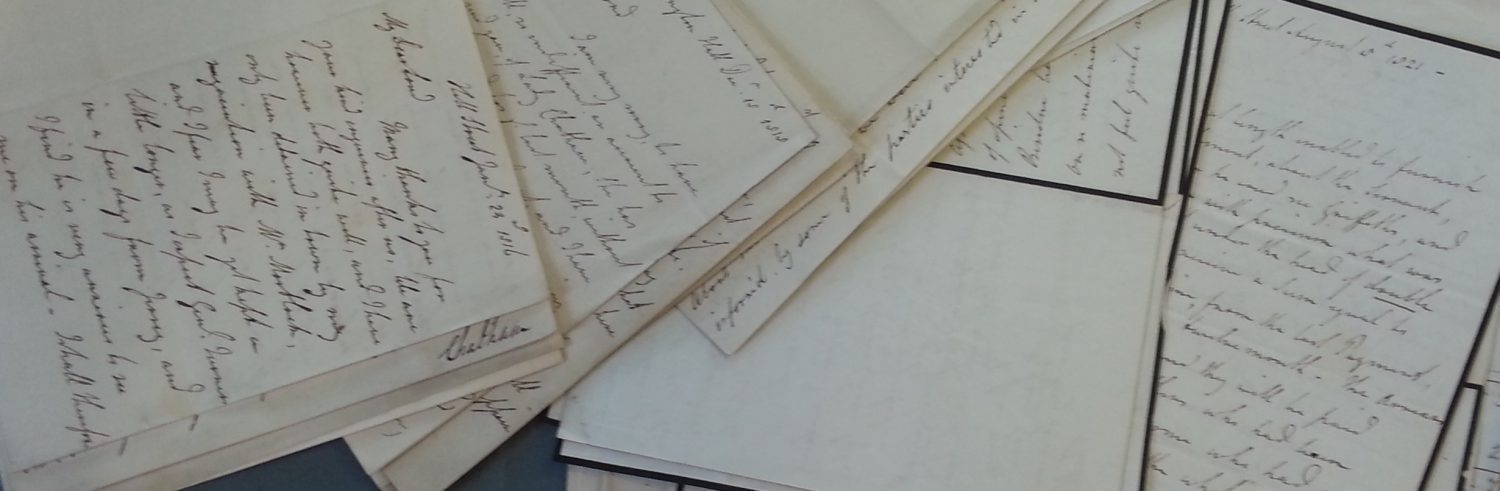
Contents of HA 119/562/688: letters from Lord Chatham to George Pretyman-Tomline, 1816-25 (Ipswich Record Office)

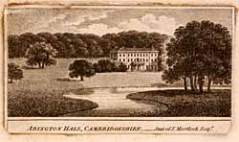
On 17 March 1818 John Pitt, 2nd Earl of Chatham folded a sheet of foolscap, dipped his pen in ink, and began to write a difficult letter. His correspondent was George Pretyman-Tomline, Bishop of Lincoln. Tomline was an old family friend: he and John had been joint executors of John’s brother’s will and had become close over the years. Since 1816 John had been renting Abington Hall near Cambridge, which was very close to Tomline’s palace as Bishop of Lincoln in Buckden.
 

Image

Abington Hall, Cambridge

In writing his letter John was breaking a long silence. This was not unusual for John, who was not a particularly efficient correspondent at the best of times. As his letter made clear, however, this was not the best of times.


“I have been meditating a letter to you, for the purpose of saying, that whenever you move towards London, Abington is but a few miles out of ye road … But unfortunately I have from day to day been obliged to put off writing to you, from a cause, which I know you will be concerned to hear. Lady Chatham has now been for above three weeks extremely unwell, and still continues so. She had at first a severe bilious attack, attended with a good deal of fever, and which is not yet entirely removed, tho she is better, but it has so much reduced her, as to leave her in a very uncomfortably low and nervous state.”[1]


Six weeks later he wrote to Tomline to report the “low and nervous state” had not improved: “I had deferred writing to you … in the hope from day to day, that I shou’d have been able to have sent you a more favourable account of Lady Chatham … But I am sorry to say, that … Lady Chatham has … continued without gaining any ground”.[2]


John had no way of knowing, but he would continue to live “from day to day”, waiting for his wife to recover and return to normal, for more than two years. Mental illness is treated much more sympathetically today than it was in the eighteenth century, when it was labelled as “insanity” and treated horrifically. Rank was not proof against this: witness the treatment of George III– bled, purged, gagged, straitjacketed– in the desperate attempts to restore him to health. Ironically John’s own father, Pitt the Elder, was almost certainly bipolar, and John must have watched his wife sink into depression with a cataclysmic sense of deja vu.
 

Image

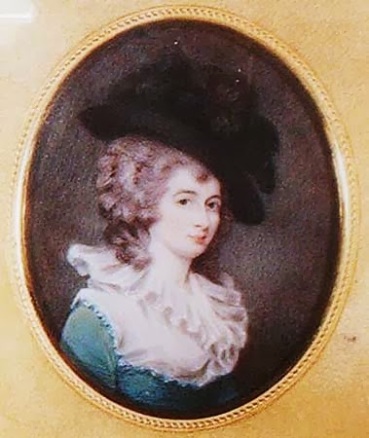
Mary, Countess of Chatham, in earlier years

John was a taciturn and deeply private correspondent; he generally kept his letters brief, factual and to the point, with perhaps a short discussion of the weather towards the end but little of a personal nature. After half a year, however, he could not keep his distress from showing, and words like “harassed” and “distressed” began to appear in his letters.[3]
 

Image

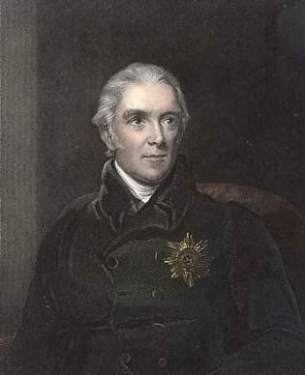
Sir Henry Halford

In September 1818 John persuaded Mary to see Sir Henry Halford, the King’s personal physician. Halford was optimistic: a change of air was required, so John took Mary to the fashionable spa at Leamington in Warwickshire. Unable to make any plans whatsoever– still drifting “from day to day”– this was the first time John had left Abington since spring. Understandably he needed a break, but Mary was having none of it. When John suggested she stay with her brother Lord Sydney at Frognall in Kent, she insisted she was getting better. In February, nearly a year after Mary first fell ill, John finally managed to get her to Frognall. Mary’s state can best be gauged from the tone of the letter John sent to Tomline, which he only placed in the post after leaving in case the plans fell through at the last minute: “I have remained here [at Abington] in one continual state of suspense, having fixed generally one or two days every week for removing to Frognall, and having been as constantly disappointed. We now intend going tomorrow … Lady Chatham, is I am sorry to say not the least better, and my situation has been most distressing”.[5]


John was finally able to have a rest: “after the confinement I have had, I trust [exercise] will be of use to me”.[6] He certainly needed it, for apart from Mary’s family he had nobody–no children, no remaining siblings– to assist him. Over the next few months he managed to get away from Mary’s sickbed long enough to go on a few hunting parties with friends, where presumably he took out his frustration on anything that had fur or feathers. But always he returned to Mary after a week or two, and the strain of living “from day to day” was taking its toll.


By now John was beginning to guess Mary’s illness might never improve. “I fear she is losing ground,” he reported in June. In August, though, there was a glimmer of hope, and John thought she seemed a little more open to the idea of company. He wrote to the Tomlines hesitantly suggesting that “should it be convenient to you to give us the pleasure of your company … we shou’d be most happy to see you”.[7]


The Tomlines arrived on Friday 3 September. “Lady C[hatham] received us … in her usual manner,” Mrs Tomline later recorded for Mary’s physician Sir Henry Halford. All, however, was far from well, and Mary was unable to keep up the pretence of normality very long. “On Friday Evening, when Lord C[hatham] rose to ring the bell to remove the Tea tray supposing her [Mary] to have finished her tea, her eyes became frightfully wild”. As soon as she saw she was observed, however, Mary “recovered her composure– gradually became calm”.


This ability to impose self-control impressed Mrs Tomline, who noted that, “though rather Agitated, there was nothing in her manner to excite remark … We shoud have left [Abington] on Monday satisfied with this appearance of tranquillity had we judged only from seeing Lady C[hatham] in company.” But “the sad reverse, when alone” was “painful to describe”, and Mrs Tomline particularly dwelled on a disturbing conversation:


“She talked to me for some time about her illness in a way that affected me more than I chose to show. …. She was told exertion was necessary, but that she could not control herself when— and after a sudden stop, added in a wild way, ‘I must not talk of myself– but I often think it must end in madness’ – looking with eager eyes for my opinion.”


Tragically for Mary, Mrs Tomline did not recognise this as a cry for help from a desperately depressed woman. Her response was, essentially, that Mary should pull herself together:


“Of course I placed her feelings to the account of nerves & urged the absolute necessity of controuling her agitation when ever it occurred … and expressed perfect confidence that she would again recover, provided she kept herself calm, for controul in some way or other was absolutely necessary”.


Surrounded by unsympathetic listeners, Mary’s self-esteem was low and her frustration was extremely high. “She spoke with great concern of the trouble she gave Lord C[hatham] ‘to whom I am sure (she said) I ought not to give a moment’s pain’”. Having forbidden herself from confiding in her own husband, Mary found an outlet in self-harm. Mrs Tomline reported “her screams are often heard over the whole house” and how her maid had “to prevent the poor Sufferer from striking herself with a dangerous force … she is indeed covered with bruises she has given herself in various ways and with various things often with clenched hands and shut teeth”. Sleep was an issue: Mrs Tomline seemed to think it was not, but John reported her staying in bed most of the day– no doubt seeing her bedroom as a refuge from the need to put on a pretence of normality. She was certainly suicidal: “her threats respecting her own life are most alarming”.[8]
 

Image

John, Lord Chatham, in 1821, from Sir George Hayter’s “The Trial of Queen Caroline”

Something had to be done. John had never been robust, and his health was poor. “He cannot much longer support such a score of suffering,” in Mrs Tomline’s words. Halford’s response was not encouraging. “The matter appears to me to be coming to a Crisis,” he wrote, “and I can scarcely suppose that many weeks more will pass before the poor Creature is put under restraint.” His recommendation was to straitjacket the patient to save her husband’s health, for “it will be well if ever we see him Himself again”.[9]


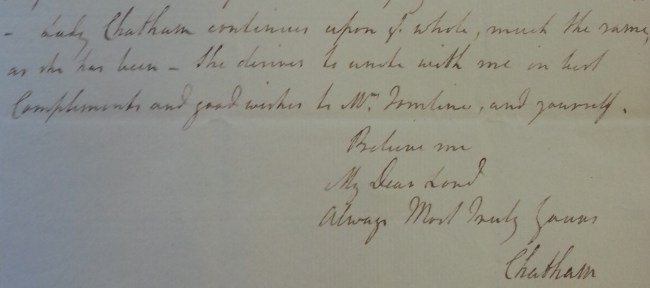
John was horrified. He had spent eighteen months nursing his wife, and was amazed at Halford’s diagnosis: “I am at a loss to understand to what he coud allude … when he spoke of any Crisis to be expected in a few weeks”. He dreaded the idea of “any change of System, unless it were deemed indispensable”, and naturally feared the effect of such “severity and cruelty” on his wife, particularly, as he saw it, to little purpose. To his credit he never referred to his wife as anything other than just that– no subhuman “poor Creature” such as is found in Halford and Mrs Tomline’s letters– and invariably passed her best compliments to Tomline at the end of his letters. Even when Mary’s state was clearly poor, he always wrote of “we” rather than “I”. But however much he disapproved of Halford’s recommendations, John was desperate. Under pressure from Halford and the Tomlines, and half-staggered under the burden of Mary’s illness, he agreed to appoint a “companion” who had experience with insanity.[10]
 

Image

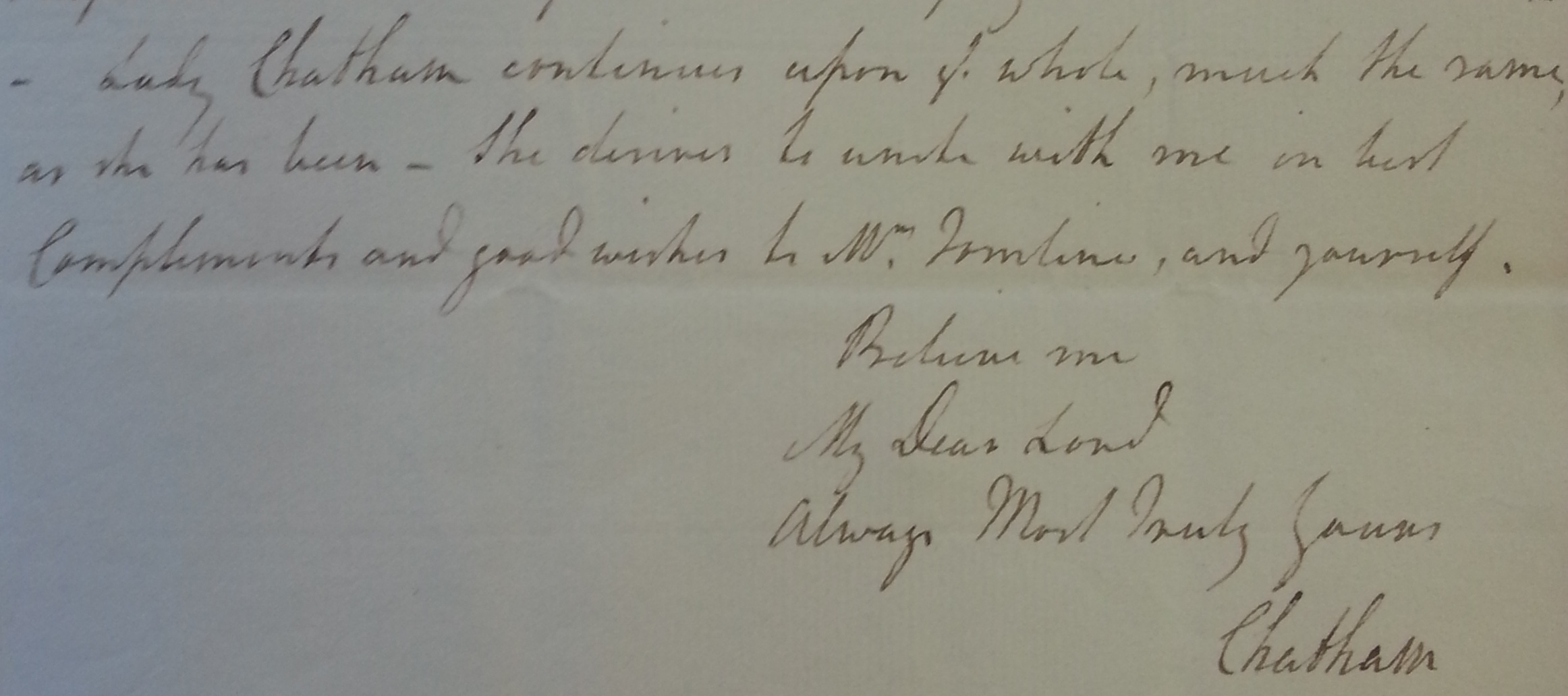
27 April 1818, HA 119/562/688

This “companion” was intended to impose “a restraint which the presence of Lord C[hatham] no longer produces”,[11] but it may not have worked. In the new year Mary was “very unwell, so much so, as to render her state, a very anxious one for a couple of days”, and John morosely reported to Tomline that “her state of irritation seems rather encreased”. Had Mary attempted suicide? John’s letter is ambiguous, but perhaps it is significant that they were immediately visited by their niece, Harriot Hester, Lady Pringle, who had lived with them for three years prior to her marriage in 1806. At any rate he managed to get up to Belvoir to hunt with his former ward the Duke of Rutland in February, “for I stand much in need of some recruiting having passed a sad time here”.[12]


After that the correspondence breaks off until July 1821, when John reports, on black-edged paper, that he cannot attend George IV’s levee as “there is an Order for no Person, to appear in mourning, which precludes me”.[13] John was in mourning because Mary died on 21 May, aged 58. Her obituary in the paper simply states that she died at five o’clock in the evening “after an indisoposition of nearly two years”.[14]


Mary’s physical health had never been good, so it is possible she died of natural causes, but given her history and her age I cannot help wondering if she helped herself along a little. This is obviously speculation, and John never refers to her in his letters again. I’m not sure I will ever find out the answer for certain, but whatever the truth Mary’s last years were neither happy nor healthy.


So ends the tragic tale, at least for Mary. John was destined to outlive her fourteen years; his adventures can be read about in a previous blog post of mine in two parts, found here and here. He never complained of loneliness but there is more than an echo of it in his last letters to the Tomlines before leaving England to take up the governorship of Gibraltar in October 1821: “I have been but indifferent, indeed I cou’d not well expect otherwise”. “I can not say much for myself,” he wrote the following year. “I am tolerably well in health, but I do not gain much ground, otherwise … There is a great deal of constant business [as Governor], which occupies my mind, and from this, I think I have found most relief”.[15]


Poor Mary, and poor John. It’s no secret that I feel a strong bond with these two; they are, after all, the main characters of my work in progress. But until yesterday I had no idea their story ended so tragically. I cannot tell you how much I wish it had been otherwise.


References


All manuscripts are from the Pretyman-Tomline MSS, held at Suffolk Record Office (Ipswich).

[1] Chatham to Tomline, 17 March 1818, HA 119/T108/24/7

[2] Chatham to Tomline, 24 April 1818, HA 119/562/688

[3] Chatham to Tomline, 14 October 1818, HA 119/562/688

[4] Chatham to Tomline, 18 December 1818, HA 119/562/688

[5] Chatham to Tomline, 1 February 1819, HA 119/562/688

[6] Chatham to Tomline, 19 February 1919, HA 119/T108/24/8; same to same, same date, HA 119/562/688

[7] Chatham to Tomline, 2 June, 17 August 1819, HA 119/562/688

[8] Mrs Tomline’s letter to Sir Henry Halford is at HA 119/562/716. John’s observations on Mary’s lying later in bed are from HA 119/562/688, 22 and 27 September 1819

[9] Sir Henry Halford to Mrs Pretyman, 10 September 1819, HA 119/562/716

[10] Chatham to Tomline, 22 September 1819, HA 119/562/688; 27 September 1819

[11] Mrs Tomline to Sir Henry Halford, HA 119/562/716

[12] Chatham to Tomline, 19 January 1820, 5 February 1820, HA 119/562/688

[13] Chatham to Tomline, 25 July 1821, HA 119/562/688

[14] The European Magazine and London Review 1821, vols 79-80, 561; The Ezxaminer 1821, 335.

[15] Chatham to Tomline, 6 October 1821, 27 February 1822, HA 119/562/688


Picture of Abington Hall from here.

Picture of Sir Henry Halford from here.
Guest blog for Madame Gilflurt: Collapse of the Earl of Chatham in the House of Lords, 7 April 1778

Busy doesn’t cover it, but I have been guest blogging again for madamegilflurt. Check out my piece on Pitt the Elder’s collapse in the House of Lords on 7 April 1778 at:

http://www.madamegilflurt.com/2014/04/a-salon-guest-collapse-of-earl-of.html?spref=tw&m=1

“Master Billy’s return from Grocer’s Hall”

image

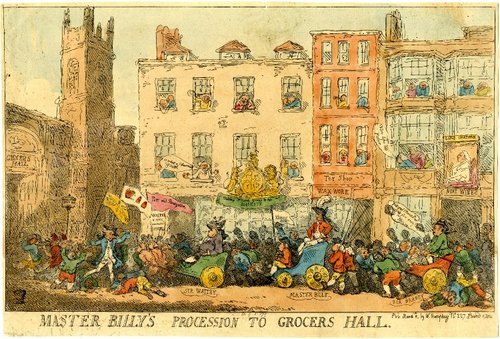
(“Master Billy’s procession to Grocer’s Hall” by Thomas Rowlandson, from here)

It has just been brought to my attention that I missed an anniversary yesterday (28 February). On 28 February 1784, William Pitt the Younger received the Freedom of the City of London at a banquet held at Grocer’s Hall. This was towards the end of the so-called “constitutional crisis” triggered by George III’s dismissal of the Portland ministry and appointment of 24-year-old Pitt at the head of a minority government. Assisted by a combination of behind-the-scenes bribery, eloquence in Parliament, his reputation for purity, and downright luck, Pitt had been slowly gathering public support and chipping away the opposition’s majority throughout February. The Freedom of the City was a great coup for him, since the City traditionally held itself independent of the monarch and had a great deal of political influence. Pitt’s carriage was drawn from Berkeley Square, where he was living with his brother, to Grocer’s Hall by his supporters.

image

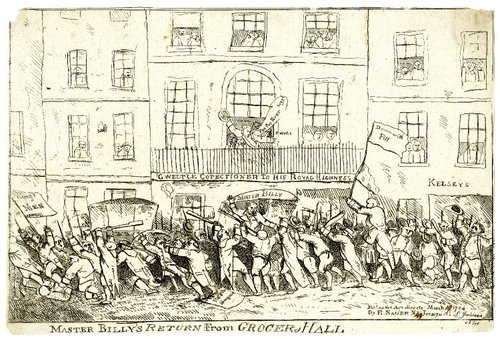
(“Master Billy’s return from Grocer’s Hall”, anonymous, from here)

The way home was, unfortunately, not quite so uneventful. Once again Pitt was drawn through the streets “by a great concourse of people, many of the better sort … as well as by a considerable Mob” (in the words of Pitt’s brother Lord Chatham, who, along with Pitt’s brother-in-law Lord Mahon, later 3rd Earl Stanhope, was also in the carriage). Chatham later set down his recollections of what happened next for Pitt’s biographer, the Bishop of Lincoln, in 1821 (this can be found at Ipswich Record Office, Pretyman MSS HA119/562/688). Chatham wrote:

The Populace insisted on taking off the Horses and drawing the Coach. A Mob is never very discreet, and unfortunately they stopped opposite Carlton House and begun [sic] hissing, and it was with some difficulty we forced them to go on. As we proceeded up St James’s Street, there was a great Cry, and an attempt made to turn the Carriage up St James’s Place to Mr Fox’s house (he then lived at Ld Northingtons) in order to break his windows and force him to light, but which we at last succeeded in preventing their doing.


I have often thought this was a trap laid for us, for had we got up, there, into a Cul de Sac, Mr Pitts situation would have been critical indeed. This attempt brought us rather nearer in contact with Brooks, and the moment we got opposite (the Mob calling for lights) a sudden and desperate attack was made upon the Carriage in which, were Mr Pitt, Lord M[ahon] and myself, by a body of Chairmen armed with bludgeons, broken Chair Poles &c (many of the waiters, and several of the Gentlemen among them).


They succeeded in making their way to the Carriage, and forced open the door. Several desperate blows were aimed at Mr Pitt, and I recollect endeavouring to cover him, as well as I cou’d, in his getting out of the Carriage. Fortunately however, by the exertions of those who remained with us, and by ye timely assistance of a Party of Chairmen and many Gentlemen from Whites, who saw his danger, we were extricated, from a most unpleasant situation, and with considerable difficulty, got into some of the adjacent houses, without material injury, and from there to Whites. The Coachman, and the Servants were much bruised, and the Carriage nearly demolished.

I do not recollect having particularly seen Genl Fitzpatrick, but I distinguished Mr Hare, and the present Lord Crewe extremely active, and I think Lord Robert Spencer, standing at the Door. I remember when the Streets were a little clear, I walked over, with Mr McDowall to Brooks, and went up into ye Club Room, but the Party were either gone home, or gone to Supper.


The next morning I met Lord Ossory in St James’s Street, who attempted to make apologies for what had passed, and to lay it upon ye violence of the Chairmen, some of the Chairs having been broken by the Mob.


I never went to Brooks any more, and I was never able to ascertain further what passed or what first led to the Outrage that night.

Fair enough, I guess!

With family like this…

There’s one thing that has bothered me for some time, and now is the time to blog about it because yesterday I made a discovery.

I have always had a strong feeling that Lady Hester Stanhope disliked her older uncle. She certainly didn’t have much time for him at the end of her life (read her Memoirs, as transcribed by Dr Meryon… “he was a man of no merit, but of great luck”: II, 76, to give only a short example). Until yesterday though the only thing I had found her saying about him prior to her leaving England for good was a comment about his nose being long, which at the time made me laugh.

Yesterday, though, I went to the British Library to check out the Dacres Adams papers. These were papers collected by Pitt the Younger’s last secretary, William Dacres Adams, from Walmer Castle after Pitt’s death, and kept in his family until recently. A couple of years ago the papers were sold and they ended up at the BL. It’s a mixed bag and quite a lot of it involves Adams’ correspondence with friends and family. Adams was very friendly with Lady Hester Stanhope and her brothers James and Charles, all of whom pretty much lived with Pitt in his last years.

After Pitt died Lady Hester was left homeless. She had fled her republican father Earl Stanhope and obviously couldn’t go back to him. The obvious person to take her in would have been her remaining uncle, John, Earl of Chatham, and the fact that he did not do so rankled. Only a few days after Pitt’s death, possibly 26 January 1806, Lady Hester wrote to Adams and referred to John’s failure to assist in scathing terms:

“[Charles] together with James [have paid a] visit to Ld C[hatham] which I deem quite improper, as we all despise him, & therefore ought not to toady him, or put any sort of confidence in him. Had his protection been thought advantageous, we s[houl]d have been recommended to his care” (BL Add MS 89036/2/1 f 10)

Wow, “despise”— that’s a strong word! Nor did she forget Chatham’s failure to rise to his duties as uncle. When her brother Charles was killed in action at Coruna in 1809, John wrote his niece a letter of condolence. Her response must have made him wish he hadn’t bothered: “I feel your kind attentions at this unhappy moment as much as I felt your neglect of me under similar affecting circumstances” (quoted in Tresham Lever, The House of Pitt (1947), p. 338). Ooookay.

And clearly Lady Hester was not the only one of the Stanhope brood to feel this way. Perhaps naturally, her brothers too felt John could have done more for their sister. Charles it seems had spent some time in John’s household when he had first joined the army, learning the trade as it were, and I haven’t found any direct evidence of his disliking John, but as for James… In 1807 he made a visit to Burton Pynsent, formerly the Somerset home of William Pitt the Elder and sold by John after his mother’s death in 1803. James wrote an epigram comparing John with his younger brother and sent it to Adams:

“The immortal Chatham ee’r [sic] he died

These gifts he thus assigned

Take then my fortune John, he cried

Thou William hast my mind

This son the Part improved with toil

That ‘twas his country’s weal

The former Burton learnt to spoil

To shuffle, cut, and deal.”

(Add MS 89036/2/4 f 101)

On John’s behalf I say “OUCH”, not only because, well, *ouch* but because James was being rather unfair. I’ve no idea how far John’s gambling debts influenced the decision to get rid of Burton Pynsent (as Basil Williams, biographer of Pitt the Elder, concluded, using as his source this interview with William Beckford printed in the New Monthly Magazine of 1844, vol 71, 302). James certainly seems to believe this had a role. Maybe it did, although if John was a notorious gambler this is all I’ve heard on the subject. What I do know was that Burton Pynsent was mortgaged to the hilt when John inherited it in 1778, and (along with Hayes Place, also remortgaged at least once by Pitt the Elder) never really managed to be anything but a massive drain on Pitt funds. I think it would be uncharitable to conclude that John couldn’t wait to get his hands on the money for it. No denying he was a spendthrift (it was in the genes!), but the “fortune” he inherited from his father was far from being the amazing thing James obviously assumed it was.

And that brings me to a major point in John’s defence. Lady Hester Stanhope clearly never forgave him for his snub after Pitt’s death. Maybe he should have at least asked her to stay with him for a bit. But do you want to know why I think he didn’t? (Apart from the obvious grief at having just lost his brother?) Because John’s wife Mary was very ill. The Bishop of Lincoln wrote to his wife a week after Pitt’s death: “Lady Chatham is seriously ill; she has fretted herself with a delirious Fever; & Vaughan & Farquhar attend her.” (Ipswich Pretyman MSS HA119/T99/26, 31 January 1806) It’s clear from correspondence surrounding the arrangements for Pitt’s funeral that Mary was not considered out of danger until mid-February. Under those circumstances, maybe Hester might have been a bit more understanding…