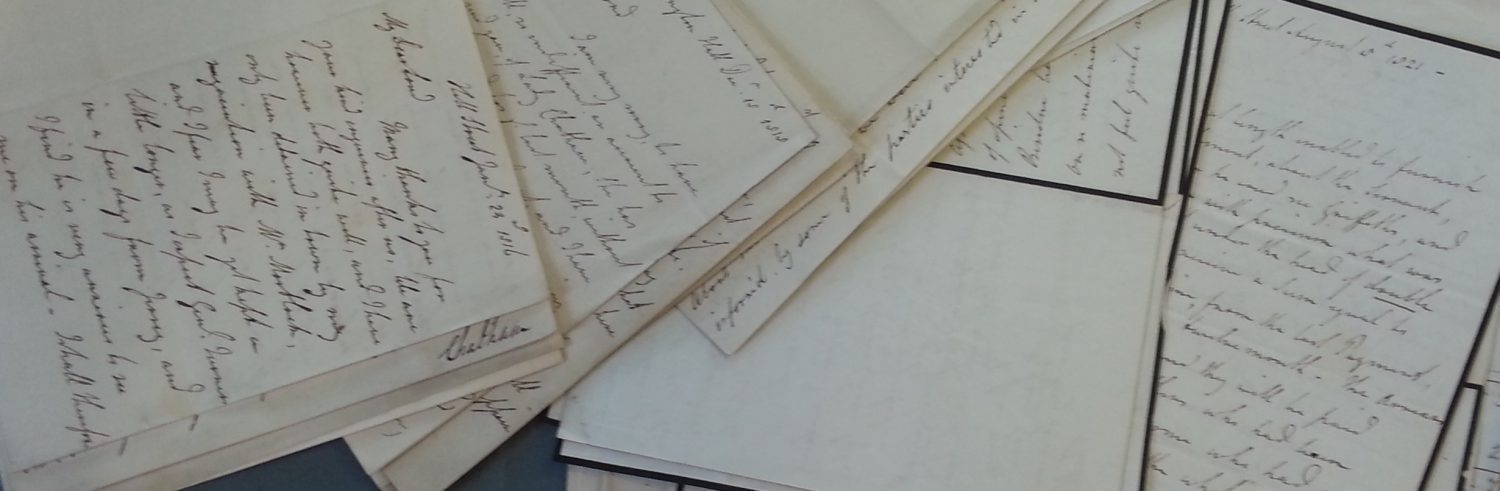
The death and funeral of John, 2nd Earl of Chatham, September-October 1835

In the evening of 3 October 1835 George Bentinck, a relative of the Duke of Portland, wrote to his mother from Westminster Abbey. The weather, he complained, “has been far from good here. It has rained every day, [and] it was very lucky I brought my umbrella”. Appended to this fascinating catalogue of adventures was a piece of news: “Lord Chatham was buried here in the Abbey to day[.] [T]here was a very great funeral and the King sent his carriage[.] [H]e is buried in the North Transept between Lord Mansfield and Mr Pitt.” (Portland MSS, Nottingham University Archives, PwM 205)
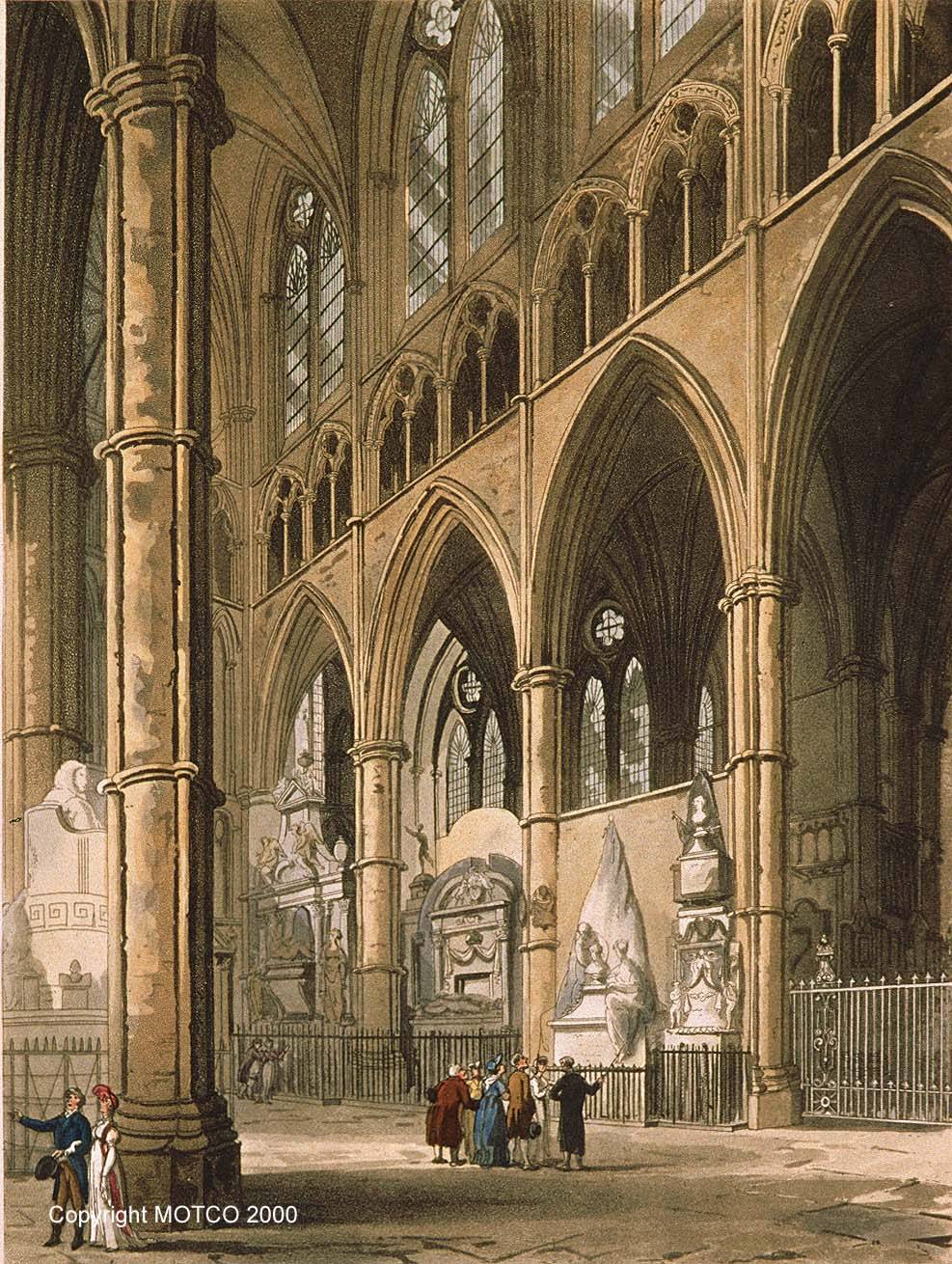
R. Ackermann, North Transept of Westminster Abbey (1809), from http://www.motco.com/index-london/imageone-a.asp?Picno=9902095

R. Ackermann, North Transept of Westminster Abbey (1809), from http://www.motco.com/index-london/imageone-a.asp?Picno=9902095

In September 1835 John Pitt, 2nd Earl of Chatham was approaching his 79th birthday. He was the last remaining member of the Pitt family, and certainly one of the longest-lived (his mother got to 82 but neither his father nor his siblings even came close). In the summer of 1834 he had had a paralytic stroke but it seems made a reasonably full recovery. He was planning to spend the autumn, winter and spring in Brighton, as he had done nearly every year since returning from Gibraltar, and the newspapers reported in mid-September that his house was ready to receive him there.

John never made it. I’m not quite sure what happened to him exactly, but I would guess he suffered another, fatal stroke in the early hours of the morning of 24 September. His heirs, his great nephews William Stanhope Taylor and John Henry Pringle, were swiftly notified. One of the first things they had to do (apart from sort out the legal implications of John’s having completely forgotten Taylor’s name and got it wrong in his will) was to sort out John’s funeral.

John had not only been an Earl; he had also been a Knight of the Garter. As such, his rank entitled him to a grand funeral in the family vault in the north transept of Westminster Abbey. One day I will have to contact the Office of Heralds to see if they have any records on the subject, but according to precedent his funeral would have been held under the auspices of Garter King of Arms, who would have prescribed the precise order of the ceremony and also what sort of heraldic devices could be used.

The heraldic precedent for an earl’s funeral was that of the Earl of Derby in 1574. Reading over the account of the ceremony, I’m guessing John’s could theoretically have been as impressive as his heirs wanted it to be. John in life had always been very proud of his status and of his knighthood: he would, no doubt, have wanted the whole hog with the black velvet pall embroidered in escutcheons, the helmet (silver with five gold bars for an earl), crest, sword and target (crested shield), the great banner (the crest of the deceased), and the bannerolls (a square crest particularly designed for use in funerals).

Presumably he got at least some of these things, and the attendance of Garter King of Arms himself to preside. The fee to the Office of Heraldry for using all the heraldic devices required in an Earl’s funeral was £35, a not inconsiderable sum, but John’s heirs had to stump up a fair amount otherwise, as the bill for the funeral in the National Archives makes clear (PRO 30/8/370 f 152).

The bill was issued by Thomas Dowbiggin & Co (a company that made furniture for high society, with an undertaking business on the side) on 24 September 1835, so presumably Taylor and Pringle wasted no time in getting down to business. While John was not going to be buried in the same lavish fashion as his father and brother, who both received public funerals, he would be laid to rest in fine style.

The arrangements for the coffin alone were as follows:

A strong elm Coffin lined, and ruffled with rich White Satin – £7 7s 0d

A rich satin Winding Sheet – £4 18s 6d

A rich thick tufted Mattress and pillow – £2 12s 6d

A pair of silk gloves – £0 4s 0d

A strong outside leaden coffin soldered all round – £7 17s 6d

A Metal Plate of Inscription soldered on ditto – £0 7s 0d

Putting John into the coffin and soldering it closed cost just over a pound in total. Once he was in, the coffin was encased in another elm case, this time covered in crimson velvet attached with three rows of brass nails. Four pairs of “solid brass Handles with Octagon Rests” were attached to the side, and the whole was studded with “brass Coronets .., [and] Star to the order of the garter all richly gilt and burnished” [GARTER BLING!]. The decoration alone cost nearly thirty pounds. Unsurprisingly, it cost 15s just to carry the coffin downstairs.

Once the coffin was sorted, the accoutrements now had to be sorted out. At the head of the procession was a “Male Horse” (nice and specific there), covered in a velvet caparison and dressed with black ostrich feathers, and led by two grooms. John’s executors hired a velvet pall for 10s 6d, as well as more ostrich feathers (and a man to carry them, supported by two men in mourning with wands). The hearse was drawn by six horses, all also covered in velvet and ostrich feathers and attended by ten men in mourning carrying “truncheons”.

Behind the coffin was a “Velvet Chased Earl’s Coronet gilt and jewelled” with an ermine border carried on a velvet cushion, both of these presumably also hired as they only cost a total of £3 13s 6d. Of banners, bannerolls, targets etc etc there is no sign, so presumably these were skimped, but eleven official “mourners” were hired, each dressed in “ducasse” (? no idea: anyone know?) scarves and hatbands and wearing black silk gloves.

After this the list is mostly about kitting out the various officials, clergymen and porters who attended, and there must have been quite a procession. The provision of “rich silk pole covers” suggests that someone walked under a canopy, probably the Dean of Westminster, his Sub Dean, the Preceptor, the Clerk of Works, and “Mr Vincent & Mr Hayes” (I have no idea who these men were, alas). All of these men were also kitted out with “ducasse Scarves”, hatbands and gloves at the executors’ expense, as were the Chief Mourner (presumably the eldest heir, William Stanhope Taylor), “two vergers and a Beadle”. Some of the servants driving the mourning carriages in the procession also had to be kitted out, and no fewer than twenty grooms accompanied the “Royal Carriages”, presumably that of the King (William IV) mentioned by G.F. Bentinck and whatever other royals graced John’s funeral with their symbolic presence.

Behind the royal carriages were at least three empty “mourning coaches”, each drawn by four horses, also bedecked with the usual velvet and ostrich-feather combination. Two men in mourning walked beside each empty coach, carrying wands. The accompanying assemblage of porters, hearse pages, coach pages, foot pages, footmen, grooms, coachmen and postillions, all of them had to be kitted out in hatbands and gloves at the executors’ expense.

Finally came the “achievement”, in other words a hatchment designed to be attached above the door of John’s house in Charles Street (or perhaps attached over the grave in the Abbey: I’m not quite clear on where it ended up, but it could have been either of those places). I do not know where this has ended up, but it is described in the undertakers’ bill as “a Yard and half” in size, which seems to have been standard, “in double Shields supporters, Garter &c painted in Oil with Frame covered with fine black Cloth”. This, along with the “Wall Gooks, Nails &c” cost £8 8s 0d, not counting 7s for two men to fix it up.

John’s achievement would have been similar to the above, with his arms impaled with those of his wife Mary. Because Mary had died in 1821, however, both sides of the achievement would have been painted black.
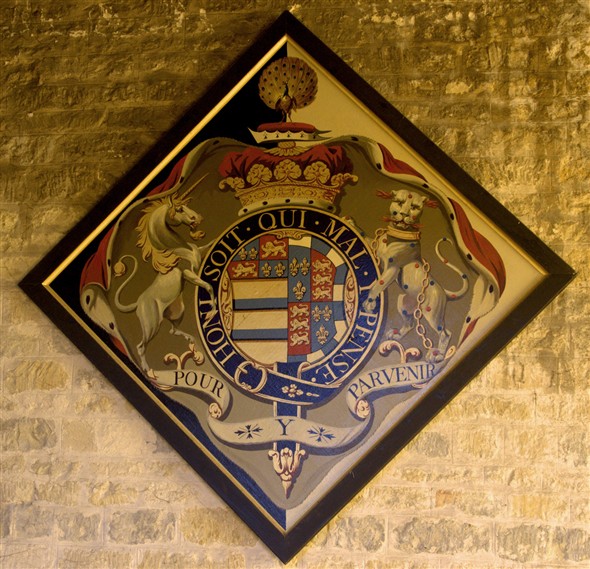
Hatchment for the 4th Duke of Rutland (from http://www.bottesfordhistory.org.uk/page_id__796_path__0p1p30p45p.aspx). Like Rutland, John would have been entitled to surround his arms with a Garter. Unlike Rutland, his would have been completely black due to the fact he was a widower

Hatchment for the 4th Duke of Rutland (from http://www.bottesfordhistory.org.uk/page_id__796_path__0p1p30p45p.aspx). Like Rutland, John would have been entitled to surround his arms with a Garter. Unlike Rutland, his would have been completely black due to the fact he was a widower

After this the estate had to cover a number of additional expenses. “Fees to the Abbey” (presumably to all the officials, and for closing off the whole building and Abbey yard) came in at a whopping £130 17s 2d, nearly as much as the procession by itself. Masons were paid £4 13s 5d, and the royal servants received a tip of £3, while other servants received 9s. Carriage duty and “expenses for Men &c”, as well as a mysterious “Searcher”, made up the remainder. No fees were paid to any heralds or heraldry officers, so I am guessing Garter King of Arms did not directly attend.

The grand total for the whole funeral was £348 19s 7d, not counting £2 13s 5d for “removing [the] Marble Ledger … &c from the Family Vault”, relaying it, repairing the vault and “making good paving” (bill dated 3 October 1825, PRO 30/8/370 f 156).

I think John would have approved … although I also think he might have liked a surcoat or two. 😉


For further reading, you could do worse than to visit my friend Stephenie Woolterton’s webpage, where she discusses the funerals of John, Lord Chatham’s father and younger sister Harriot. (Please have a snoop at the rest of her excellent site, of course!)

Some sources used in putting up this blog post:

Chatham Papers, National Archives PRO 30/8/370 ff 152, 156

Portland MSS, Nottingham University Archives, PwM 205

William Berry, Encyclopaedia heraldica; or, a complete dictionary of heraldry (London, 1828)

James Parker, A glossary of terms used in heraldry (London, 1894)

The Earl of Chatham’s weight

johnsweight

A year or so ago, my good friend A Noon-Day Eclipse and I visited Berry Brothers & Rudd in London. BB&R (as I shall henceforth call them) obviously sell wine, but they also have ledger books dating back to the 18th century recording the weights of various patrons who visited over the years. BB&R, then Clarke’s, sold coffee as well as wine, and had an enormous pair of coffee weighing scales. Wealthy patrons frequently came to Clarke’s to be weighed. Pitt the Younger was weighed numerous times in the 1780s. What we wanted to see, however, was the weight of his brother, John, 2nd Lord Chatham.

John was weighed eight times over the course of ten years. I’ve attached a photograph of the relevant ledger at the top of this post, but his weights were as follows:

1816 June 20 – 11st 13lb in boots

1818 July 17 – 11st 1lb in boots

1821 Sept 29 – 11st 13 1/2lb in boots

1825 Aug 3 – 9st 10 1/4lb in boots

1825 Nov 8 – 10st 13 1/2lb in boots and greatcoat

1825 Nov 25 – 10st 12lb in boots and greatcoat

1825 Dec 16 – 10st 12lb in boots and greatcoat

1826 Jan 20 – 11st 3 1/2lb in boots and greatcoat

From this I deduce that John was rather a spare man. I don’t know how tall he was exactly, but he was described physically as “tall”, so I think it’s fair to say he was above average height: maybe 5’11” or so (possibly taller). According to the NHS BMI calculator, in September 1821 John had a BMI of 23.4, comfortably on the upper range of healthy for a man of his age (of course he would have been fully clothed with boots when he was weighed, which I cannot correct for, but it’s an accurate enough guess). At his lowest weight in August 1825, however, he had a BMI of 18.9, which is right on the cusp of underweight.

Why the fluctuation? I can hazard some guesses. John’s “normal” weight was obviously about 11st 13lb or thereabouts. The dates above are suggestive. At the start of the records, in 1816, John was a couple of months shy of his 60th birthday, presumably in good health, happy enough. He had few official responsibilities as he had been out of office for six years, and I’m guessing his military duties were not especially onerous.

Two years later, however, he’s dropped nearly a stone in weight. This is perhaps not surprising: his wife Mary’s mental issues had begun, and John had been nursing her for some months. This was to carry on over the next few years with very little intermission, and from his letters (I’ve blogged about them in the past) it’s clear it took a toll on his health.

Three years later, in September 1821, John was a widower and about to leave for Gibraltar. He had some issues with depression after his wife’s death, but that doesn’t seem to have affected his weight: this is his heaviest ever, just shy of 12 stone.

It’s a different story in August of 1825. John left for Gibraltar in November 1821. He left there in May 1825. I have not yet managed to work out exactly why he left when he did, but there’s a hint in the newspapers of the time:

Morning Post, 20 May 1825

Morning Post, 20 May 1825

The fact that John’s “health [had] suffered materially” is reflected in August’s weight record: 9st 10 1/4lb fully dressed in boots. Clearly he was not a well man even after returning to England. He arrived in London on 1 July 1825. A friend who had not seen him for four years was shocked:

Years have bent him much. Time has made him, who was once a very fine-looking man in face and person, no longer, as to the latter, upright and straight as an arrow, and in countenance it has left him certainly fine remains of what he was, but only remains. (Lord Eldon to his son, 24 July 1825, H. Twiss, Life of Lord Eldon II, 559-60)

John obviously kept an eye on his weight for some time afterwards, and he was weighed four times between November 1825 and January 1826. His weight had clearly recovered to a certain extent, although he never seems to have gone beyond 11st 3lb in full winter greatcoat and boots. Still, I think it’s fair to say he went from “too thin” to “about OK”.

I have a feeling there are a few more John records at BB&R, which we did not find on the day we visited. Perhaps one day I will find them. It would be interesting to see how heavy John was in his younger days, although I suspect (like his brother, who was about 12st in his late 20s) he was never overweight.

Happy 252nd birthday Mary, Countess of Chatham

Mary, Countess of Chatham

Mary, Countess of Chatham [1]

Today (2 September) is Mary, Countess of Chatham’s 252nd birthday. Everyone who reads this blog will know how much I love her, and how much I wish her story had had a happier ending. For today, though, we’ll stick to the positives.

I haven’t got much to add to the biographical post I wrote for Madame Gilflurt in May, but I wanted to quote two pieces I have referred to in the past. There’s precious little about Mary in the historical record, which I think is at least partly a tribute to her retiring nature. The following poem, found among the Marsham-Townshend papers at Bromley Archives, certainly corroborates this. I have no idea who wrote the poem (presumably either a family member or a friend), and Shakespeare it ain’t, but it encapsulates my view of the private nature of Mary’s character perfectly:

The Countess of Chatham

Aye! There’s a creature feminine, of whom

The world may proudly boast, with store of charms,

And blandishments that so bedeck the Sex;

She from the yielding of her gentle heart,

Hath walked fair honor’s handmaid, early shunned

The flaunting scenes of Court parade, to act

The humble duties of Domestic life.

Simply attired as innocent in Mind,

With all the Sweet benevolences graced,

Her polish came by habit so engrained

That slander’s biting file cd. never touch it. [2]

The other piece I’d like to quote is one of the few letters I have seen written by Mary not petitioning for patronage for a family member or servant (and she had such a wonderfully embarrassed way of doing it too). I daresay there are large piles of Mary correspondence hiding away in private collections, but I was staggered to find six or seven letters which she wrote to Catherine Stapleton quoted in The correspondence of Field Marshal Viscount Combermere (London, 1866), vol 2. Mrs Stapleton was the companion of Mary’s mother-in-law, Hester, Dowager Countess of Chatham. One day I will try and track down where the originals of these letters actually are, but in the meantime I will be satisfied with the doctored snippets found online.

Mary, Countess of Chatham (ca 1800) by Charles Rosenburg of Bath; in the possession of Ron Mills

Mary, Countess of Chatham (ca 1800) by Charles Rosenburg of Bath; in the possession of Ron Mills

Clearly Mary was capable of writing of other things than patronage, and one or two of her letters even contain a fair amount of politics. While she never tried to assert herself as a political hostess, I suppose it was inevitable that the prime minister’s sister-in-law would be interested in current affairs. The following letter was clearly written in 1794, either just before or just after Pitt the Younger coalesced his government with the followers of the Duke of Portland, former oppositionists who had broken with Charles James Fox over the French Revolution.

Mary starts off with a dryly humourous account of a ball, at which the former Oppositionists showed their faces at Court for the first time in many years. She then makes some brief observations on the inconveniences of Courtly fashion.

We had a very grand ball at the Queen’s house on Monday, and a very good one, as they always are. Among the company a great many repentant sinners. Portlands — it was comical enough that the first ball Lady M. Bentinck should go to should be at the Queen’s house — Fitzwilliams, Carlisles, Spencers, Jerseys, Mansfields — it seemed quite odd to see them all. … Lord Carlisle and Lord Spencer are my two favourites, though, of them, nothing can be more thoroughly manly and honourable than their conduct. … The feathers in the Queen’s face is what now always happens with all young ladies who kiss her hand, for in the way in which they now wear them it is unavoidable, though the Queen leans as far back as she can; to be sure it annoys her, but she’s always good-humoured to young ladies … The Cabinet dine here, and I must get out of their way; so I go to keep a long standing promise to my brother and Mrs T[ownshend], and my carriage is now come. Adieu! Yours affectionately, MEC. [3]

I can’t help wondering what Mary would have said about Lord Spencer, had she known he would shortly supplant her husband as First Lord of the Admiralty…

The above, then, is a tantalising taste of Mary’s epistolary style. I would give anything to find more of Mary’s letters. From what I have seen she had a very similar tone and outlook to her husband: clearly they were a good match in terms of personality.

So happy birthday, Mary. I think it’s about time you received some recognition!


Notes and References

[1] Mary, Countess of Chatham, from an unknown source. I am trying to track down further information on this miniature, the only known portrait of Lady Chatham (apart from the Rosenburg silhouette) that I know of. (The Reynolds portrait you will find elsewhere on the internet is not of Mary, but her aunt.) If anyone has any information on this miniature, please contact me using the form on the About Me page.

[2] Bromley Archives, 1080/3/6/6 f 10

[3] From The correspondence of Field Marshal Viscount Combermere (London, 1866), vol 2, 426

The Helder Campaign, 1799: research visit to Noord-Holland, Part 2

About a year ago I did a considerable amount of research on the Anglo-Russian Helder expedition of 1799 (you can read more about that here). John Pitt, 2nd Earl of Chatham had returned to his military career in 1798, and was appointed to the command of the 7th Brigade in the expedition. My novel follows him to Holland, and last week I finally got the opportunity to do some location research. My husband and I hired a tandem, took a train from Amsterdam to Den Helder, and cycled through the most important locations associated with the campaign.

What follows is Part 2 of the account of my research trip. Part 1 can be found here.

noord-holland_map

 Day Two (conclusion): Alkmaar

We spent a little time exploring Alkmaar. As mentioned in yesterday’s post, Alkmaar was the second headquarters of the Allied force. The Dutch General Daendels had previously used Alkmaar as his headquarters, but was forced to move out when the British advanced from Schagerbrug in the wake of the 2 October 1799 action. The Duke of York established himself in Daendels’ evacuated HQ.

Alkmaar must have been a pleasant change after the middle-of-nowhere that was Schagerbrug, although the British and Russians were only able to enjoy it for slightly less than a week. Now mainly known for its weekly cheese market, Alkmaar was without a doubt the most beautiful of the towns we visited. In 1799 the town was surrounded by “a thick wall, faced with brick, about three miles in circumference, and strengthened with bastions at regular intervals” (E. Walsh, Narrative of the Expedition to Holland … (London, 1800) p 70). Now only the moat survives, but the Old Town, with canals running through its main streets lined with warehouses, cannot have changed much in two hundred years.

Warehouses by the canal in Alkmaar

Warehouses by the canal in Alkmaar

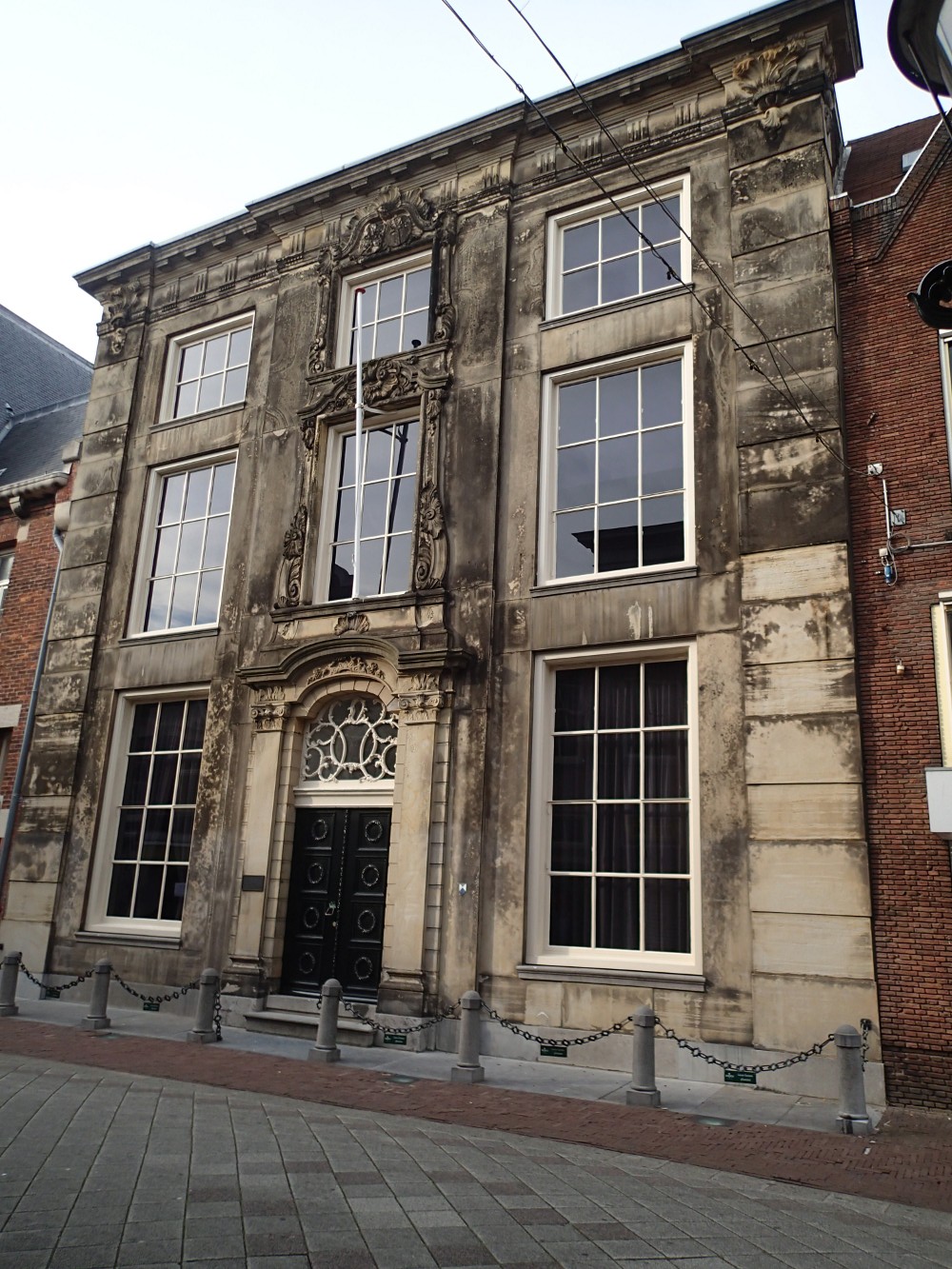
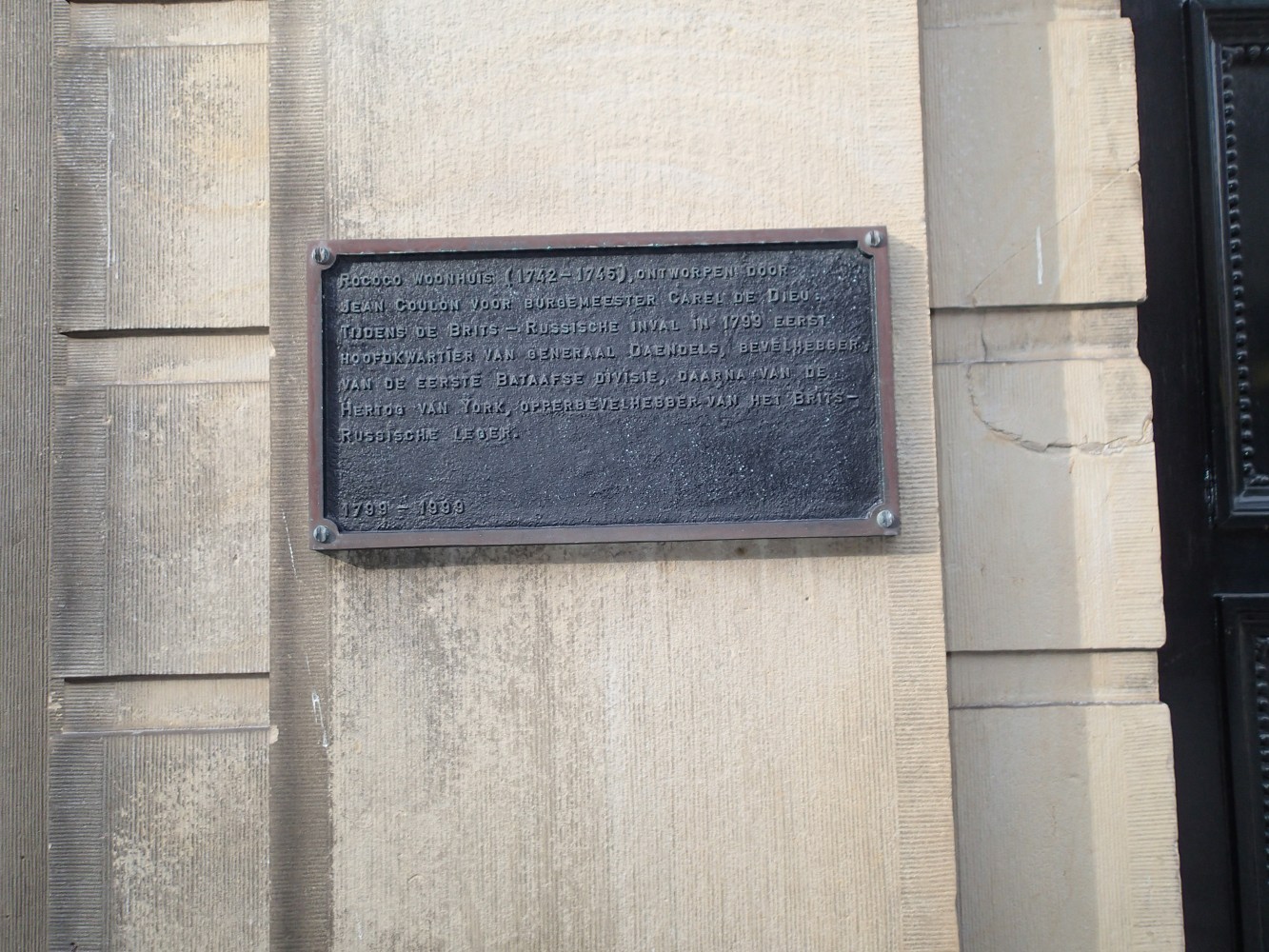
In one of those odd twists of fate, I was just telling my husband that I did not know where exactly the Duke of York’s headquarters were when we came upon an elegant Rococo-style building with a plaque next to the front door. Between us my husband and I managed to make out enough of the plaque’s Dutch to gather that we had, quite coincidentally, located the building used by the Duke as his HQ.

The headquarters of the Duke of York at Alkmaar

The headquarters of the Duke of York at Alkmaar

Plaque marking the headquarters of the Duke of York at Alkmaar

Plaque marking the headquarters of the Duke of York at Alkmaar

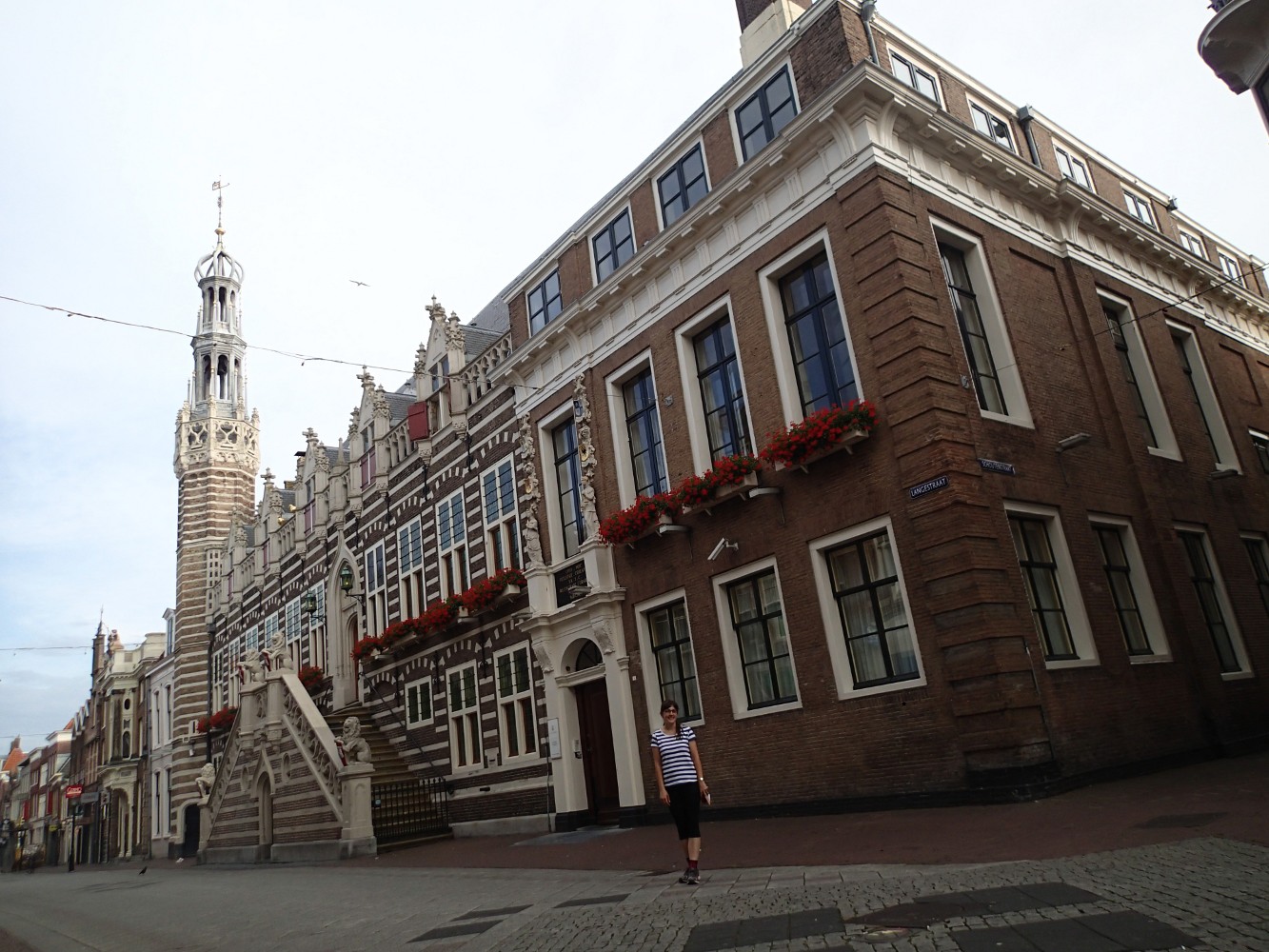
This house was originally built for the mayor of Alkmaar and must have been the best house in the town. It was just opposite the town hall, which was itself an extremely impressive building.

Alkmaar's town hall

Alkmaar’s town hall

At one end of the main street was a church, the 15th century Sint-Laurenskerk. During the battle of 6 October 1799 the rain was so heavy and the visibility so bad that the Duke of York, who remained at Alkmaar throughout, sent one of his aides up the church tower to try his best to work out what was going on!

Sint Laurenskerk in Alkmaar. The Duke of York sent his aide-de-camp up this church tower to see what was going on during the 6 October action

Sint Laurenskerk in Alkmaar. The Duke of York sent his aide-de-camp up this church tower to see what was going on during the 6 October action

Day Three: Alkmaar – Egmond-aan-Zee – Castricum – Wijk-aan-Zee

We were up super early on Day 3 in order to benefit from the weather, which continued glorious. Our intention was to follow Lord Chatham’s steps on the 6 October 1799, during the Anglo-British assault on the towns of Castricum. The battle grew out of the Allied attempt to extend their line to the south in preparation for an attack on the new French/Dutch headquarters at Beverwijk, but turned into a full-on unexpected scrap when the French poured their entire resources into repulsing them. The French commander Brune himself charged the British at the head of his cavalry. The end result was a victory for the Allies, but a Pyrrhic one, and they subsequently retreated back to Schagerbrug and shortly after gave up the whole campaign for lost.

I also wanted to go back towards Egmond-aan-Zee, since I had made a discovery just before bed the night before. Chatham’s movements on 6 October were rather nebulous, since official reports of the battle were comparatively sketchy. His activity can be deduced only from the fact that his brigade (along with that of Lord Cavan) suffered the most casualties. I’m still not entirely sure where and how he was deployed, and nobody else seems to have worked it out either. The great Sir John Fortescue also failed to work it out, but came to the following, somewhat unprofessional, conclusion anyway:

The brigade that suffered most severely was Chatham’s, in which the three battalions of the Fourth lost nearly 150 officers and men killed and wounded, and over 500, including 13 officers, prisoners; while the 31st lost over 100 killed and wounded and 33 prisoners. In what part of the field these battalions were engaged I have been unable to discover, but under so incompetent a brigadier they were likely to come to misfortune in any position (Fortescue, History of the British Army IV (II) 697)

To which I of course say “Hey!”, since in my opinion this is a 20/20 hindsight conclusion to make, particularly as Fortescue admits he does not know where Chatham was to be found.

The large number of captured troops was due to the poor weather on the day of the battle. The Sun of 16 October 1799 contained the following account:

sun16oct1799chathamatcastricummencaptired

From looking over the Army Lists the captured units clearly belonged to Lieutenant Colonel Cholmondeley, who was captured along with a number of several of his officers. They were exchanged the following year.

I had spent the previous evening in our hotel reading through my 1799 campaign notes, and I thought I was beginning to work out what Chatham might have been doing on 6 October. My initial impression of the post-2 October campaign was that Chatham had remained with General Dundas and followed the same order of battle on the 6th as on the 2nd, but I found the following letter from Chatham to his mother quoted in my own notes:

Egmont: Oct 4 [1799]

My dear Mother,

I have but a moment to write to you a single line to say that I am perfectly well … We succeeded in a general attack on the enemy on Wednesday … and I moved in the course of yesterday before this place to reinforce Sir R[alph] Abercrombie [sic], but the enemy, on his approach, unmasked the place, and we have marched in this morning. (Quoted in Lord Ashbourne, Pitt: Some Chapters of his Life and Times (London, 1898), pp 168-9)

From this it seems clear that Chatham did not remain with the division of 2 October, but joined with Abercromby at Egmont, with whom he presumably remained for the action of 6 October.

So back to Egmont we went. Egmont is now a tiny, generic seaside resort town, and although there were a few old buildings left, most of them now converted to shops selling miscellaneous seaside-related tat. It was clearly nestled right in the middle of the dunes, however, and must have been in quite a commanding strategic position in 1799.

Dunes rising near Egmond-aan-Zee

Dunes rising near Egmond-aan-Zee

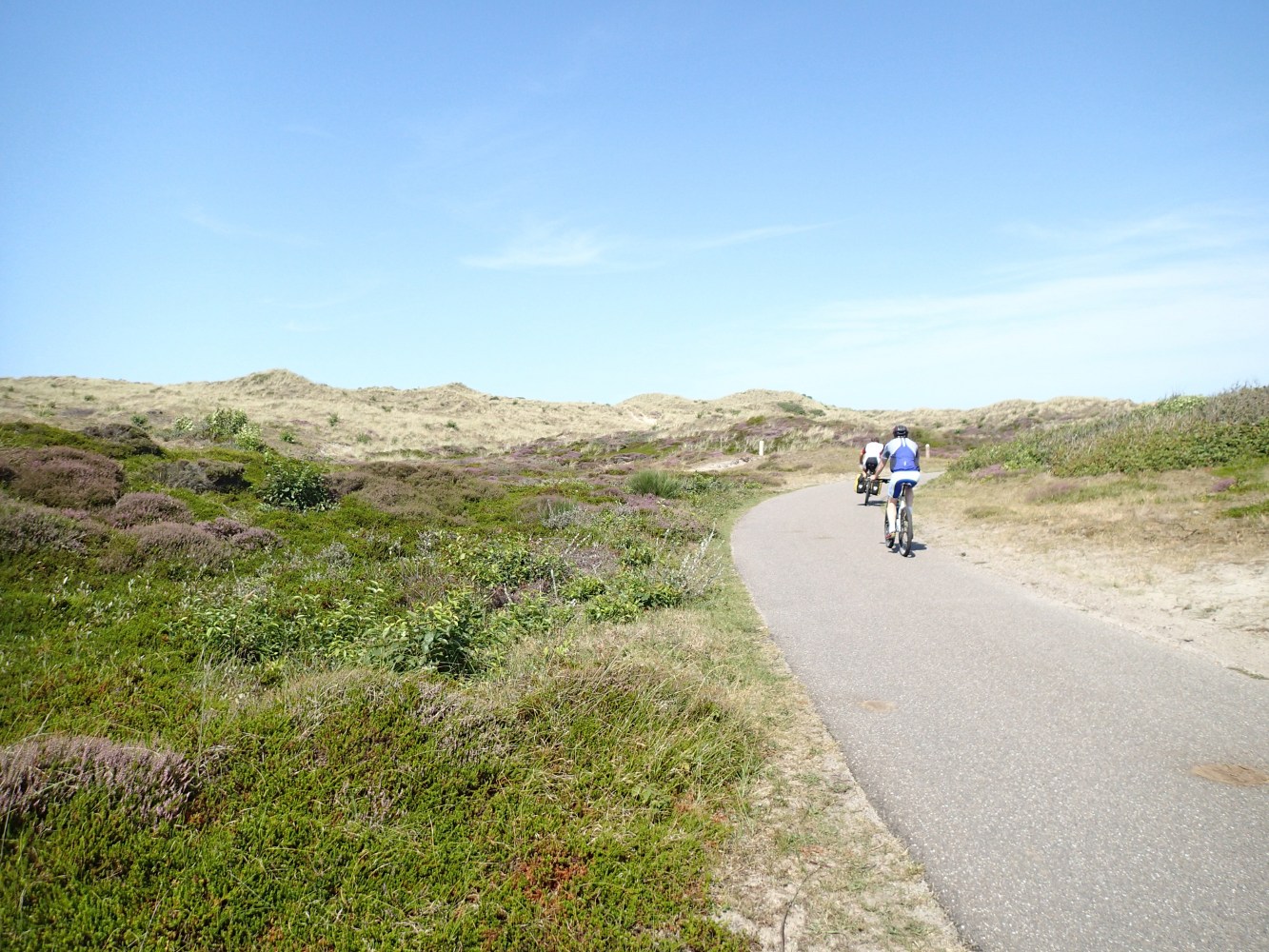
From Egmont we cycled back through the dunes towards Castricum, passing through Heiloo and Limmen on the way: two villages where the Russian force received a strong check from the French on 6 October, and where I originally thought Chatham’s men might have come unstuck. The dunes here strongly resembled the ones north of Egmont, rising up and down for miles between the sea and the flat polders of the interior. Once again, it was obvious that British infantry would have had a hard time marching up and down without being split up into divisions. The sand underfoot gave way easily, though it was largely kept in place by the omnipresent scrub and heather.

Scrubland on the dunes near Castricum

Scrubland on the dunes near Castricum

As I mentioned before, the weather on 6 October 1799 was awful in the extreme, with driving rain on and off from early afternoon until long into the night. In wet, misty conditions the visibility in the dunes cannot have been good. I do not know how Lt Col Cholmondeley’s division got separated from the rest of Chatham’s brigade, but one thing is for sure: this was not ideal terrain for the British troops.

After a lot of up-and-downing (who knew there were quite so many hills in Holland?!) the land flattened out towards Castricum. Like Egmont, today it is a nondescript seaside town, very modern.

OLYMPUS DIGITAL CAMERA

After lunch we cycled on towards Beverwijk. Once again we entered the dunes. Somewhere on this terrain Lord Chatham received a spent musket ball to the shoulder, which glanced off his epaulette but apparently forced off his coat and waistcoat on its path. Obviously I couldn’t tell exactly where, but it was odd to be on the spot I had read about so many times.

Dunes between Castricum and Beverwijk. If you squint you can juuuust see my husband

Dunes between Castricum and Beverwijk. If you squint you can juuuust see my husband

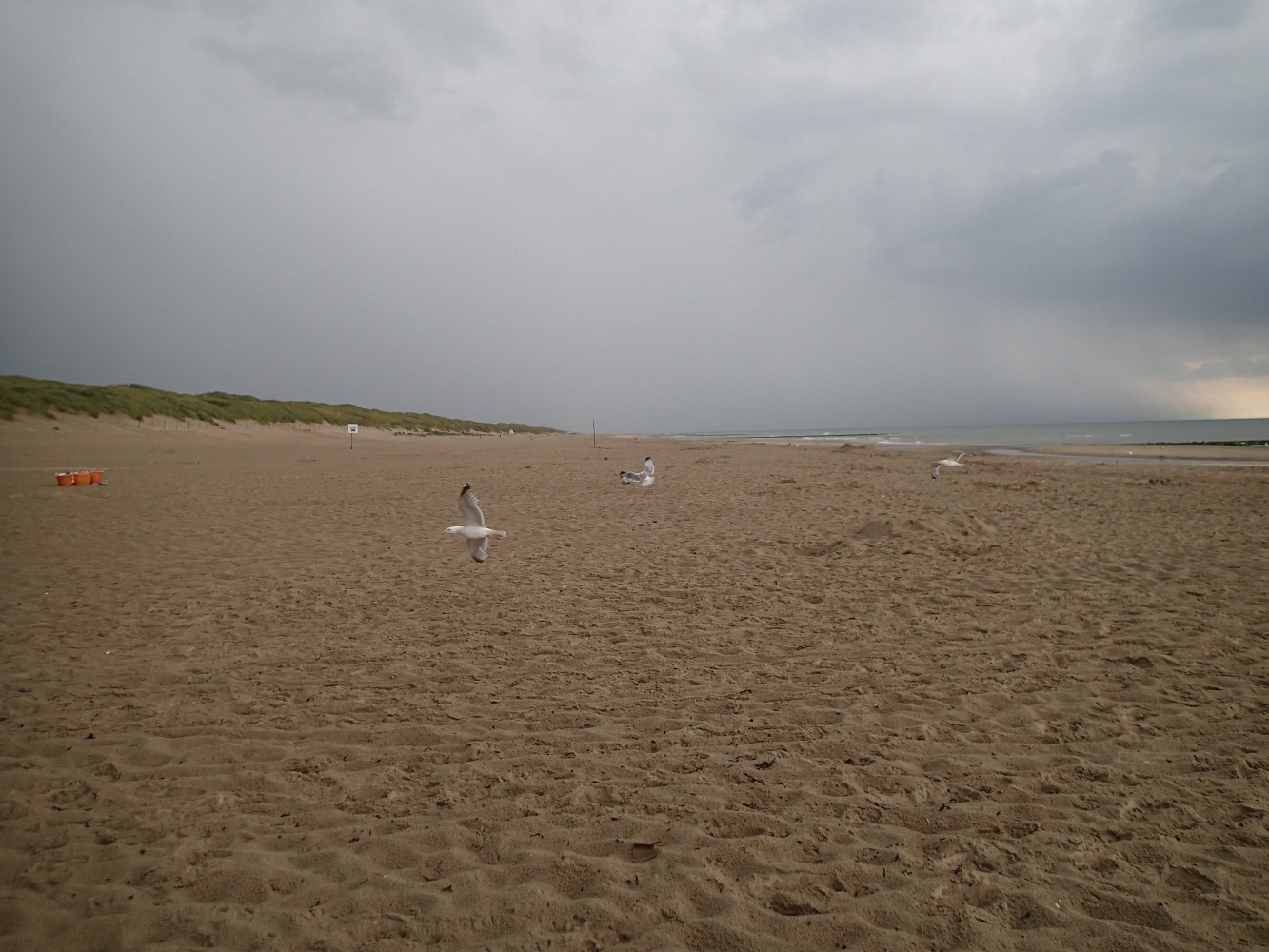
We did not manage to get into Beverwijk that day, but stopped at our hotel at Wijk-aan-Zee. In 1799 much fighting took place in this tiny village; now it’s a beach resort. Because it was such a lovely day we had to paddle, and I took an amazing shot of the sand dunes rising away to the north.

Beach at Wijk-aan-Zee looking down towards the bigger dunes in the north

Beach at Wijk-aan-Zee looking down towards the bigger dunes in the north

Day Four: Wijk-aan-Zee – Beverwijk – Amsterdam

Much like the British and Russians, the push to Beverwijk was our last effort. In 1799, the Allied forces fell back on a long, nightmarish march to Schagerbrug, where the decision was made on 14 October to abandon the campaign and return home. A convention was signed with General Brune on the 18th by which the British and Russians were to be permitted to re-embark unmolested in return for the release of eight thousand French prisoners of war.

We decided to pop into Beverwijk to see if we could see any trace of its 1799 past, but we might as well not have bothered. Like Castricum, Beverwijk is virtually 100% modern. We found the church, which was clearly very old, and one or two older-looking houses close to the shopping centre, but otherwise, since we were not there to spend money in a high street boutique, we high-tailed it.

OLYMPUS DIGITAL CAMERA

After getting snarled up in Beverwijk’s spaghetti-like network of motorway and dual carriageway junctions, we managed to find our way out and spent the next hour and a half or so cycling into Amsterdam, which we reached in time for lunch.

Following in the footsteps of the Helder campaign was quite an experience, and one I have been planning for nearly a year. I am very glad we managed to see the terrain. Needless to say the relevant chapters in my novel will be getting a significant rewrite!

The Helder Campaign, 1799: research visit to Noord-Holland, Part 1

About a year ago I did a considerable amount of research on the Anglo-Russian Helder expedition of 1799 (you can read more about that here). John Pitt, 2nd Earl of Chatham had returned to his military career in 1798, and was appointed to the command of the 7th Brigade in the expedition. My novel follows him to Holland, and last week I finally got the opportunity to do some location research. My husband and I hired a tandem, took a train from Amsterdam to Den Helder, and cycled through the most important locations associated with the campaign.

noord-holland_map

Day One: Amsterdam – Den Helder – Callantsoog – Schagerbrug – Schagen

 The train up to Den Helder was instructive. We sat with a friendly and chatty local who was interested to hear the purpose of our visit and helpfully pointed out a number of towns from the train window as we travelled up. My impression was of comparatively small, tight towns interspersed by long stretches of flat countryside. We passed through Castricum, Alkmaar and Schagen before finally arriving at Den Helder, in 1799 Holland’s northernmost point ….. about at the same time as the thunder.

OLYMPUS DIGITAL CAMERA

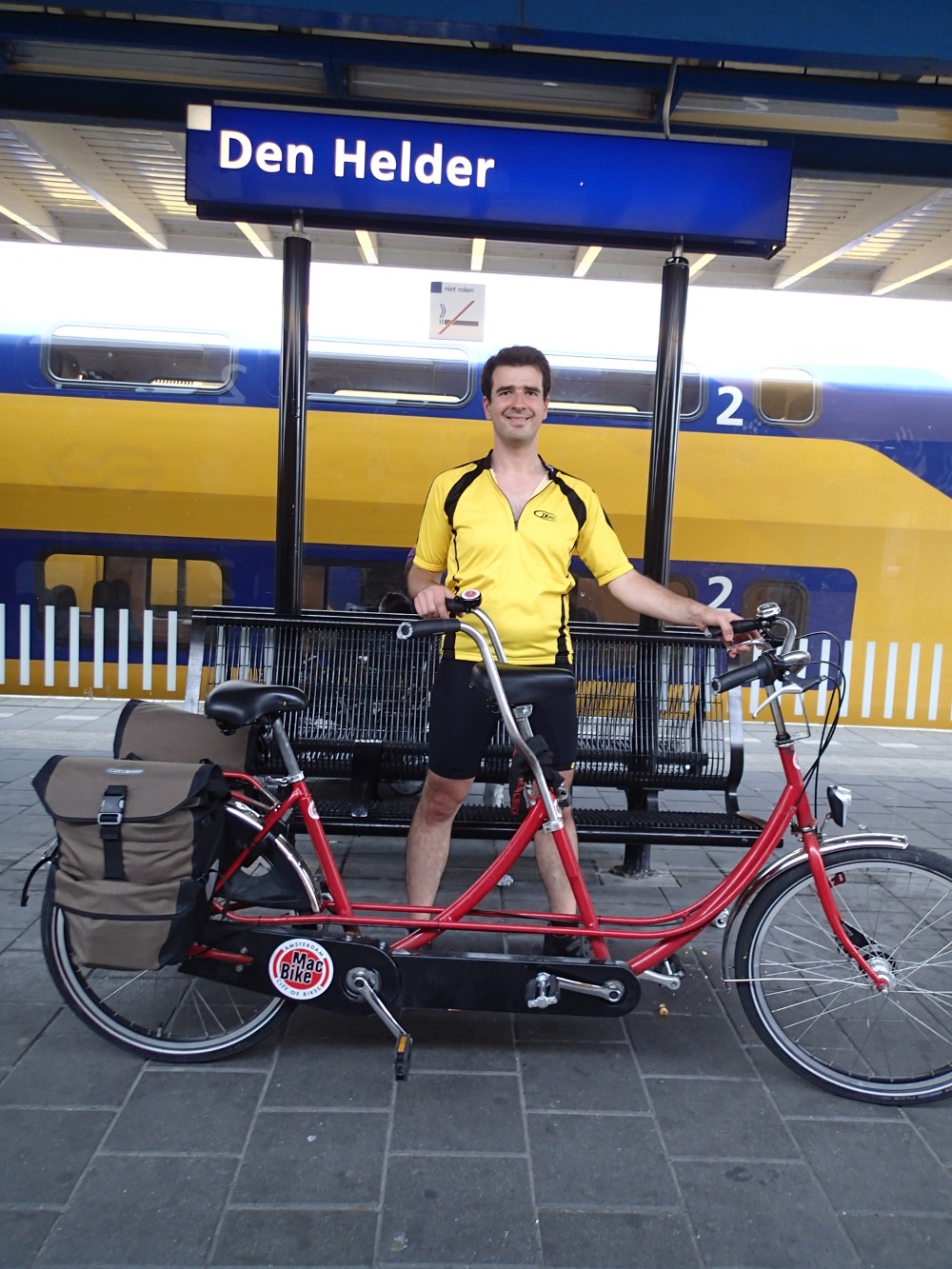
My husband with our hired tandem at Den Helder station


We set off as swiftly as we could, getting briefly lost in town while I got used to our map. At last we found the coastal cycle path, cycling up a steep incline to reach the top of the dyke surrounding the seaward-side of the town. From here we paused to take in the beautiful view towards the island of Texel: a significant strategic point for the navy in the 18th century.


Looking out to Texel from Den Helder

Looking out to Texel from Den Helder


Shortly after I took the above photograph, the heavens opened with an almighty peal of thunder. I was at first quite glad about this — the 1799 Helder expedition was plagued by bad weather, and I had hoped to have the “full Helder experience” for at least a little while — but there was a strong south-easterly wind and, after a few minutes, we had to stop cycling because neither of us could see. Honestly I never knew rain could actually be painful. Even standing still it felt like being repeatedly whipped in the face by a wet pincushion. (At least it was warm!)

Eventually the rain died down, but did not completely stop all afternoon. Still, at least we were able to cycle on, passing Kirkdijn Fort (1811, I believe) and turning southwards down the side of the coast towards Callantsoog.

I did not take too many photographs at this point, because any attempt to stop made us cold as well as wet. Luckily the tandem we had hired was a complete tank, built for city use rather than up-and-down coastal paths, complete with a dicky first gear which (after getting stuck in it a few times) we avoided using unless utterly necessary.


Dunes around Den Helder

Dunes around Den Helder


By this time we were entering the dunes. These run down the majority of the Helder peninsula coast, separating the flat mainland from the turbulent sea. Most of the 1799 Helder fighting took place in this terrain, so I was very interested to see it. Now it is a nature reserve, but I doubt it has changed a great deal in 200 years. The sand was quite dense and held together with scrub. Cows and sheep roamed everywhere. Whenever we joined the roads we saw little draining canals everywhere, criss-crossing the countryside in all directions.

What with the rainfall making the roads slick with water I could see why some British soldiers, retreating at the end of the campaign in torrential rain, occasionally mistook the canals for roads and fell in.

In mid afternoon we reached Keeten near Callantsoog, where the British made their first landing on Dutch soil on 27 August 1799. They were immediately challenged by the Dutch General Daendels, whom they beat back on a narrow strip of beach only wide enough for one battalion to face front at a time. It was the first pitched battle of the campaign and set the tone for the rest: short, sharp and bloody. The sand was very difficult to walk on, soft and giving way underfoot. I cannot imagine how hard it must have been for the British, who had to wade up through the surf to the beach, probably still feeling seasick, then fight their way inland.


Keeten Beach, where the first battle of the Helder campaign took place

Keeten Beach, where the first battle of the Helder campaign took place


By now we were sopping, so we hastened to our destination for the night: Schagen. On the way we passed through Schagerbrug, a tiny hamlet which (as the name suggests) consisted mostly of a bridge over the North Holland Canal, a church, and … er … that’s about it. For some reason Schaberbrug was the Duke of York’s first headquarters as Commander in Chief of the Allied British and Russian army. No clue where he stayed but I did not have time to hang around and search as the weather was so awful. I have no idea why York chose Schagerbrug as his HQ when Schagen, a much larger market town, was only just down the road (can anyone enlighten me?) but I paused only to take a photograph or two.


Schagerbrug Church

Schagerbrug Church


We arrived at Schagen shortly afterwards. Schagen is a much bigger place than Schagerbrug, a collection of traditional Dutch brick houses with the stereotypical step-faced fronts clustered around a beautiful church. We stayed in the Castle, which it turns out was used as a barracks for British soldiers in 1799. Unfortunately the Brits trashed the joint and the castle was largely demolished in 1819.

This was, incidentally, the only place where I saw a plaque commemorating the 1799 Helder campaign.


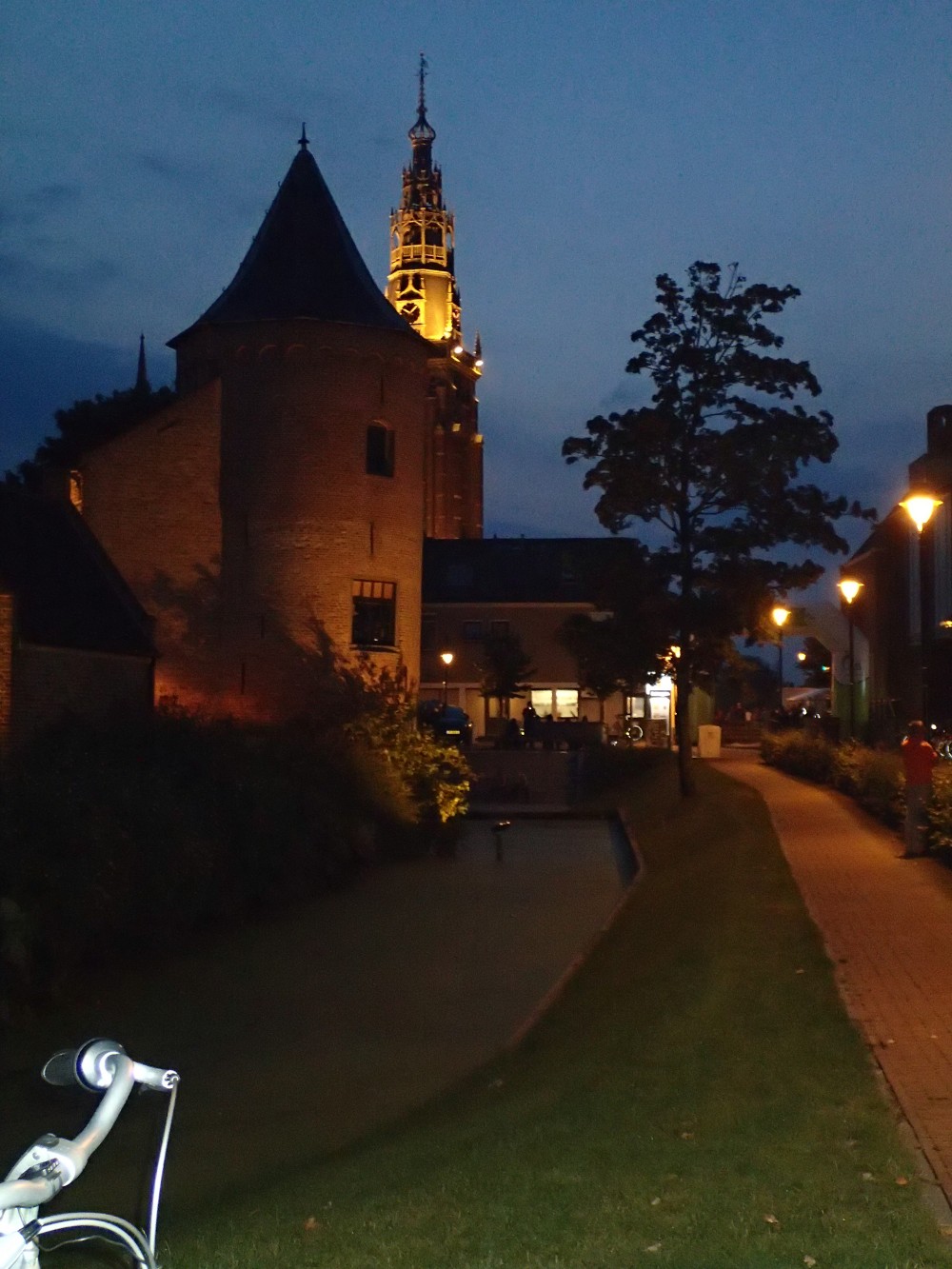
Schagen Castle looking out to market square and church

Schagen Castle looking out to market square and church

Plaque commemorating the 1799 Helder expedition in Schagen

Plaque commemorating the 1799 Helder expedition in Schagen


Day Two: Schagen – Schoorl – Alkmaar

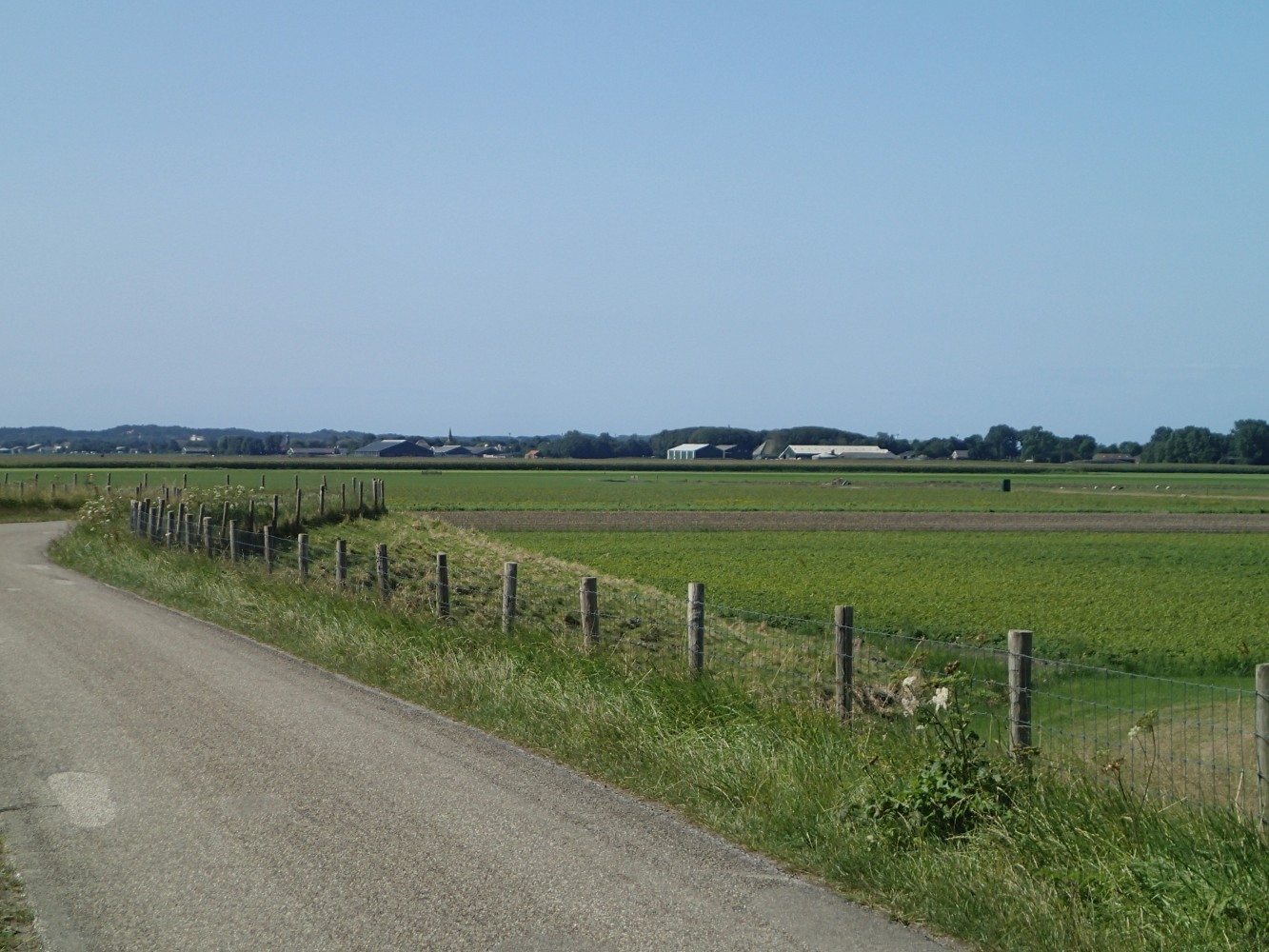
The next day was dry! Hallelujah! We were glad about this, as we had both had enough of the complete 1799 experience and our shoes were still wet. We set off about eleven across the flatlands back towards the coast, cycling largely along the top of dykes and alongside the canals veining the flat “polders” landscape.

We were making for Schoorl at the base of the dunes. Our objective was to follow, as much as possible, the route John, Lord Chatham would have taken with his brigade on 2 October 1799 during the battle for Bergen (alas we ran out of time and were not able to visit Bergen itself, but I do not think John set foot there either). Chatham was attached to General Dundas’s brigade and tasked with acting as a reserve force for the Russians. The Russian force did most of its fighting in the towns of Schoorldam and Schoorl, but, once they had cleared Schoorl of French, refused to proceed to take Bergen. British General Coote said the Russians lay down on the ground and refused to get up when he ordered them to march.

Chatham’s brigade then marched into the sand dunes to assist General Dundas, whose battalions had become scattered in the terrain. Chatham’s men helped form a stronger line and, under strong fire from French artillery in the trees on top of the sand dunes, cleared the field of enemy.

We cycled in the direction I guessed John would have taken his men. The countryside was, as before, perfectly flat, but before long the dunes loomed ahead of us on the horizon.


Road to Schoorl, looking towards sand dunes

Road to Schoorl, looking towards sand dunes


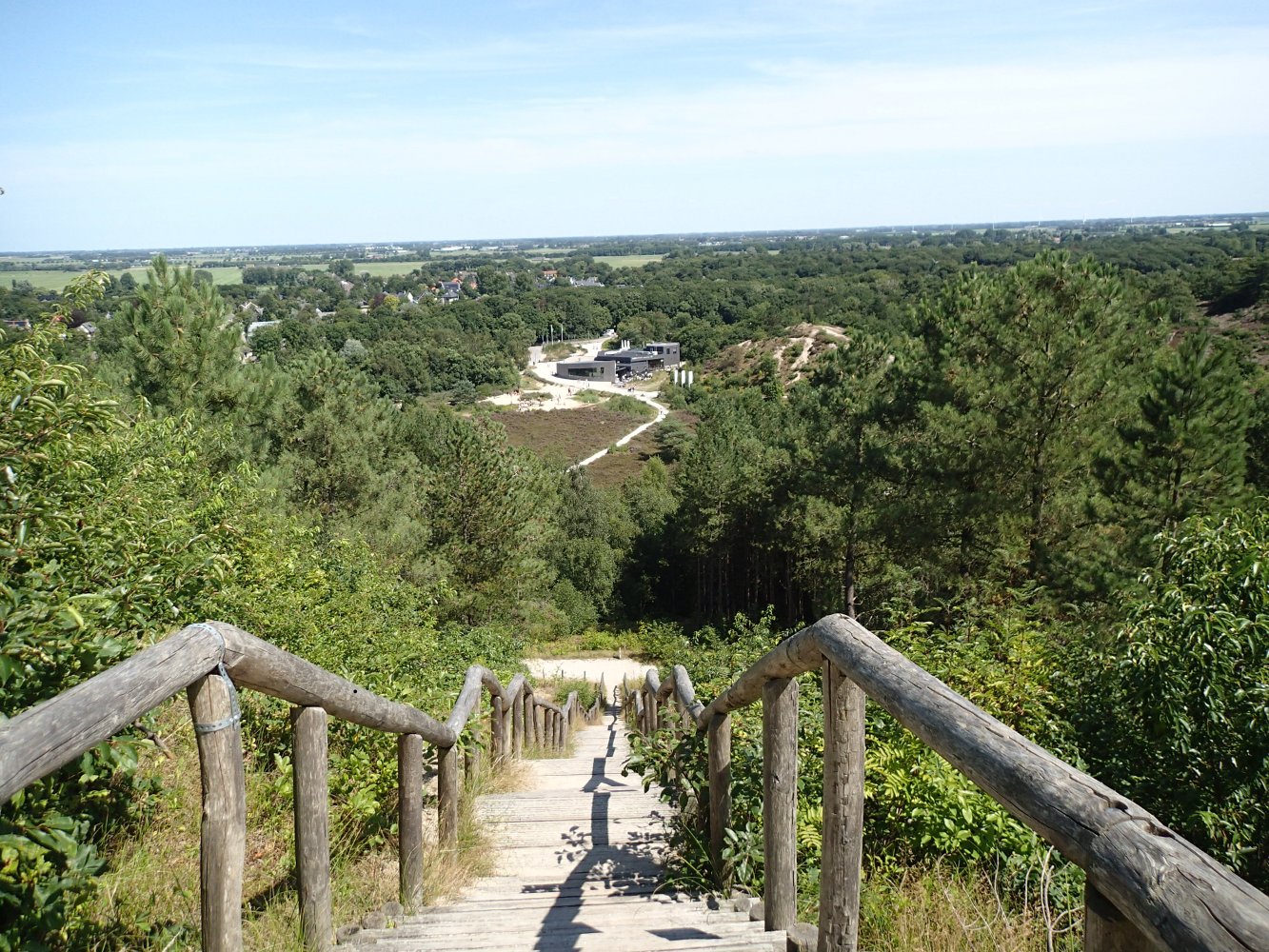
The terrain here is quite different from northern Helder: heavily wooded, with the most enormous, steep, impressive dunes. The ones at Schoorl were the biggest of all, between 150-200 feet high. Forget everything you’ve ever known about dunes: these were BIG, like small mountains with a couple of kilometres worth of undulating landscape on top covered with trees. I immediately began to appreciate why all eyewitness accounts of the campaign laid such stress on the “intricate” nature of the landscape.


OLYMPUS DIGITAL CAMERA

OLYMPUS DIGITAL CAMERA


On top of the dunes, the trees were very dense. I got the impression many of them had been planted since 1799 — they were predominantly pine, and I seem to recall contemporary accounts described mainly beech and birch — but I could easily see how the French could launch ambushes from the trees on attacking troops, and there were so many tree-roots criss-crossing the ground it must have been extremely difficult to march up the sandy ground.


OLYMPUS DIGITAL CAMERA

The terrain flattened out a bit here, but remained undulating for several kilometres towards Bergen. I immediately realised how easy it would be to lose whole brigades in such terrain. The fact that the British seemed to have completely lost sight of whole branches of their force no longer surprised me.

OLYMPUS DIGITAL CAMERA

We knew there had been forest fires in the Schoorl area within the past five years, and there were unfortunately still signs that the landscape is recovering. It appears the fires were started by arsonists. Many trees were blackened stumps and a lot of the terrain still smelled strongly of ash.


OLYMPUS DIGITAL CAMERA   


The second half of our journey through the dunes took us past Egmond-aan-Zee, in 1799 known as Egmont-op-Zee. The worst of the fighting on 2 October took place in the dunes around Egmont, where Sir Ralph Abercromby came to grips with the bulk of the French and Dutch armies defending Bergen. The dunes here are less tall than near Schoorl, but much denser. Eyewitness reports suggest it was very difficult for the British to form up in their traditional lines, and the fighting got very bloodthirsty:

We marched forward … to a place where … the sand rose pretty high, in the form of a semicircle; into this opening we wheeled, and were instantly exposed to a fire upon both our flanks and front … We continued to stand still and fire for a few seconds, and then began to move forward, firing as we advanced; the other two divisions had wheeled into various openings in the sandhills in our rear …

In some instances, parties of our troops came suddenly ipon parties of the enemy. In one instance, one of our parties haveing climbed to the top of a sand ridge, found that a party of the enemy was just benearth, and instantly rushed down the ridge upon them; but the side of the ridge was so steep and soft, that the effort to keep themselves from falling prevented them from making regular use of their arms. They were involuntarily precipitated amongst the enemy, and the bottom of the ridge was so narrow, and the footing on all sides so soft, that neither party were [sic] able, for want of room, to make use of the bayonet; but they struck at each other with the butts of their firelocks, and some individuals were fighting with their fists. (Narrative of a private soldier in His Majesty’s 92nd Regiment of Foot … (London, 1820) pp 46-7)

This part of the trip was quite amazing. Some of the landscape was truly astounding. For some reason I seem to have lost the photos I took though, so you’ll have to extrapolate based on the shots I took above, and this short video I took while cycling through the landscape:

We arrived in Alkmaar early in the evening, and went straight to our hotel. Alkmaar was the Duke of York’s second headquarters after the successful push on Bergen on 2 October, when the British line moved forwards closer to Amsterdam. I will, however, cover that in greater depth in my next post, when I will conclude the account of our trip to Den Helder.

“Your Grace’s most devoted servant”: the 18th century patronage game

Yesterday I spent a few hours in Nottingham University’s manuscripts department. Nottingham holds the bulk of the papers of the 3rd Duke of Portland, prime minister 1782-3 and 1807-9. Portland started out as Charles James Fox’s political leader but, after the French revolution, distanced himself from the Foxite Whigs and eventually coalesced his following with Pitt the Younger in 1794.

There was lots of fun stuff to look at, but nothing quite like the following exchange between Portland and Sir George Collier over Collier’s search for patronage. Dry and dull the subject may be, but as the correspondence unfolded I found myself snorting into my laptop. I’d like to share bits of it here, because it gives a flavour of the less savoury underbelly of the 18th century political game.


The naval hero

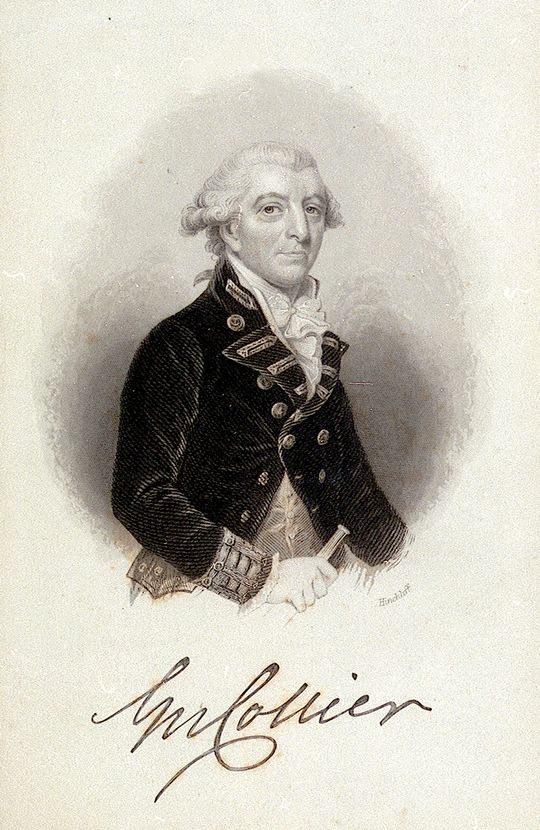
Sir George Collier was a British naval hero from the American War of Independence (… well, that’s how he would no doubt have put it). He had been successful in clearing parts of the American coast of ships and privateers, and also engaged in some spectacular one-on-one ship battles with the Spanish. Despite his almost unbroken record of success he had not received the public recognition he felt he deserved — probably because of his political affiliation with the opposition Whigs under the Marquis of Rockingham and, later, the Duke of Portland.

Admiral_Sir_George_Collier

After Portland’s coalition with Pitt in the summer of 1794 Collier decided it was high time he got that recognition. He was hard-up and needed cash. What does an 18th century public figure who is hard-up and needs cash do? Why, he unashamedly grovels for a government-funded office, of course.

Collier was not shy about his objective:

“My Lord, As the Motives for my not hoisting my Flag are certainly at an End by your Grace’s having been pleas’d to support Ministry, & to take a part in it, I beg to express to your Grace my Wish to have a Command, if you will have the Goodness to interest yourself with the First Lord of the Admiralty for that purpose.”

Subtlety not being Collier’s strong point, he informed Portland exactly what he wanted: “There is no Flag Officer at Chatham, tho’ there is at Sheerness … An appointment for that Post might easily be reviv’d, if Lord Chatham [the First Lord of the Admiralty] chuses it.”[1] Collier felt his health was “so tender & indiffferent, that it is ill calculated (I fear) to encounter the Fatigues & Hardships of foreign Service”, as a result of which he wanted to remain at home. Creating a new post at Chatham was his favourite plan, but he expressed himself just as happy to take the admiralty of any of “the other Royal Ports (Portsmouth, Plymouth & Sheerness)” or the command of the Downs.[2]


Is it something I said?

A week later Portland had not replied, and Collier began to get edgy. “I have been more than anxious to have had the Honor of one Line from You … This great Impatience & Anxiety, makes me again venture to take this fresh Liberty”.

Why was Portland ignoring him? There could be only one reason: Collier’s political record stood against him with Pitt’s government. As a supporter of the Portland interest, after all, Collier had opposed the government on a number of issues, most notably the Regency Crisis in 1788/9.

It seems Collier had already forfeited considerable naval advancement by his alienation of Lord North’s First Lord of the Admiralty in the 1770s, and now in the 1790s Collier feared he had made another high-placed enemy:

“I perceive I don’t stand well, with Lord Chatham by his Inattention on several occasions, nor can I divine or guess the Reason Why, tho’ I have taken some Pains to know; but all Conjecture is quite at a loss.” In fact Collier thought he knew exactly why he was getting Chatham’s cold shoulder, but at this stage of the correspondence he was loath to set it down in black and white.

His nervousness translated itself into excessive flowery fawning. I’m guessing this was de rigueur for 18th century scroungers, but it makes for slightly uncomfortable reading from a 21st century perspective:

“[I wish] to know I have the Happiness of continuing to possess … your Grace’s good Opinion, to me inestimable … If Your Grace with that most kind & benevolent disposition you possess, woud have the Goodness … to tell me if there is a Thing in which Lord Chatham, or any one else can blame me for … I shall to the end of my Life acknowledge your Goodness, with Gratitude, & true Sensibility.”[3]

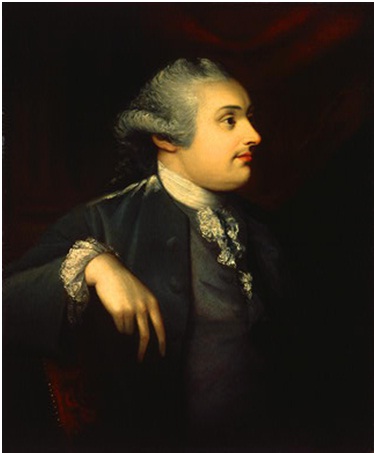
Duke_of_Portland_by_Pratt

The Duke of Portland

What Portland thought of all this I can’t say as I have found only one letter from him in return, but presumably at this stage he could do little anyway. Lord Chatham was away from his desk due to ill health from the end of August to the end of September, so Portland would in any case have been unable to do anything but pass on Collier’s letters.

In early October, however, Chatham was back at work and Portland evidently promised to speak with him in person on Collier’s behalf. Collier again urged his desire for a new command to be created at Chatham dockyards, and wrote a memorandum for the First Lord of the Admiralty explaining his opinion on why “the King’s Service woud be so much expedited & better carried on by having a Commander in Chief at so principal a Port”.[4]


“A numerous family”

When Portland’s silence continued still longer, Collier’s tetchiness increased several notches. All floweriness dropped away from his correspondence, and he became much more direct as the suspicion that he was being deliberately ignored solidified in his mind: “I am entirely at a Loss respecting my future destination … had You (my Lord) had an Opportunity of speaking to Lord Chatham on the Subject, I flatter myself your great kindness woud have relieved my anxiety”.

I suspect Collier was much more accustomed to directness than courtly language, but even so his blunt statement of his urgent necessity is quite startling: “A numerous family of 7 Children are strong calls upon my exertions for their Welfare”. And as though the tone of the letter itself was not cheeky enough, Collier clearly decided, while he was about it, he would add another claim on Portland’s “goodness” on behalf of his eldest son, just back from India:

“He is well educated, & I shoud wish Him to have the Honor of being in the Secretary of States Office [Portland was Home Secretary] if your Grace woud have the Goodness to appoint Him to a situation in it.”[5]


Wherein Lord Chatham expresses his dislike of scroungers

Remarkably, Portland did not do what I would have been tempted to do in his situation (tell Collier to get stuffed). He wrote back agreeing to take Collier’s son on in the Home Department (cue Collier’s relapse into overly orotund flattery: “I received with sincere Gratitude of Thanks, your Grace’s most obliging Letter … the knowing I have the Felicity to be esteemed by your Grace, is a most powerful & pleasing Cordial to me”).[6]

He also wrote that he had finally seen Lord Chatham at court, before the King’s levee. His account of the meeting was not exactly encouraging: “He said, on casting his Eye over it [Collier’s memorandum on the Chatham command], that he was too well acquainted with your merits & claims, to want to be reminded of them; & regretted his not having been able to give you a proof of that opinion.”

johnprint

John Pitt, 2nd Earl of Chatham

This coldness of that did not go unnoticed with Portland, who asked outright if Collier might expect the command of Chatham. “I will not enter into any engagement of that sort,” Chatham replied. Portland tightened the screws a little and urged “the cruelty & injury of a refusal”, whereupon Chatham totally flew off the handle:

“He exclaimed that nothing could be so hard upon a man in his situation as such a construction. That he wished, most earnestly, that he could employ every flag, & indeed every other officer, who is capable & willing to aserve his country, but that if Gentlemen in general who happened not to be employed, conceived that the omission was to be attributed to any reference either to their Political, or Naval Conduct, they equally wronged him & themselves; & they ought, he said, to consider the number of Admirals as well as Captains to whom it was impossible to give commands. So we parted…”[7]

(In other words: “Tell Collier to join the end of the queue.”)

“I admit there was nothing definite in his answer,” Portland concluded with comical restraint, “nor can I say, He gave me any reason to hope for the Chatham command”. He nevertheless thought from something Chatham had said that a naval command might soon be found.


Wherein Collier nearly calls Chatham out

This was, obviously, not what Collier had been hoping to hear. He reminded Portland that he did not want a naval command, and concluded that this was yet another example of political blackballing: “I am afraid, my Lord, that my Sins have arisen out of my political Character … I am passed over … as the Beacon to deter others from venturing to have an Opinion in future”. He reminded Portland again, pointedly, of the “7 strong Claims upon me”, and there the correspondence rested for a month or so, presumably to Portland’s relief.[8]

At the start of December Collier renewed the assault. The commander-in-chief at Plymouth was dying and Collier saw an opportunity to get his domestic command after all. But when Plymouth went instead to Admiral Sir Richard King, Collier’s indignation overflowed in an extraordinary letter to Portland, waxing lyrical and with liberal use of exclamation marks:

“It is hardly possible to restrain my Indignation at the provoking & rude Refusal Lord Chatham has cast upon your Grace! You have with that Goodness so intimately connected with your noble Nature & Family, condescended to help a feeble Plant whom you were pleas’d to think not unworthy [of] your Support … But when the most excellent & best of Men, born to the highest Rank and professing a great & ostensible Station, condescends to offer to the Naval Minister a Person who has serv’d his Country honorably & well, for a certain Post, shall it be presumed to be told this great Character (by the Naval Minister) that ‘He had given Assurances to Sir R[ichar]d King on his quitting one lucrative Command, that he should have another & that the first which fell vacant!!![‘] — & venturing to inform the same excellent Man of this, who had before ask’d the Chatham Command (for his humble Friend) to whom He had ventured to say He ‘woudl not enter into an Engagement of that Sort‘ … !!!!”

At this point Portland was probably reaching for strong stuff to support him, but Collier went further still:

“I own his Inconsistency & affronting Absurdity almost overpowers my Senses, & I can with difficulty keep within the bounds of moderation [… so going up to five exclamation marks, presumably, was right out]. … I despise it [Chatham’s affront], & should be truly happy to express to Lord Chatham some little of my feelings, on this ungenerous occasion: but I restrain myself out of the Respect I owe your Grace”.

Thank goodness for that restraint, because I am fairly certain Collier’s telling Chatham what he thought about him to his face would have led to nothing good. To show he had no hard feelings for Portland, however, Collier signed off in the most effusive manner yet:

“It is only then left me with a Heart flowing with grateful sensations to assure Your Grace they never will be eras’d, & that I shall never fail to remember your Goodness; I am with a fervency not to be expressed & more strong if possible than if your generous Endeavours had been crowned with the Success you wish’d for me, Your Grace’s most devoted & much obliged servant George Collier”.[9]


At last!

Luckily for Collier, even as he was recording his desire to poke Chatham in the eyes the First Lord of the Admiralty was in the throes of being sacked by prime minister Pitt. Chatham’s successor at the Admiralty, Lord Spencer, was a Portland Whig. Collier saw his chance and finally got something he requested: the Command of Sheerness, which he obtained in January 1795.

Unfortunately he did not live long enough to enjoy his salary, and died four months later.

Still, persistence!


References

[1] Sir George Collier to the Duke of Portland, 6 August 1794, Portland MSS, Nottingham University, PwF 3.001

[2] Sir George Collier to the Duke of Portland, 7 August 1794, Portland MSS, Nottingham University, PwF 3.002

[3] Sir George Collier to the Duke of Portland, 13 August 1794, Portland MSS, Nottingham University, PwF 3.003

[4] Memorandum by Sir George Collier, October 1794, Portland MSS, Nottingham University, PwF 3.005

[5] Sir George Collier to the Duke of Portland, 17 October 1794, Portland MSS, Nottingham University, PwF 3.006

[6] Sir George Collier to the Duke of Portland, 24 October 1794, Portland MSS, Nottingham University, PwF 3.007

[7] Duke of Portland to Sir George Collier (copy), 20 October 1794, Portland MSS, Nottingham University, PwV 108 f 123

[8] Sir George Collier to the Duke of Portland, 24 October 1794, Portland MSS, Nottingham University, PwF 3.007

[9] Sir George Collier to the Duke of Portland, 3 December 1794, Portland MSS, Nottingham University, PwF 3.009


Pitt the Younger’s death mask: a post by Stephenie Woolterton

Readers may be interested in (if ever so slightly creeped out by) my friend Stephenie Woolterton’s latest post on her excellent blog, The Private Life of William Pitt the Younger.

She has unearthed some previously unseen photographs of Pitt the Younger’s death mask, taken for the sculptor Nollekens the day after Pitt died.

They are amazing– rather gruesome, and it is certainly evident that Pitt was in a very, very bad way, but without a doubt the closest we will get to a photograph of Mr Pitt’s face.

Brace yourselves and take a look.

Marriage of the 2nd Earl of Chatham and Mary Elizabeth Townshend, 10 July 1783

Mary, Countess of Chatham and John, 2nd Earl of Chatham by Charles Rosenburg (ca 1800)

Mary, Countess of Chatham and John, 2nd Earl of Chatham by Charles Rosenburg (ca 1800)

I know it’s a day early, but I’d like to post in honour of the 231st wedding anniversary of John, 2nd Earl of Chatham and his wife Mary Elizabeth Townshend and I can’t guarantee I’ll manage tomorrow. They are obviously the main characters of my WIP and I have done a lot of research on their lives in the past year. Not all my discoveries have been pleasant, but I have learned a lot about them and I feel much closer to them now than I did this time last year. (You can read last year’s post about their marriage settlement here.)

John and Mary were married by special licence at the house of Mary’s father, Thomas Townshend, Lord Sydney, on 10 July 1783. John was twenty-six, Mary twenty. They had known each other since they were children and it was a love match between longtime sweethearts. Despite rumours that John had a mistress I have not been able to substantiate them, and on the contrary all the evidence points to the closeness of their relationship. The marriage was destined to last nearly thirty-eight years, coming to an end when Mary died on 21 May 1821 at the age of fifty-eight.

As husband and wife the pair suffered more than their fair share of trials and tribulations. Mary’s health was always poor. She suffered from some sort of premature-onset arthritis in her hip that left her permanently lame, and never managed to carry a child to term, although she miscarried at least once. She shared in all her husband’s twists and turns of fortune, accompanying him as much as she could on his military postings throughout Britain, and retiring with him into political obscurity after he commanded the disastrous Walcheren expedition in 1809. In 1807 Mary suffered a prolonged mental breakdown, and although she recovered she relapsed more or less permanently in 1818. You can read more about John and Mary in my guest posts for “Madame Gilflurt’s” excellent blog.

I’d like to leave you with a short excerpt from my WIP in which I describe John and Mary’s wedding. Please join me in raising a glass of claret to the happy couple!


Albemarle Street, July 1783

`My lord Chatham, if you will repeat after me…’

Mary’s heart beat a hectic rhythm in her chest as Dr Courtenay, the parish rector, took the ring off the Bible and slipped it onto her finger. She did not take her eyes off John for a moment. He wore a cream silk suit trimmed with silver to match her gown. His hair was immaculately curled and powdered and his eyes held hers with an intensity that made her heart beat faster. He echoed Courtenay’s words, precisely and with great concentration.

`With this ring I thee wed. With my body I thee worship, and with all my worldly goods I thee endow. In the name of the Father, and of the Son, and of the Holy Ghost, Amen.’

`Those whom God hath joined together let no man put asunder,’ Courtenay said. John put his hand over Mary’s; the sensation of his warm flesh pressing the cold band of the ring into her finger sent a shiver of excitement through her. `I pronounce that they be man and wife together. My lord, you may kiss your bride.’

The wedding guests applauded as John leaned down to bestow a chaste kiss on his wife’s lips. Mary saw his eyes dart towards the chairs arranged before the windows of her parents’ drawing-room. Her father, created Viscount Sydney in one of Lord Shelburne’s parting acts as minister, sat beaming a few feet away. Arrayed beside him were his wife and Mary’s six siblings, from Georgiana to three-year-old Horatio, sucking his thumb on his eldest sister’s lap. Behind were William and Harriot, both grinning broadly.

Mary knew how self-conscious John could be in front of an audience, but she had no intention of letting him get away with that kiss. She wrapped her arms around her husband’s neck and murmured into his ear. `Does Mary, Countess of Chatham not return your kisses so sweetly as Miss Mary Townshend?’

His face cleared instantly. `I do not know. Perhaps we should put it to the test?’

He cupped her chin and kissed her again. In an instant her world narrowed down to the sensation of his lips against hers and Lord Sydney’s elegant drawing-room, with all its inhabitants, was lost to her.

Mary kept her hand in John’s as the guests came over to congratulate them. Her father and mother led the way, enormous smiles on their faces. Lady Sydney kissed John on each cheek. Lord Sydney pumped John’s hand up and down, unable to say anything other than `Well done, Chatham, well done indeed,’ for all the world as though John had just won Mary in single combat.  Last came William and Harriot. Harriot slipped her hand through her new sister-in-law’s arm and William clasped John’s hand with genuine pleasure.

`You look fine, John, very fine,’ William said.

`Marriage suits you,’ Harriot observed. Her eyes were like John’s: they had the same heavy-lidded, almond shape, the same shade of greyish-blue flecked with brown, fringed with the same dark lashes, but Harriot’s were full of a mischief Mary had never seen in her husband’s. `Why, you nearly look handsome.’

`Only nearly?’

`You know Harriot,’ William said. `She never flatters. But as far as I am concerned you look splendid. Lady Chatham too.’ Mary glanced over her shoulder, half-expecting to see that John’s mother had just entered the room, then realised William was talking about her and felt the blood rush to her cheeks. `Congratulations, my lady. Welcome to our family.’

`Too late to change your mind I’m afraid,’ Harriot put in.

`I don’t think I want to,’ Mary said. She could not help slanting a mischievous look up at her husband. John smiled back and dropped a brief kiss on her lips.

`I am glad to hear it!’

He spoke flippantly and Harriot and William laughed, but Mary detected strain in his voice. When he was not paying attention she looked at him more carefully, peeling away the silver-lined coat, the pomaded, curled hair, and the aura of quiet gentility and pride he wore like a cloak. She saw the pallor of his skin and the tightness around his eyes and thought: He is as nervous as I am. She wondered if she was the only one to notice, for even William and Harriot continued to jest at him as though they did not see his jaw tighten further with each joke.

It was as though she could see him better than anyone else in the room, as though her love were a filter stripping away everything but the raw thoughts and emotions that made him John. She took his arm and he turned to her with a smile she was beginning to recognise belonged only to her. The connection between them felt more than physical, as though if Mary withdrew her arm she would still be holding him, even if they were hundreds of miles apart.

Abington Hall, Cambridge: the 2nd Earl of Chatham’s rented country home

Two months ago I made a tragic discovery about the later life of John, 2nd Earl of Chatham: his wife Mary succumbed to severe depression, and was considered “insane”, in 1807-8 and again in the late 1810s. For those not in the loop I blogged about it here. I am bringing it up again because I recently had the opportunity to visit the place where Mary suffered for much of her second illness: Lord Chatham’s rented property of Abington Hall, Cambridge.

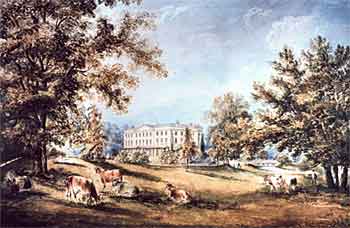
Abington Hall, ca 1750.From TWI Library Archive, sourced from http://www4.twi.co.uk/libarchive/lib_who_lived.html

Abington Hall, ca 1750.From TWI Library Archive, sourced from here


 Lord Chatham had no country estate of his own. He had sold Hayes Place, his father’s seat, in 1785 and sold Burton Pynsent, his remaining property, in 1805. He had periodic access to other properties, either rented or borrowed: he used Cheveley Park, the Duke of Rutland’s hunting lodge, as a country estate from 1787 to 1797, and (mysteriously) had access to a property in Kent known only as “Gedding” from 1808 onwards (if anyone can assist me in tracking “Gedding” down I would be most grateful!).

In 1816 Chatham was looking for a property conveniently located for access to London that would allow him to indulge in his favourite pastime of hunting. He settled on Abington Hall, slightly less than ten miles from Cambridge, close to Cheveley and also to Audley End, where he had cousins. In March 1816 John wrote to the Bishop of Lincoln that he had “at length brought my negociation [sic], with Mr Mortlock to a successful issue”, following two months of bartering.[1] John Mortlock, Chatham’s new landlord, was by all accounts a prickly sort: he was a banker who served thirteen times as Mayor of Cambridge, which if nothing else shows perseverance.

So far, not a great deal is known about John’s tenancy of Abington Hall. I’m not even sure when he moved out. The History of the County of Cambridge and the Isle of Ely volume VI (Victoria County History, 1978) says he rented it “up to 1820” but a Heritage Assessment compiled in 2010 suggests he moved out in 1825.[2] Cambridge Archives dates the “Survey of Dilapidations” compiled on Chatham’s vacating the premises as 15 January 1824.[3] Neither of these dates makes perfect sense, since Chatham was in Gibraltar from November 1822 to July 1825, but he was certainly still at Abington in February 1821.[4] I did not manage to find out if John indulged in any planting, although it sounds from Dr Brown’s Heritage Assessment like he did to a limited extent (see references to “a small plantation”); but he is credited with white-washing the facade of the red brick house.[5]

As you can see the white-washing has seen better days:

20140602_110853

When Chatham got his hands on it the house consisted of 40 acres, including extensive stabling and a walled garden. The house itself has been in the possession of The Welding Institute (TWI) since 1946, and the estate would be almost totally unrecognisable to John today, covered as it is in warehouses, workshops and staff facilities. The house itself has probably changed remarkably little, at least on the ground floor. (The piano nobile and servants’ quarters have both been converted into open-plan offices and bear no resemblance to their original layout.) I found it surprisingly small, given the kind of house I would have expected John to live in. I counted three drawing rooms/parlours and a dining room running along the back of the house looking away from the road.

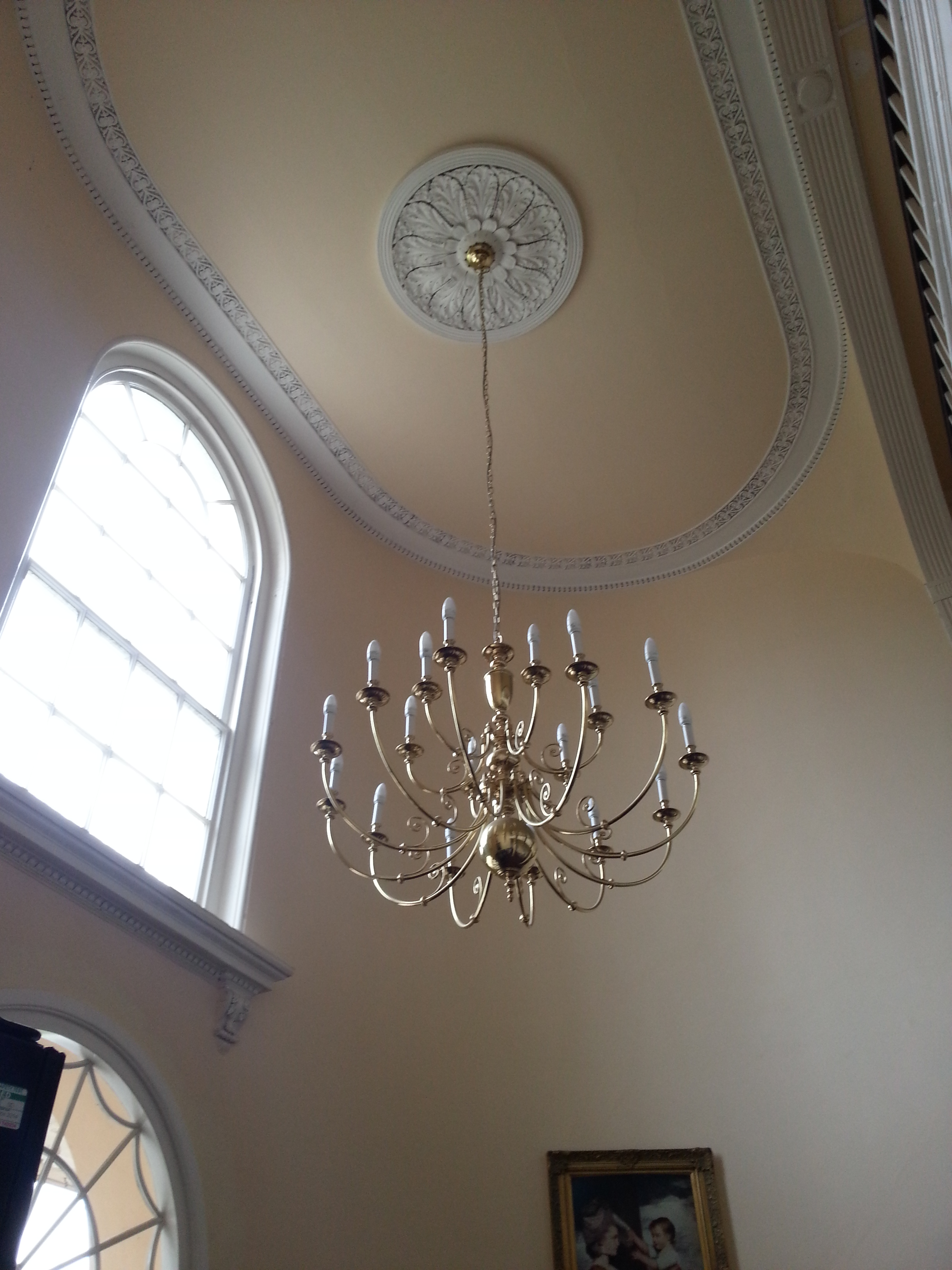
20140602_112612  20140602_111246  20140602_111235

Above: three photos of Abington’s entrance hallway

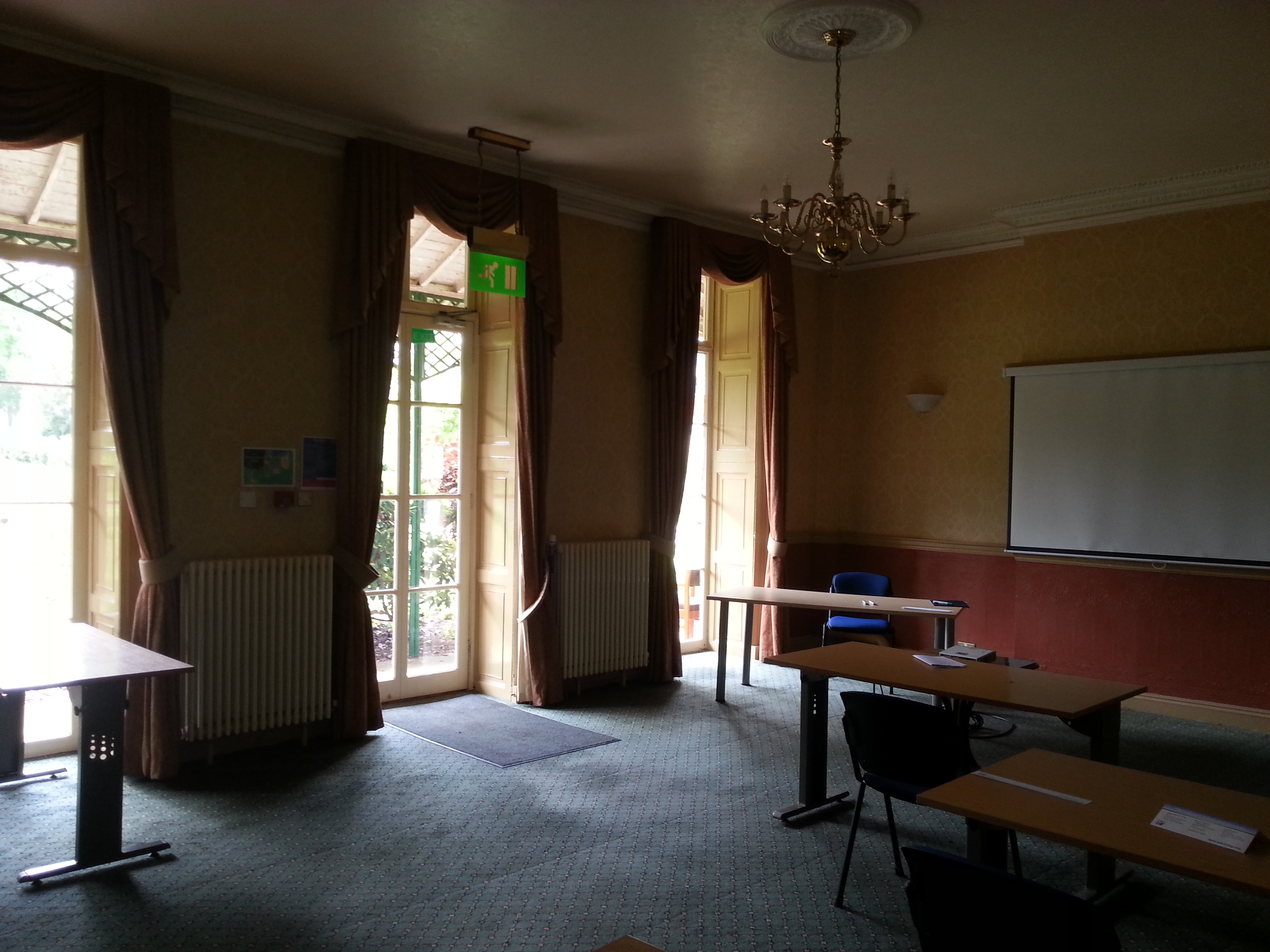
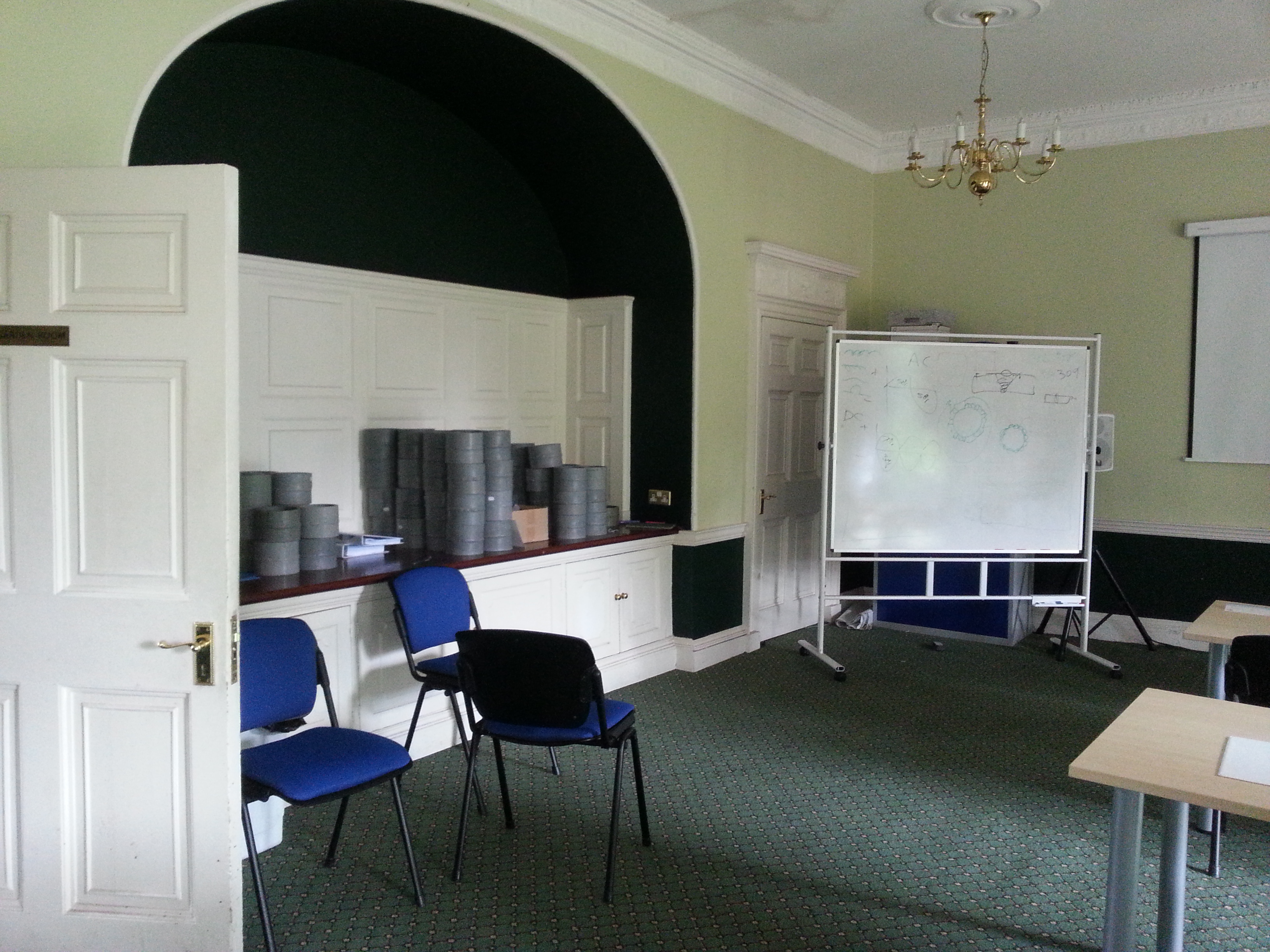
20140602_112229  20140602_111909  20140602_113519

Above: two of the drawing rooms and (on the right) the dining room. The dumb waiter hatch was in the corridor just behind. The third drawing room (small enough possibly to be a parlour) was in use as an office so I did not photograph it.

As you can see, the rooms are largely recognisable as 18th century formal rooms.

20140602_111854  20140602_112314  20140602_111446

Above: some of the original features in the Hall

TWI’s Records Officer very kindly walked through the house and estate with me, and together we tried to guess at what the rooms might have been used for. He was very informative indeed and pointed out to me the road Chatham and his guests would have taken to approach the house from London (now with a warehouse built over it), where there had once been a bridge over the river leading to the village and church, and the location of the stables and walled garden, among other things.

I need to do some more research on Abington Hall to see if I can work out how Chatham would have used it and what he did to it (apart from white-wash it, obviously…), but it was thrilling to have the opportunity to visit a house that he lived in. Even if he almost certainly did not have happy memories of his time there.

References

[1] Lord Chatham to George Pretyman-Tomline, 23 January and 18 March 1816, Ipswich RO HA 119/562/688

[2] “Heritage Assessment of effects on the historic landscape associated with Abington Hall”, compiled July 2010 by Dr David Brown, found here

[3] 15 January 1824 Survey of Dilapidations at Great Abington Hall on lease from Thomas Mortlock, esq. deceased, to the Earl of Chatham. Cambridge Archives, K296/B/A/29

[4] Lord Chatham to George Pretyman-Tomline, 4 February 1821, Ipswich RO HA 119/562/688

[5] Brown, “Heritage Assessment” paragraph 2.12.

Acknowledgments

Many thanks to Hazel Jackson and Lee Pretlove of TWI and Abington Hall Conference Centre.


Guest post for Madame Guilflurt on Mary, Countess of Chatham

A few days ago I guest blogged again for Madame Gilflurt. The subject of my post was Mary, Countess of Chatham, and the post went up on the 193rd anniversary of her death:

http://www.madamegilflurt.com/2014/05/a-salon-guest-mary-elizabeth-countess.html

Image

As regular readers know, I am very fond of Mary, the more so given my recent discoveries about her later life. She is a totally underrated and ignored historical figure: you will not find this much about her anywhere else, I guarantee it.